Guide
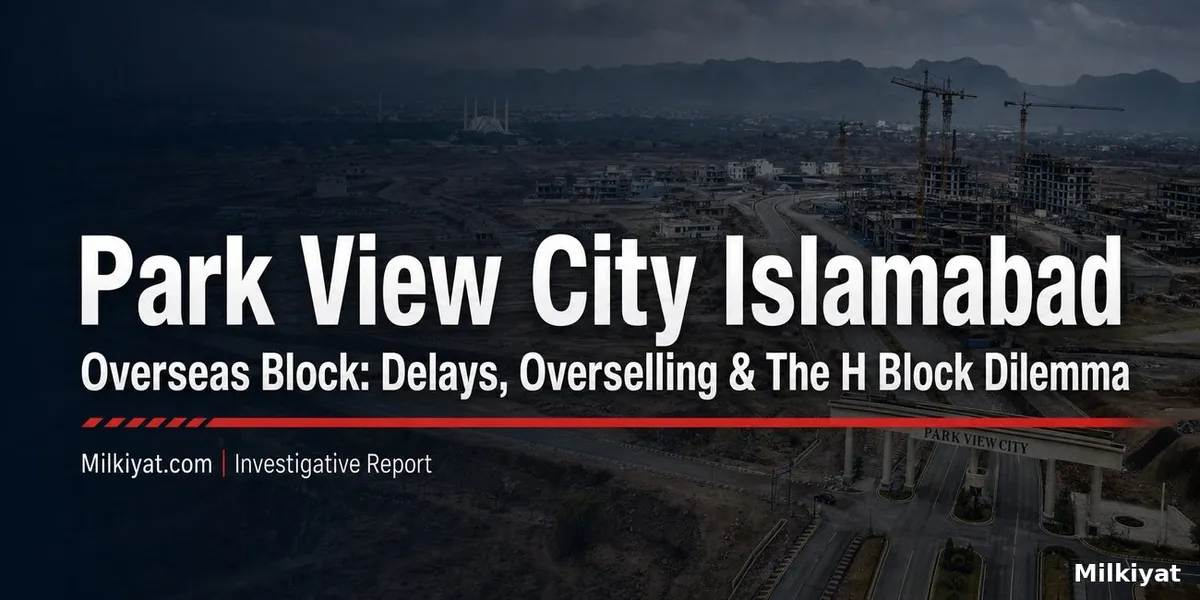
Park View City Islamabad: The Reality Behind Overseas Block Delays and the H Block Transition

By wajahat Ali
Real Estate Analyst
Updated 6 min read
Over the past few years, Park View City Islamabad has emerged as one of the most heavily marketed housing societies in the capital. Backed by large-scale advertising, rapid commercial expansion, Downtown Islamabad’s attractions, and premium branding, the project attracted thousands of investors from both Pakistan and overseas markets.
Park View City Islamabad is made up of several residential blocks, commercial districts, and overseas-focused sectors, each at a different stage of development, possession, and plot allocation. That uneven progress is the backdrop to the questions now being raised by Overseas Block investors, and it is easier to follow once you know how the society is laid out and which areas have actually been delivered. Our Park View City explainer covers its blocks, approvals, amenities, and development status, giving useful context before reading about the Overseas Block dispute and the H Block adjustments.
For all the noise around the Overseas Block, the clearest picture of the society comes from what is actually trading. The current plots and houses for sale in Park View City Islamabad show which blocks have possession-ready inventory, what sellers are asking, and how far those prices sit from the rates quoted on undelivered files. Keep that page open as you read on: the gap between a developed, tradeable plot and a file still waiting for a plot number is precisely what the Overseas Block dispute and the H Block transition come down to.
Among its most aggressively promoted sectors was the Overseas Block — a block specifically marketed toward overseas Pakistanis seeking secure investment opportunities and future residential options in Islamabad.
However, in recent months, concerns among a section of investors and dealers have started surfacing regarding delayed possession timelines, plot availability questions, and adjustment offers reportedly being made to file holders.
Delayed Possession Becoming a Growing Concern
For many overseas investors, one of the biggest selling points of the Overseas Block was the expectation of timely development and possession. Dealers marketed the block as a premium overseas-focused investment destination expected to deliver strong future returns.
But according to investors active in the market, possession timelines have continued to extend far beyond early expectations. Some investors claim they have been waiting years for clearer allocation updates, development certainty, or confirmation regarding the exact status of their plots.
In Pakistan’s real estate sector, delayed possession is not uncommon. Rising construction costs, approval processes, infrastructure expansion, market slowdowns, and planning revisions often impact delivery timelines. However, delays become more sensitive when projects involve overseas Pakistanis, many of whom invest remotely based primarily on trust and marketing commitments.
Allegations of Overselling and Limited Plot Availability
Another issue increasingly discussed within Islamabad’s property circles is the claim that a very large number of files were sold in the Overseas Block relative to the amount of readily available developed land.
Several investors and dealers allege that inventory pressure may now be contributing to complications in direct plot allocation. While no official public confirmation has been issued regarding any shortage of land, discussions around “file adjustments” have become more common in recent months.
In Pakistan’s property market, “files” often trade heavily before physical possession or full development occurs. During bullish market cycles, developers may sell large volumes of booking files based on future development plans and expected expansion. Problems arise when development pace, approvals, or available inventory fail to align with the volume of sold units.
Real estate analysts say such situations can create uncertainty in the secondary market, especially when investors begin questioning whether all file holders can receive plots in the originally promised locations or timelines.
H Block Adjustments and Additional Payment Demands
According to multiple investors and market sources, some Overseas Block clients are now reportedly being offered adjustments into H Block instead of receiving plots in the originally expected area.
However, many investors claim these adjustment offers come with additional payment requirements due to price differences, category changes, or revised rates.
This has created frustration among some buyers who argue they initially invested specifically for the Overseas Block branding, location expectations, and future value proposition. Several investors believe that shifting them into another block — especially with additional financial demands — changes the original investment equation entirely.
Property experts note that adjustment mechanisms are frequently used in Pakistan’s real estate industry during inventory shortages, redesigns, or sector restructuring. In some cases, adjustments can benefit investors if the replacement location develops strongly. In other cases, however, disputes arise when buyers feel they are being pressured into paying significantly more for an issue they believe was not their fault.
Impact on Investor Confidence
The controversy highlights a wider issue within Pakistan’s real estate sector: the gap between aggressive marketing and actual ground delivery.
Over the last decade, many housing societies across Islamabad and Rawalpindi sold large numbers of files during peak speculative periods. Investors often entered projects hoping for rapid appreciation before possession stages. But as the market matured and buyers became more cautious, demand increasingly shifted toward projects with visible development, clear possession schedules, and transparent inventory management.
Today’s investors are no longer satisfied with brochures and promotional campaigns alone. They want physical development, infrastructure visibility, possession certainty, and legal clarity.
This is especially true for overseas Pakistanis, who collectively send billions of dollars in remittances annually and form a major part of Pakistan’s property investment ecosystem. Many overseas buyers rely entirely on developer credibility because they cannot physically monitor development progress themselves.
Park View City Still Remains a Major Islamabad Project
Despite the concerns being raised by some investors, Park View City Islamabad remains one of the largest and most recognizable housing projects in the capital region. Its location, commercial districts, Downtown Islamabad development, road infrastructure, and strong branding continue to attract buyers and businesses.
The society has successfully developed several sectors and commercial areas over the years, helping it maintain strong market visibility even during slower market conditions.
However, market observers believe that how the developer handles Overseas Block concerns in the coming months will significantly impact long-term investor confidence — particularly among overseas Pakistanis and future file investors.
Transparent communication, realistic possession timelines, and clear allocation policies will likely play a crucial role in restoring trust among affected investors.
The Bigger Lesson for Real Estate Investors
The Overseas Block discussion also serves as a reminder for property investors across Pakistan.
Before investing in any file-based project, experts recommend carefully evaluating:
- Actual on-ground development
- Available developed inventory
- Possession timelines
- Approval and planning status
- Developer track record
- Transparency in allocation policies
- Dependence on speculative future expansion
In today’s market, projects with visible delivery and real infrastructure are increasingly outperforming purely speculative file trading models.
As Islamabad’s real estate sector evolves, investor awareness and demand for transparency are likely to become even stronger.