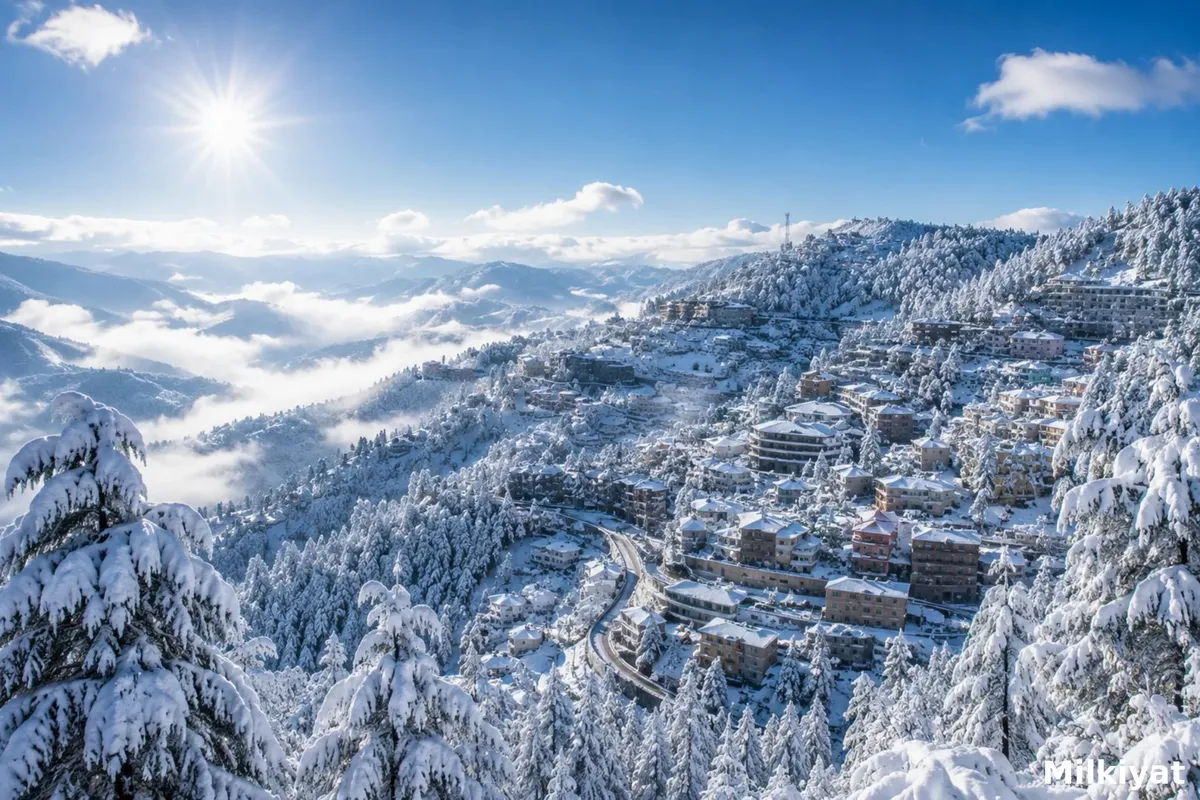
Murree is Pakistan’s most iconic hill station — a cool, forested mountain retreat just an hour from Islamabad. This complete 2025–2026 area guide covers attractions, weather, hotels, real estate trends, investment potential, and essential travel tips to help you plan your visit or property purchase with confidence.
Browse in Murree Pakistan
Explore listings, sectors, and societies in Murree Pakistan.
Murree is Pakistan’s most visited hill station — a cool, forested mountain resort located in the Galyat region of the Himalayan foothills. Established as a British colonial sanatorium in the 19th century, it has evolved into a year‑round tourism hub known for its scenic views, snowfall, pine forests, and accessibility from Islamabad.
Murree sits at an elevation of ~2,200–2,300 meters, offering a climate dramatically cooler than the plains and making it a top destination for families, honeymooners, and nature lovers.
Murree Mall-Road
2. History & Background
Murree was founded in 1851 as a British summer headquarters. Its colonial architecture, churches, and old garrison buildings still define parts of the town.
Over the decades, Murree expanded into a tourism powerhouse, with Mall Road becoming the commercial heart of the region. Today, Murree is part of the newly formed Murree District (2022), reflecting its growing administrative and economic importance.
3. Location, Access & Connectivity
Where Is Murree Located?
Murree lies 60–70 km northeast of Islamabad, connected via the Murree Expressway (N‑75).
Travel Time
Weekdays: 1.5–2 hours
Weekends / Peak Season: 3–6 hours due to congestion
Snowfall Days: Travel may be restricted; police often limit entry for safety
Access Routes
Murree Expressway (N‑75) — fastest and safest
Old Murree Road — scenic but slower
Kashmir Road → Patriata (New Murree)
4. Climate & Best Time to Visit
Murree offers four distinct seasons:
Summer (May–July)
Cool, breezy, and extremely crowded.
Monsoon (July–August)
Heavy rain, fog, and slippery roads.
Autumn (September–November)
Clear skies, golden forests — best for photography.
Winter (December–February)
Regular snowfall, peak tourist season, but also peak traffic.
Best Time:September–November and February–April for low crowds + great weather.
5. Key Attractions & Tourism Hotspots
Mall Road
The commercial center of Murree — shopping, cafés, street food, and colonial buildings.
Murree Neighborhoods & Surrounding Areas
Area
Best For
Highlights
Mall Road
Shopping, nightlife
Hotels, markets, food street
Patriata
Nature, views
Chairlift, forests
Nathia Gali
Trekking
Mukshpuri & Miranjani trails
Ayubia
Families
Pipeline Track, wildlife
Murree-Neighborhoods-Surrounding-Areas
7. Hotels, Resorts & Accommodation
Murree offers everything from budget lodges to luxury resorts:
Top Picks
Pearl Continental Bhurban
Lockwood Hotel
Grand Taj Hotel
Hotel One Mall Road
Shangrila Resorts
8. Food, Cafés & Local Markets
Popular Spots
Usmania Restaurant
Red Onion
Gloria Jeans (Mall Road)
Street food: pakoras, corn, Kashmiri chai
Local markets sell handicrafts, shawls, dry fruits, and souvenirs.
9. Real Estate Market Overview (2025–2026)
Murree’s real estate market is driven by:
Holiday homes
Short‑term rental demand (Airbnb/guest houses)
Proximity to Islamabad
Year‑round tourism
Property Types
Houses
Cottages
Apartments
Commercial shops
Land near Patriata, Bhurban, and Galyat
Price Trends (2025–2026)
Bhurban: High‑end villas & resorts
Patriata: Mid‑range cottages + land
Murree Expressway: Fastest‑growing corridor
10. Investment Potential & ROI
Murree offers:
High rental yields during summer & winter
Strong land appreciation near Expressway
Low vacancy rates for furnished rentals
Tourism‑driven commercial demand
Ideal for investors seeking short‑term rental income or long‑term land appreciation.
11. Infrastructure, Utilities & Facilities
Comparison
Buyer / Visitor Type
Best Area
Families
Kashmir Point, Bhurban
Honeymooners
Patriata, Bhurban
Investors
Expressway corridor
Nature lovers
Nathia Gali, Ayubia
Budget travelers
Lower Bazaar, Ghora Gali
Who-Should-Visit-or-Invest-in-Murree?
14. Frequently Asked Questions (FAQ)
Q1: Does Murree get snowfall?
Yes — December to February.
Q2: Is Murree safe for families?
Yes, but avoid late‑night travel during snowfall.
Q3: Best time to visit?
Autumn and spring for low crowds; winter for snow.
Q4: Is Murree good for investment?
Yes — strong tourism demand + rental yields.
Comparison table
Place
Distance from Islamabad
Elevation
Best for
Crowd level
Murree (Mall Road)
60–70 km
2,290 m
Shopping, family trips, colonial charm
High
Patriata (New Murree)
70 km
2,300–2,400 m
Chairlift, forest views, quieter walks
Medium
Nathia Gali
90 km
2,500 m
Trekking, cooler climate, nature
Medium
Quick-decision-aid
Final verdict
Murree is ideal for short escapes, family holidays, and holiday‑home investment — but success depends on timing, realistic travel planning, and rigorous title checks. If you want, I’ll expand this into a full SEO‑optimized long‑form guide (1,800–2,500 words) with block‑level neighborhood profiles, sample itineraries, hotel and restaurant recommendations, and meta tags for search ranking.
References
Government of Pakistan – Pakistan Tourism Development Corporation (PTDC).
“Murree & Galyat Region Tourism Overview.” https://tourism.gov.pk
Pakistan Meteorological Department (PMD).
“Murree Climate Data & Seasonal Weather Patterns.” https://www.pmd.gov.pk
Punjab Government – Murree District Administration.
“Murree District Formation & Administrative Structure (2022).” https://punjab.gov.pk