News
$895m in Foreign-Funded Sindh Projects Approved, Including Property-Revenue and Urban Infrastructure Reforms

By Mariam Khan
Real Estate Analyst
4 min read
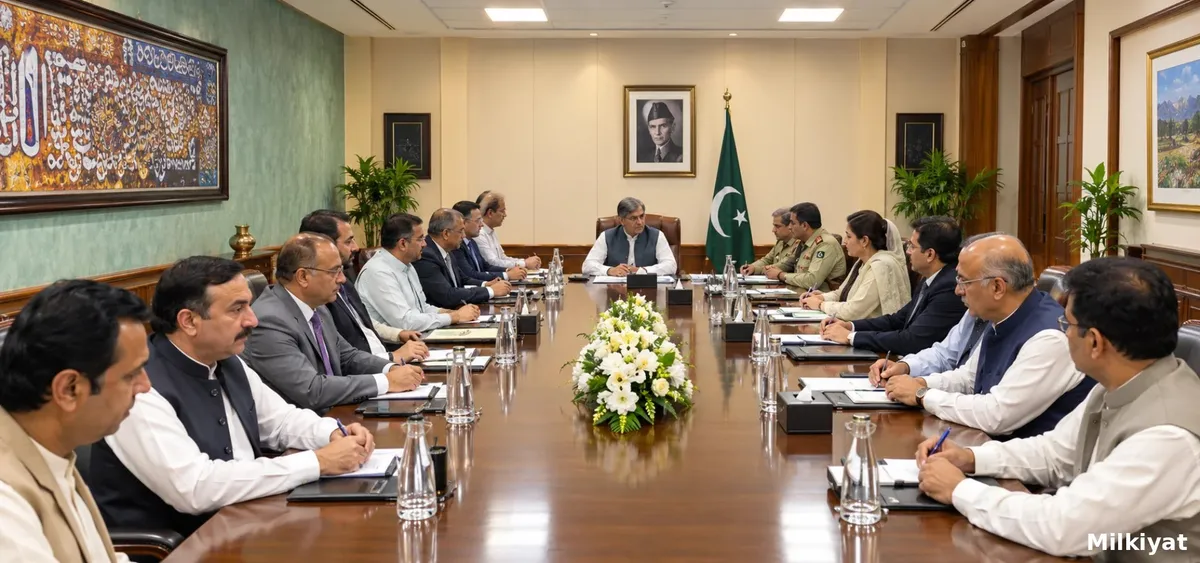
The Central Development Working Party has approved seven foreign funded projects worth a combined $895 million for Sindh, covering water supply, sanitation, urban infrastructure, irrigation and property revenue reform. Most relevant to real estate is the $150 million Sindh Property Revenue Enhancement Programme, backed by the World Bank and implemented through Sindh's Local Government, Housing and Town Planning Department, intended to strengthen the province's property revenue system. The package also includes $15 million in project readiness financing for future urban and water sector projects, alongside the Kalri Baghar Feeder and Keenjhar Lake improvement for K-IV, estimated at roughly Rs50.99 billion, important for securing Karachi's future water supply.
Why the Property Revenue Enhancement Programme Is the Standout Item in This Package
Among seven approved projects spanning water, sanitation, irrigation and urban infrastructure, the $150 million Property Revenue Enhancement Programme is the single item most directly relevant to real estate specifically, since it targets Sindh's property revenue system itself rather than physical infrastructure. This programme arrives alongside a broader pattern we have tracked of property tax and valuation reform discussions in Pakistan, including World Bank recommendations to harmonise provincial property tax systems and move valuations closer to market values, and a dedicated, funded programme implemented through Sindh's own Housing and Town Planning Department gives that broader reform conversation a concrete provincial funding vehicle specifically for Sindh.
Why World Bank Backing Connects This to the Broader Valuation Reform Push
The Property Revenue Enhancement Programme being backed by the World Bank specifically, and implemented through a provincial department with direct authority over housing and town planning, suggests this funded programme could be one of the concrete mechanisms through which the World Bank's broader recommendations on market based property valuations and provincial tax harmonisation begin to take shape in practice, at least within Sindh. This is a meaningful detail for anyone tracking how that broader reform recommendation might move from discussion toward actual implementation in a specific province.
Why the Project Readiness Financing Signals More Projects Are Still to Come
The inclusion of $15 million specifically earmarked for project readiness financing for future urban and water sector projects indicates this approved package is not Sindh's final word on foreign funded infrastructure and property reform activity, but rather includes dedicated funding to prepare additional projects for approval down the line. This detail suggests the current $895 million package should be read as part of an ongoing pipeline rather than a one time, completed round of funding.
Why the K-IV Related Approval Reinforces an Already Tracked Infrastructure Priority
The Kalri Baghar Feeder and Keenjhar Lake improvement, estimated at roughly Rs50.99 billion and described as important for securing Karachi's future water supply, sits within the same broader K-IV water security effort we have tracked separately, including the 94 kilometre transmission network moving toward construction across major Karachi corridors. This approval adds a specific, funded upstream water source improvement to that broader K-IV picture, reinforcing that Karachi's water security push is advancing on multiple fronts simultaneously rather than through a single project alone.
What This Means for Property Owners, Developers and Investors in Sindh
Property owners and market participants in Sindh should watch for how the Property Revenue Enhancement Programme's implementation unfolds through the Local Government, Housing and Town Planning Department, since this funded programme could be an early, concrete signal of how property revenue and valuation reform specifically begins taking shape in the province. Developers and investors with interests in Karachi's water security and broader urban infrastructure should treat this approval, alongside the K-IV transmission network already under way, as continued confirmation that Sindh's water supply constraints are receiving sustained, multi project attention with real foreign funding behind them.