News
Punjab Monsoon 2026: What Heavy Rain Means for Property Owners

By Mariam Khan
Real Estate Analyst
5 min read
Punjab has entered its seventh monsoon spell of the season, with heavy rainfall expected to continue through the rest of this week across a wide stretch of the province. The Indus is already sitting at a moderate flood level near Kalabagh, and disaster management officials have flagged a real risk of urban flooding, flash flooding, and landslides in vulnerable pockets as this spell moves through. The districts named in the alert cover most of Punjab's major property markets at once, including Lahore, Rawalpindi, Faisalabad, Gujranwala, Sialkot and Multan, alongside a long list of smaller districts.
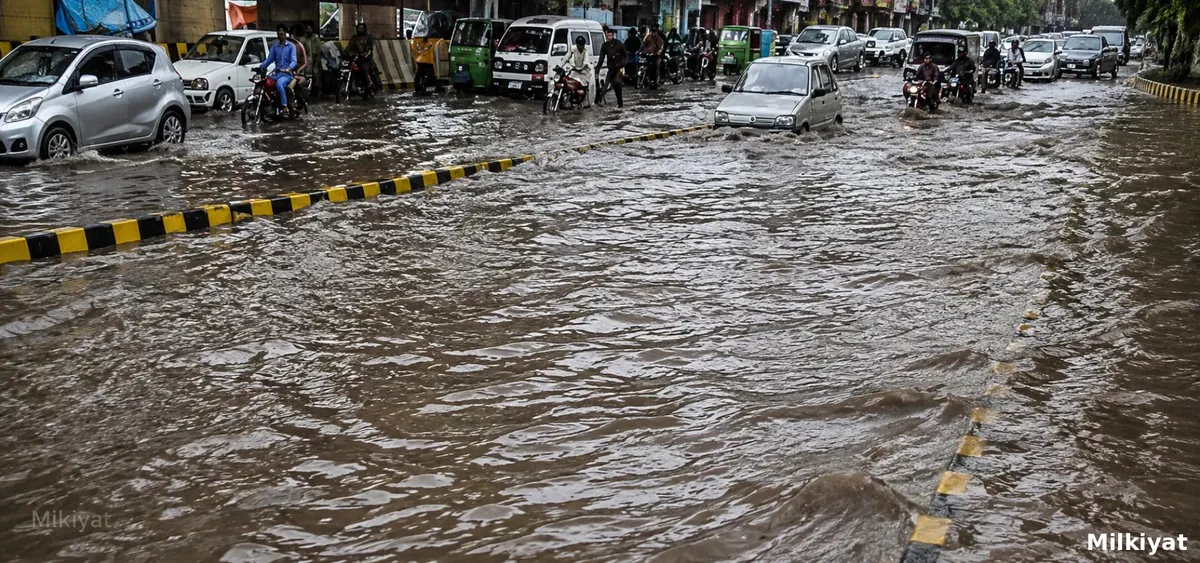
This comes only days after Rawalpindi's twin cities took on water from a single heavy downpour, with low lying neighbourhoods, shops and even a hospital basement affected. A second spell arriving this soon matters less as a weather story and more as a practical one for anyone who owns, is building on, or is about to buy property in any of the named cities.
Why one more spell changes the calculation
A single flooding event can be written off as a one time event. A second serious spell within the same fortnight, hitting largely the same cities, starts to say something about baseline drainage capacity rather than about the rain itself. Ground that was already saturated from the previous spell absorbs less of the new rainfall, which means the same volume of rain this week can produce worse flooding on the ground than an equivalent downpour would have a month ago, before the soil and drainage network were already under strain.
For property specifically, this raises the stakes on a few fronts at once. Basements, semi basements and ground floor units in low lying blocks face a higher near term risk of water ingress. Roads leading into newer housing society blocks, particularly those where drainage infrastructure has not fully caught up with plot development, are more likely to become temporarily impassable. And active construction sites, where excavated foundations and unfinished drainage connections are common, are more exposed to standing water and site damage than completed structures.
What this means if you already own property in an affected area
Owners in low lying blocks or ground floor units should treat this spell as a prompt to check, not assume, that their own drainage and waterproofing have held up since the last downpour. A basement or ground floor unit that stayed dry through one heavy spell is not automatically safe through a second one arriving on already saturated ground. Where a property has an active insurance policy covering water damage, this is also a reasonable moment to confirm what is and is not covered, since flood and rain damage exclusions vary considerably between policies and are easy to overlook until a claim is actually needed.
What this means if you are buying or building right now
Buyers currently evaluating a plot, particularly in a block that is still under active development, have a practical opportunity this week that does not come around often: a live, visible test of how that specific block handles heavy rain. A site visit during or immediately after a serious spell shows far more about a plot's actual drainage behaviour than any dry season inspection can, including whether water pools on the plot itself, how quickly the access road clears once rain stops, and whether nearby drains are keeping pace or backing up.
For anyone with an active construction project underway, exposed foundations and unfinished drainage connections are worth checking on directly rather than assuming a contractor has already covered them, since a delay in securing a site before a spell arrives can turn into a meaningfully larger repair cost once water has already gotten in.
A short list of practical checks worth making this week
- Confirm whether your specific block or street has a documented history of standing water during previous monsoon spells, not just a general sense that the area is fine.
- If evaluating a new purchase, ask directly how the plot performed during the earlier flooding this month, and treat a vague or evasive answer as a signal to check further yourself.
- For basement or ground floor units, inspect for any sign of water ingress since the last spell, even where none was reported, since minor seepage often shows up before a visible flood does.
- For active construction sites, confirm with the contractor that excavation and foundation areas have adequate temporary drainage or covering before the next bout of heavy rain arrives.
- Review your property insurance coverage for water and flood damage specifically, rather than assuming general coverage extends to monsoon related losses.
The broader pattern worth watching
This is now the seventh distinct monsoon spell to affect Punjab this season, and the recurrence itself is informative for anyone thinking about property in flood exposed cities over a multi year horizon, not just this particular week. A single bad spell can be attributed to unusually heavy rain. A pattern of repeated spells, each testing the same drainage networks and the same low lying blocks, is a more reliable signal of where genuine infrastructure gaps sit, and that information is worth remembering the next time a plot in one of these cities is being evaluated, long after this week's rain has passed. Readers can follow ongoing alerts directly through the Provincial Disaster Management Authority Punjab, which issues updated advisories as each spell develops, and can review the mechanics of how monsoon systems form and behave through a general primer on the monsoon itself for readers less familiar with the underlying weather pattern.