News
Daducha Dam Reaches 92 Percent Completion as Rawalpindi Sets a December Deadline

By Mariam Khan
Real Estate Analyst
4 min read
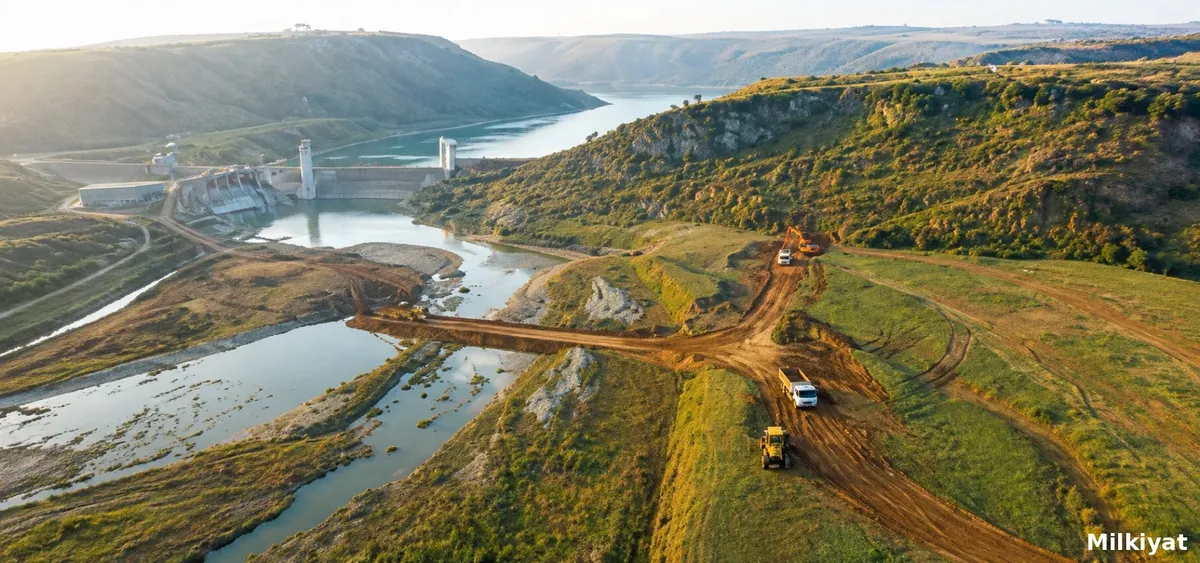
The Daducha Dam, being built near Rawalpindi to help secure the city's drinking water supply, has now reached ninety two percent physical completion. Rawalpindi's Divisional Commissioner has directed that the remaining work, along with the associated drinking water supply components, be finished by December 31, 2026. What remains is the kind of work that determines whether a dam actually delivers water on schedule rather than simply existing as a completed structure: the spillway, retaining wall, bridge, intake and outlet structures, and the residential colony for operational staff.
Why Rawalpindi specifically needed this
Rawalpindi's water supply position has been under sustained pressure for years, not months. The city's daily demand runs well above what its existing sources, chiefly the Rawal and Khanpur dams alongside several hundred tube wells, have been able to reliably deliver, a gap that has widened as groundwater levels in the area have fallen dramatically over recent decades. This is not a new or hidden problem; local water authorities have at points formally acknowledged the shortfall and asked residents to conserve, which is a fairly blunt signal that supply has been struggling to keep pace with the city's growth. A dam specifically designed to add a meaningful new daily volume to Rawalpindi's supply, separate from the aging Rawal and Khanpur system, addresses a structural gap rather than a temporary shortage.
Why this is a property story, not just a utilities one
Reliable water supply is one of the quieter preconditions for housing expansion, easy to take for granted until it is missing. Housing societies and blocks that depend on tube wells or an already strained municipal network face real limits on how much new construction that infrastructure can support, since every additional household draws on the same finite groundwater and pipeline capacity. A dam that adds a substantial new daily supply to the city's system does not just ease pressure on existing residents; it expands the practical ceiling on how much new residential development the city's water infrastructure can actually sustain, particularly in areas that have historically relied on tube wells because municipal supply never reliably reached them.
This matters most for buyers and developers in Rawalpindi's outer and newer developing sectors, where water access has often been the limiting factor on how quickly a block could realistically build out, independent of how much land or how many approved plots existed on paper.
Why the December deadline is worth watching, not just the ninety two percent figure
A project sitting at ninety two percent completion is, in principle, close to done. In practice, the specific components still outstanding here, the spillway, retaining wall, and intake and outlet structures, are exactly the pieces that determine whether water can actually be safely stored and delivered, rather than components that are purely cosmetic or secondary. A dam that is structurally complete but missing a functioning spillway or intake system cannot yet do the one thing it was built for. The administrative deadline set by the Divisional Commissioner is therefore a meaningful marker to track, since the gap between a dam reaching physical completion and a dam actually delivering water to households has, on other long delayed water projects in this same region, stretched years beyond initial completion estimates.
The broader pattern in twin cities water infrastructure
Daducha Dam is not an isolated initiative. It sits alongside other long running efforts to secure water supply for Islamabad and Rawalpindi, including the much larger, and considerably more delayed, project to draw water from the Indus system for the twin cities. Seen against that backdrop, a dam nearing physical completion with a firm administrative deadline attached is a genuinely positive marker, though one that should be judged on actual water reaching households on schedule, not on the completion percentage alone.
Sources
- Dadhocha Dam, for background on the project's scope, capacity and history
- Rawalpindi, for general city context
- Water scarcity, for background on the broader issue this project addresses
- Khanpur Dam, for context on the twin cities' existing water supply infrastructure