News
Fauji Cement to Install Battery Storage and Solar Power at Two Plants

By Mariam Khan
Real Estate Analyst
3 min read
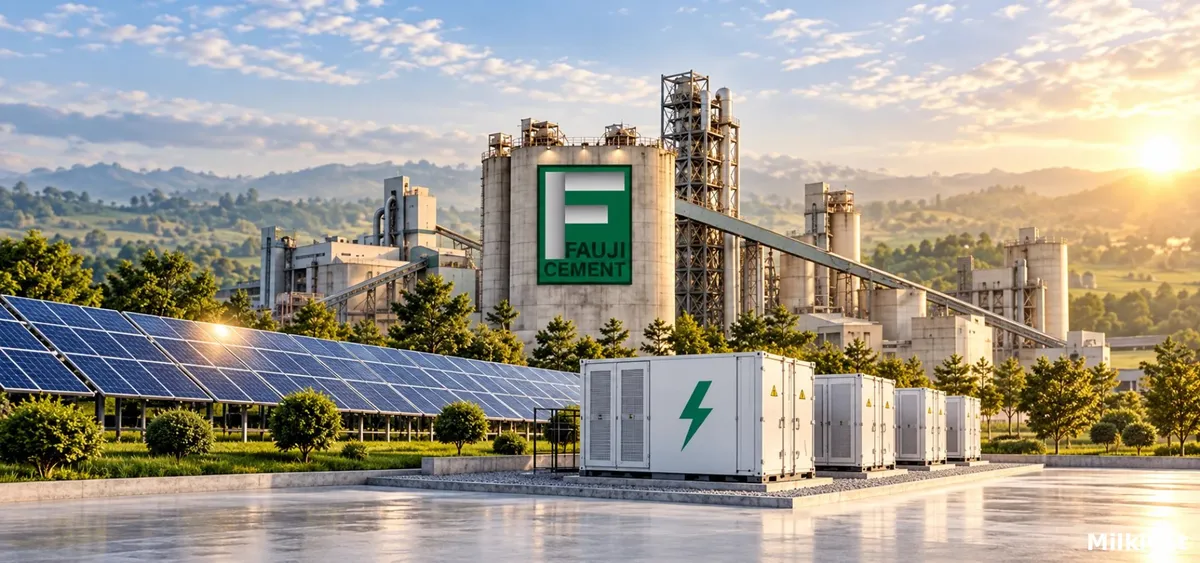
Fauji Cement Company Limited has approved a project to install Battery Energy Storage Systems with a combined capacity of 50 MWh alongside dedicated solar power capacity of 10 MW at its Nizampur and Jhang Bahtar plants, according to a notice the company issued to the Pakistan Stock Exchange. The board approved the project through a resolution by circulation, with each plant receiving 25 MWh of battery storage and 5 MW of dedicated solar capacity, and the company expects the project to be completed within 10 months of its start date.
Why Pairing Batteries With Solar Changes the Economics
The core purpose of the project, as FCCL described it, is to store daytime solar energy in the battery systems for discharge during evening peak hours, reducing the plant's reliance on peak grid electricity. This distinction matters because solar power alone only offsets grid consumption while the sun is up, whereas evening and night hours, when cement plants continue heavy operations, still require grid power at its most expensive peak rates. By adding battery storage on top of solar generation, FCCL is targeting the specific window where energy costs are highest rather than only capturing savings during daylight hours.
This Builds on an Already Substantial Solar Base
This is not FCCL's first move into renewable energy. The company expanded its solar capacity to 67.5 MW in fiscal year 2025, a build out that already meets 90 percent of its packaging needs and has contributed meaningfully to its overall energy efficiency. The new 10 MW of dedicated solar capacity alongside battery storage represents a further expansion of that existing renewable base, rather than a first step into solar power for the company.
Why Cement Manufacturers Are Leading This Shift
Cement production is one of the most energy intensive processes in industrial manufacturing, making energy cost a major, ongoing line item for producers like FCCL. Pakistan's broader dependence on imported oil and liquefied natural gas leaves energy intensive industries particularly exposed to global price swings, which helps explain why solar adoption has become increasingly popular not just among residential and commercial consumers but specifically among heavy industrial users like cement manufacturers, who have both the scale and the incentive to invest in reducing grid dependence.
What This Means for Construction Costs
Energy costs are a meaningful component of cement production costs, and a producer that successfully reduces its reliance on expensive peak grid electricity has more room to manage its pricing over time than one that remains fully exposed to grid rates and fuel price volatility. While a single producer's 10 MW solar and 50 MWh battery investment will not immediately move cement prices industry wide, it reflects a broader trend of Pakistani cement manufacturers investing in energy cost control, which matters for anyone tracking construction material cost trends, since sustained energy cost pressure has been a recurring factor behind cement price increases in recent years. Developers and contractors budgeting cement heavy projects should continue watching overall energy price trends alongside individual producer announcements like this one.