News
FGEHA Signs MoU for 1,600 Kanal Housing and Apartment Project in Charsadda

By Mariam Khan
Real Estate Analyst
3 min read
ShareWhatsApp
News
By Mariam Khan
Real Estate Analyst
3 min read
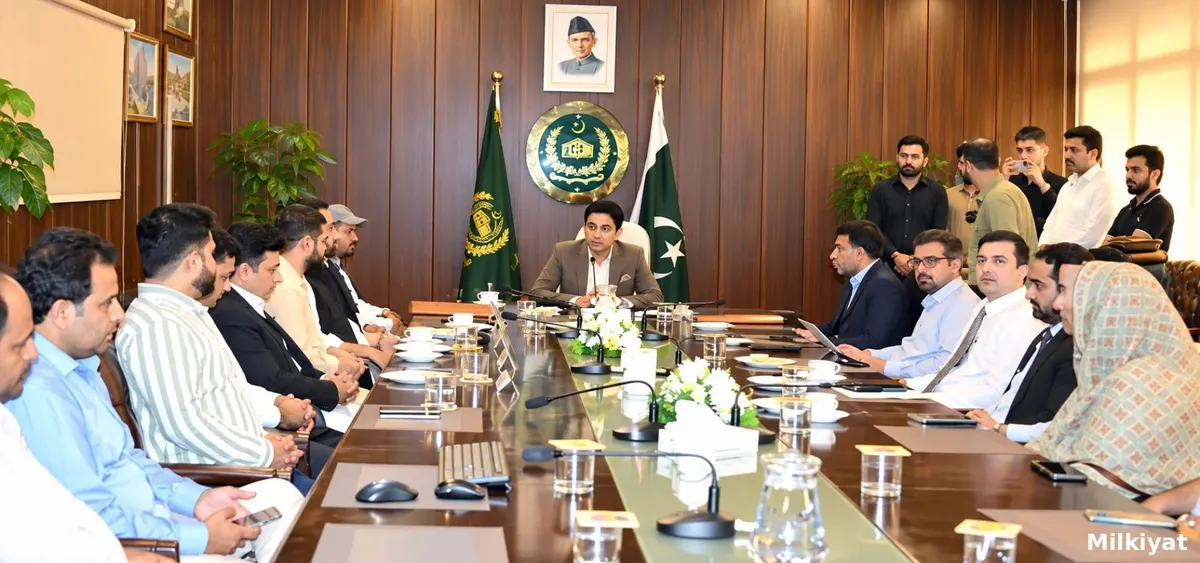
The Federal Government Employees Housing Authority has signed a memorandum of understanding with a consortium of Zee Brothers and Ruya Developers to develop a large housing and apartment project spanning approximately 1,600 kanals in Charsadda, Khyber Pakhtunkhwa. The agreement, signed on September 24, also provides scope for the project to be expanded later.
FGEHA's projects have historically concentrated heavily around Islamabad and other major urban centres, so a large scale, federally backed housing and apartment development in Charsadda specifically marks a notable geographic expansion for the authority. This signals that federal government employee housing provision is being extended into Khyber Pakhtunkhwa on a scale significant enough to warrant a dedicated consortium partnership, rather than remaining concentrated in the capital region alone.
At roughly 1,600 kanals, this project sits well above the scale of a typical single sector or neighbourhood development, placing it among the larger housing schemes reported in the region this year. A project of this size, particularly one built around a mix of individual housing and apartment units rather than plots alone, has the potential to meaningfully add to the available planned residential supply in Charsadda once construction actually proceeds.
The MoU's specific provision for the project to be expanded later is a meaningful detail beyond the initial 1,600 kanal footprint, since it signals FGEHA and its development partners are planning with room for future growth rather than treating this as a fixed, one time development. This kind of forward planning provision often indicates a longer term institutional commitment to the location, which can be a relevant factor for anyone assessing the durability of demand and infrastructure investment in the surrounding area over time.
Partnering with a private consortium, Zee Brothers and Ruya Developers, rather than developing the project entirely through its own resources, reflects a model FGEHA and other public housing authorities have increasingly used to bring in private sector development capacity and financing alongside public sector land and institutional backing. This structure can accelerate delivery timelines compared to a purely public sector development process, though it also means the project's actual pace and quality will depend heavily on the private consortium's execution track record, which prospective buyers should look into directly before committing.
Federal government employees in Khyber Pakhtunkhwa, and property investors more broadly, should treat this MoU as an early stage but genuinely significant development commitment, given the scale of land involved and the explicit provision for future expansion. As with any MoU stage announcement, this represents an agreement to develop rather than a confirmed construction timeline or unit pricing, so interested employees and investors should watch for FGEHA's subsequent announcements on the project's PC-I approval, launch phase, and allotment process before treating this as an imminent, bookable opportunity.
FBR notifies faceless income tax appeal rules, introducing anonymous commissioners, digital hearings and automated case allocation for tax disputes.
FBR replaces sales tax return STR-7 and revises purchase and sales invoice annexes, introducing expanded transaction and tax reporting requirements.
FBR seals a Karachi superstore outlet after finding Rs3.27 billion in off-system sales, POS violations and alleged sales tax irregularities.
Pakistan plans to split SNGPL and SSGCL into six to eight entities, restructure gas operations and shift over Rs3 trillion in circular debt.