News
FGEHA's Green Enclave-I and Lifestyle Residency Remain Stalled Despite Rs20bn Development Budget
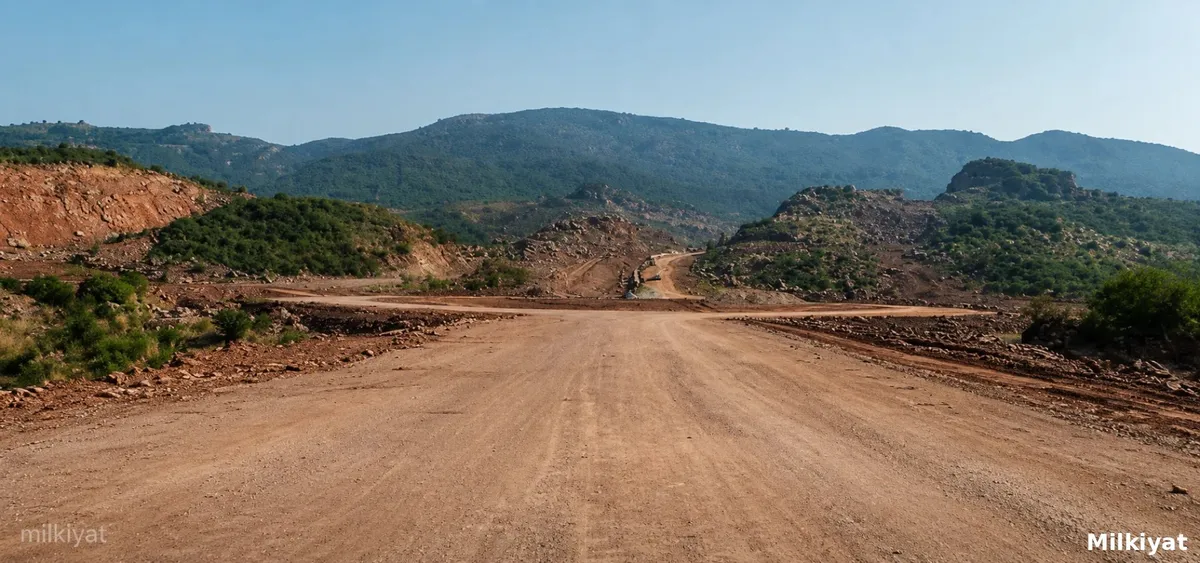

By Mariam Khan
Real Estate Analyst
5 min read
ShareWhatsApp
News
By Mariam Khan
Real Estate Analyst
5 min read
Federal Housing Minister Mian Riaz Hussain Pirzada has expressed grave concern over FGEHA's continued failure to restart two long stalled Islamabad housing projects, Green Enclave-I in Bhara Kahu, launched in 2009, and the Lifestyle Residency apartments, launched in 2017, according to reporting dated 20 August 2026. Thousands of allottees across both schemes have reportedly deposited payments but remain without plots or apartments years after their original launch dates.
The minister directed FGEHA to take immediate measures to restart work on both projects, submit pending inquiry reports, and act on their findings without further delay. No confirmed restart date, completion schedule, or project specific funding allocation came out of the meeting. This is not the minister's first intervention on Green Enclave-I specifically: in early August, he had already directed FGEHA's Executive Board to begin development work on the scheme within one month after removing all remaining obstacles, telling officials at the time that he frequently faces questions about the stalled project in Parliament and from the media. That one month window has now passed without the project restarting, which is the direct context behind this week's renewed, more pointed concern.
Green Enclave-I covers roughly 3,375 kanals in Bhara Kahu and was launched in 2009, yet officials told the Senate Standing Committee on Housing and Works that construction had reached only 52 percent completion as of mid 2026. FGEHA attributed the delay to a combination of prolonged litigation, National Accountability Bureau investigations, land acquisition disputes, unresolved bank guarantee issues, the COVID-19 pandemic, rising construction costs, and contractual complications with the project's joint venture partner. Development work on the scheme stalled entirely after FGEHA signed a construction agreement in 2019 that ran into disputes over contract terms, work execution, and revised security costs.
The FGEHA Board separately approved a Rs20 billion development budget for the 2026 to 2027 financial year, including Rs2.808 billion carried forward from the previous year. It is important to be precise about what this budget does and does not confirm: no project specific funding allocation was announced alongside it, meaning the Rs20 billion figure should not be treated as dedicated Green Enclave-I or Lifestyle Residency funding until FGEHA publishes a specific breakdown tying budget lines to these two projects and their construction timelines.
Green Enclave-I and Lifestyle Residency are not the only FGEHA projects facing this kind of prolonged delay. Parliamentary oversight bodies have separately reviewed a wider list of stalled schemes this year, including stalled sectors F-14 and F-15, the Kashmir Avenue Apartments project, G-13 Apartments, G-14/1, and G-15/3, prompting the Housing and Works Secretary to tell lawmakers that the ministry has decided against approving any new FGEHA housing schemes until existing projects are completed. That restriction itself signals how seriously the government now regards FGEHA's backlog, even as this week's events show individual projects like Green Enclave-I continuing to miss even short, ministerially imposed deadlines.
Allottees have announced a protest outside FGEHA headquarters during the final week of August, adding direct public pressure to a dispute that has already been raised in Parliament, with the Federal Ombudsman's Office, and through a Senate Standing Committee that has separately sought a briefing from the NAB chairman specifically on the Bhara Kahu schemes.
For allottees of both Green Enclave-I and Lifestyle Residency, this week's ministerial statement extends a pattern rather than breaking it: an earlier one month deadline for Green Enclave-I has already passed without visible restart, and this week's meeting produced concern and directives rather than a confirmed timeline. Allottees should retain and organise every payment receipt, allotment letter, correspondence with FGEHA, and any prior response from the Federal Ombudsman's Office or Parliament, since this documentation is what would support any future administrative complaint or legal remedy if the authority's inquiry reports and promised measures do not translate into an actual restart. Given that FGEHA's own officials have cited litigation and NAB investigation as genuine, ongoing causes of delay in Green Enclave-I specifically, allottees should treat any new verbal restart commitment with caution until it is backed by a published construction timeline and a specific budget allocation tied to their scheme by name.
Files and allotments linked to both Green Enclave-I and Lifestyle Residency should be treated as carrying elevated timeline and resale risk for as long as FGEHA continues to miss its own restart deadlines. Anyone considering purchasing an existing allotment in either scheme should independently confirm the specific plot or unit's current status directly with FGEHA, request evidence of the scheme's actual physical progress percentage, and treat the Rs20 billion authority wide budget as general context rather than confirmation that their specific project has been funded.
FBR notifies faceless income tax appeal rules, introducing anonymous commissioners, digital hearings and automated case allocation for tax disputes.
FBR replaces sales tax return STR-7 and revises purchase and sales invoice annexes, introducing expanded transaction and tax reporting requirements.
FBR seals a Karachi superstore outlet after finding Rs3.27 billion in off-system sales, POS violations and alleged sales tax irregularities.
Pakistan plans to split SNGPL and SSGCL into six to eight entities, restructure gas operations and shift over Rs3 trillion in circular debt.