Blog
G-11 vs F-11 Islamabad: The Kashmir Highway Price Differential

By Bibi Masooma
Real Estate AnalystVerified author
Updated 7 min read
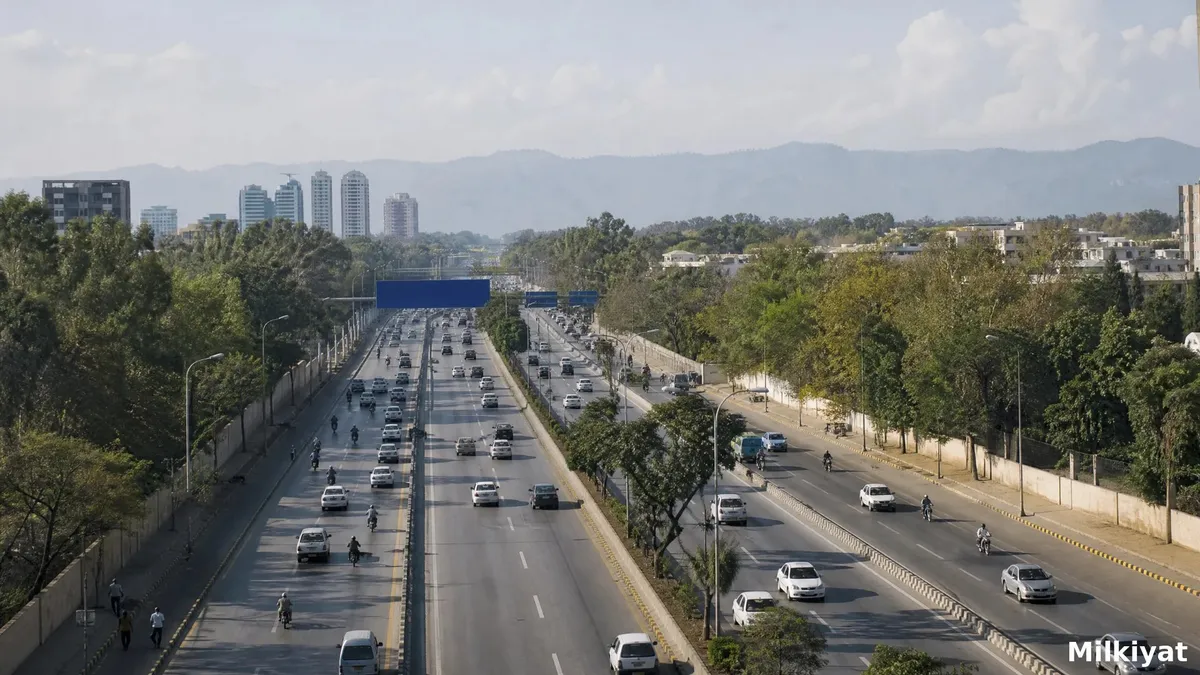
If proximity to good infrastructure explained property prices on its own, G-11 and F-11 would trade much closer together. Both sit along the same broad Kashmir Highway corridor, and both are positioned to benefit from the same wave of CDA road investment.
G-11 is a fully developed CDA sector along Kashmir Highway, known for its busy Markaz, mix of family houses and apartment towers, and strong rental demand from students, professionals, and federal employees. It offers much of the connectivity of its F-series neighbours at a noticeably lower entry price, which is the heart of its appeal for value-focused buyers. For a broader look at the sector's layout, sub-sectors, amenities, and market character, see our page of G-11 sector essentials.
This article examines why F-11 continues to trade at a premium over G-11 despite sharing the same broad road network, looking at planning history, infrastructure maturity, commercial character, and buyer profiles. Since the gap varies from street to street and property to property, comparing real asking prices is the clearest way to see it. Browsing current G-11 property listings lets you set G-11's prices against comparable homes in F-11.
Yet in Islamabad's property market, F-11 and G-11 are a striking example of how two relatively close sectors can develop very different price profiles. The corridor is shared. The connectivity is comparable. But the price tag tells a very different story.
That gap is not accidental. It reflects differences in commercial maturity, housing stock, buyer profiles, rental demand, and the lifestyle each sector has built over time. F-11 commands a premium for what is already established; G-11 competes on accessibility, activity, and relative value.
So, what exactly is driving the gap and does F-11’s premium still make sense?
| Factor | F-11 | G-11 |
|---|---|---|
| Market Position | Established, premium sector | Established, value-oriented market |
| Property Prices | Higher entry prices | Generally more accessible |
| Commercial Activity | Mature and high-demand | Active, with room for further growth |
| Rental Demand | Strong, supported by premium location and amenities | Strong, supported by relatively accessible rents |
| Housing Stock | Mix of older and upgraded properties with premium options | Broader mix with comparatively affordable choices |
| Buyer Profile | Buyers prioritising established lifestyle and prestige | Buyers seeking connectivity, convenience and value |
| Investment Appeal | Established demand and rental income potential | Lower entry cost with longer-term growth potential |
| Key Advantage | Premium positioning and mature amenities | Relative value and growth potential |
The numbers alone, however, do not tell the whole story. To understand why F-11 consistently commands a premium over G-11, we need to look beyond location at the commercial identity, housing stock, rental demand, and buyer behaviour that have shaped both markets.
The Shared Infrastructure Is Real
This isn't a hypothetical overlap. In 2026, CDA announced a series of major road projects affecting Islamabad's wider northern and eastern road network, including the Kashmir Chowk underpass, improvements to the Islamabad Expressway service road, and the planned 11th Avenue. The 11th Avenue project specifically concerns the G-11/G-12 boundary, while the wider connectivity upgrades improve movement across the road network serving both G-11 and F-11.
That distinction matters. The two sectors do not receive identical infrastructure projects, but they operate within the same broader northern Islamabad connectivity network. For property buyers, the question is therefore not simply who gets the road upgrade but how much that improved access changes the underlying value proposition of each sector.
G-11 vs F-11 at a Glance
| Factor | G-11 | F-11 |
|---|---|---|
| Sector classification | G-series residential sector | F-series residential sector |
| Development history | Developed later than F-11 | One of the earlier-established sectors in this comparison |
| Infrastructure maturity | Established but relatively newer | Longer-established roads, utilities and landscaping |
| Commercial character | Practical, daily-needs oriented | More established and premium-positioned |
| Price position | Lower entry point | Sustained premium over G-11 |
| Best fit | Buyers prioritising value and connectivity | Buyers prioritising established market position and premium location |
So Why Does F-11 Cost So Much More?
The answer reaches back to Islamabad's original planning framework, not just this decade's road-building. The city's sector system created different development patterns across its residential areas, and F-11 emerged as one of the capital's more established and higher-value residential markets. Over time, larger homes, mature landscaping, established amenities and proximity to key parts of the city helped reinforce that premium.
G-11 developed with a different market profile. Its location provides strong connectivity and access to established commercial activity, but its relative affordability has remained an important part of its appeal. larger average plot sizes, more generous green space allocations, and closer proximity to the Margalla Hills and the diplomatic core. G-series sectors, running further west and south, were designed to house a broader, more budget-conscious population, with denser plotting and more compact commercial Marakiz built around daily-needs shopping rather than destination retail.
That original classification has proven remarkably durable. Decades of subsequent development, road-building, and commercial growth haven't closed the gap, if anything, each sector has simply built more of what it was designed to be. Instead of converging, the two sectors developed distinct market identities. F-11 accumulated the advantages of an established premium residential market, while G-11 developed a stronger value proposition around accessibility, everyday commerce and comparatively lower entry prices.
F-11's Head Start Compounds the Gap
There's a second, more specific factor: timing. Dawn's own reporting from 2009, covering the start of development work in sectors I-11 and I-12, noted a telling detail, F-11 was, at that point, the last sector in Islamabad to be completely developed, a status it had held for roughly two decades. That means F-11's infrastructure, landscaping, and tree cover had two decades to mature before G-11, launched later, as part of the master plan's later 1990s expansion, even broke ground. In a city where mature trees, settled roads, and established utility networks are themselves a visible marker of quality, that head start compounds the classification gap rather than narrowing it over time.
What This Means for Buyers and Investors
-
That history matters because infrastructure maturity is itself a form of market value. Established roads, mature landscaping, tree cover, utilities and a settled residential community can influence how buyers perceive a sector and how much of a premium they are willing to pay for it.each sector reinforces its original design tier rather than converging with it.
-
If your priority is long-term capital value and prestige, If your priority is long-term capital value and an established premium market, F-11's maturity and market positioning provide a stronger case for paying a premium.
-
If your priority is value relative to connectivity,If your priority is value relative to connectivity, G-11 offers a lower entry point within Islamabad's wider northern road network, while still benefiting from ongoing infrastructure improvements., the corridor investment benefits you too, even without F-11's classification premium.
-
Track CDA's road projects as they move from planning and tendering toward completion. Actual delivery, travel time improvements and changes in surrounding commercial activity will matter more to property values than announcements alone.completed connectivity upgrades tend to support price stability in both sectors, even if they don't close the gap between them.
-
For a related look at how sector positioning and infrastructure history shape Islamabad's market, see Milkiyat's G-10 vs G-11 Markaz commercial performance comparison and F-10 vs F-11 price-per-marla analysis.
Read Next on Milkiyat.com
F-10 vs F-11 Islamabad: The Price-Per-Marla Gap and What Explains It G-10 vs G-11 Islamabad: Markaz Commercial Performance and Shop Rates F-11 vs E-11 Islamabad: CDA Freehold vs Cooperative Society Title Browse Plots for Sale in Islamabad
Sources
Dawn, CDA plans three major road projects in Islamabad Dawn, CDA to revive 10th Avenue, build 11th Avenue Dawn, Development of I-11, I-12 begins (F-11 completion history)