Guide
G-7/2 House Prices: Sizes, Sub-Blocks, Storeys and What to Inspect

Real Estate Analyst
10 min read
This guide covers houses in the G-7/2 sub-sector of Islamabad. It is not a guide to flats or to the other G-7 sub-sectors, which are covered separately.
Overview
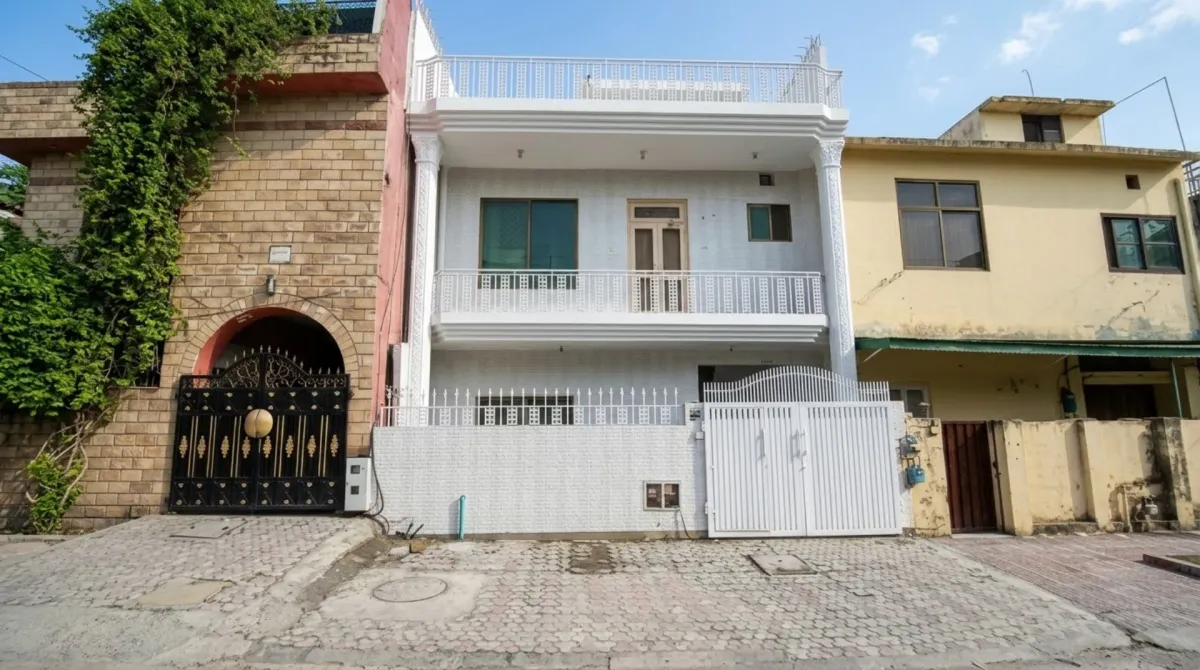
G-7/2 is one of the four sub-sectors of G-7, an established CDA sector where private houses sit among government quarters, flats, and a few local markets. There is no single price here, because the same plot can be worth very different amounts depending on the street, the building and the paperwork. This guide explains how G-7/2 is laid out, what the plot sizes mean in square feet and square yards, how many storeys a house can usually have, how to build a price from the land and the building and what to inspect before you pay. You can see what is currently offered on the houses for sale in G-7/2 page, and the guide helps you judge it.
If you want the wider picture of the sector first, including its location, markets and schools, start with our G-7 Islamabad area guide, and then return here to compare houses.
What G-7/2 Is Like
CDA names a sector with a letter and a number and divides it into sub-sectors written after a slash, so G-7/2 is the second sub-sector of G-7. A further number after a hyphen, such as G-7/2-4, points to a sub-block inside it. We did not find a published sub-block map, so treat a sub-block name in an advertisement as a pointer and not as proof, and always ask for the CDA plot number and the street name.
Sitara Market is the best known local market in G-7/2, so the streets near it have the convenience of shops and food close by and also the noise, traffic and parking pressure that goes with a market. A house on a quiet inner street and a house beside the market road are in the same sub-sector and can still be very different homes, which is why the street matters as much as the plot size.
A large share of G-7 was planned as housing for government employees. Those quarters are allotted to officers and are not sold on the open market, so they cannot be bought. The properties that change hands are private houses on private plots and flats in buildings sold to private owners, and these are priced differently. A flat is priced by the square foot, while a house is priced from its plot. Our G-7 sector page shows all of G-7 if you are comparing sub-sectors.
Plot Sizes in G-7/2: Marla, Square Feet and Square Yards
In CDA sectors one marla is 25 square yards, or 225 square feet, and a kanal is 20 marla, or 500 square yards. Houses are advertised by marla, by square feet and by dimension, and the three do not always agree, so convert everything to square yards before you compare. Private houses in G-7 are mostly on small plots, and the sizes below are the ones to know.
| Plot | Square feet | Square yards | Marla |
|---|---|---|---|
| 25x50 feet | 1,250 | 138.9 | About 5.6 |
| 5 marla | 1,125 | 125 | 5 |
| 10 marla | 2,250 | 250 | 10 |
| 1 kanal | 4,500 | 500 | 20 |
These are our arithmetic, at 25 square yards to a marla and 9 square feet to a square yard. A plot called 5 marla is exactly 125 square yards, while a 25x50 plot is about 14 square yards larger, and both are often advertised as 5 marla. Some web articles use 151.25 square yards for a 5 marla plot, which is the 272 square foot marla used elsewhere, so ask for the area printed on the CDA allotment letter and not the label.
How Many Storeys Can a G-7/2 House Have
The number of floors comes from CDA's building control regulations for residential sectors, which set the floors, coverage, setbacks and basement by plot size. We could not read the official schedule, and the published summaries we found differ in some details, including the name and date of the current schedule, so use this section as a guide to the questions to ask and not as the rule.
| Point | What published summaries report | Check with CDA |
|---|---|---|
| Floors | Ground and first floor, with a mumty on the roof | Whether a full third floor is allowed for your plot size |
| Basement | Permitted within the setbacks | How large and for what use |
| Setbacks | About 5 feet front and rear for plots up to 150 square yards | Side spaces and the figure for your size |
| Mumty | Limited to a fraction of the ground floor | The exact fraction in the current schedule |
The summaries agree that a full third habitable floor is not allowed on a standard residential plot, and a 5 marla plot of 125 square yards sits in the smaller category. Because the figures come from secondary summaries, ask CDA for the building control schedule that applies to your plot size and compare it with the approved plan of the house. A house that has more floors than its approval allows can cause problems at transfer or resale, and it is the first thing to check in an older building.
How to Price a G-7/2 House
A house price has two parts, the land and the building, and an asking price rarely says how much of each. This guide gives a method and not a price list.
- Convert the plot to square yards, using the table above.
- Find a land rate for the same sub-sector and size, from sales and not only from asks, and multiply it by the area.
- Add a value for the building, using its age and finish.
- Compare the total with the ask, and treat the gap as position, condition and the seller's margin.
For the building there is an official yardstick. FBR's valuation rates for Islamabad, in the revision we read, value a constructed building in the older sectors at Rs2,500 a square foot if it is up to five years old and Rs1,200 if it is older. That is a tax valuation and not a market price, and the rates change, so check the current notification. It shows how a building is treated: on 1,000 square feet of covered area it is about Rs25 lakh for a recent house and about Rs12 lakh for an older one, our arithmetic. In an old house, most of the price is the land.
Buyers who will rebuild are buying land and should price the old structure close to nothing.
What Moves the Price from Street to Street
Two houses on identical plots rarely ask the same. The table sets out what buyers usually weigh and which way each factor tends to push the price.
| Factor | Usually raises the price | Usually lowers the price |
|---|---|---|
| Position | Corner plot, wide road, near a park | Narrow inner street, beside the busy market road |
| Building | Newer construction, approved extra floor, basement, good finish | Old structure that needs rebuilding |
| Plot | Regular shape, full legal dimensions | Odd shape, plot smaller than its label |
| Papers | Clean allotment, transfer papers and no dues | Missing papers, unpaid charges, unclear ownership |
| Use | Ready to live in, or let in portions | Needs repairs before anyone can move in |
A seller's ask is an opening position, so compare three houses of the same size on similar streets before you make an offer.
What to Inspect Before You Pay
Walk through the house with the approved plan in hand. Look for damp on the walls and the roof, check the wiring, the gas lines and the water and drainage, and look for any extension, extra floor or basement that is not on the plan. Check the plot boundaries against the dimensions in the papers, and ask neighbours about the street, the water supply and whether the area has had drainage problems. Visit at different times of day, since a street quiet at noon can be crowded in the evening.
Transfer is the other half. CDA's board cut its transfer fee from 3 percent to 1 percent of the property's value, according to a press report, which did not say which value the fee is charged on. On a Rs5 crore property, 1 percent would be Rs5 lakh, our arithmetic. Other charges are separate, so confirm the current schedule with CDA before you agree a price.
Renting in G-7/2
If you are not ready to buy, look at the houses for rent in G-7/2, and use the yield test to compare rent with price. Divide a year's rent by the price. A low figure means you are paying for capital growth, and a high one means the price may be low for a reason.
Six Checks Before You Pay
- Confirm the plot number, sub-sector, street and dimensions in writing and convert them to square yards.
- Get the CDA allotment and transfer papers and check that dues are paid.
- Match the floors and any basement to the approved plan.
- Compare three houses of the same size on similar streets.
- Inspect the structure, the services and the damp, or have an engineer do so.
- Pay only by bank transfer to the account named in the transfer papers, and keep every receipt.
A registered agent can show you recent sales and not only asking prices, and you can find one through the verified agents in G-7.
FAQs
How much is a house in G-7/2?
It depends on the street, the plot size and the building. Convert the plot to square yards, divide the asking price by it and compare houses of the same size.
How many storeys can a house in G-7/2 have?
Published summaries of CDA's rules report a ground floor, a first floor and a mumty, with a basement allowed. Confirm the schedule for your plot size with CDA.
How many square yards is a 5 marla plot?
It is 125 square yards in a CDA sector, and a 25x50 plot is 138.9 square yards, our calculations.
Can I buy a government quarter in G-7/2?
No. Government quarters are allotted to officers and are not sold on the open market.
What does G-7/2-4 mean?
It points to a sub-block inside G-7/2, but no published sub-block map was found, so confirm the plot number and street.
Disclaimer: This guide by Milkiyat.com is for general information only. Prices, rules, fees and sub-sector details can change without notice. Before any transaction, readers should independently verify ownership, documents, CDA allotment and transfer, dues and the plot size with the relevant authorities and qualified professionals. No guarantee is given about any property, and this guide is not legal or financial advice.