News
Gilgit-Baltistan Launches €54m Project to Build 700 Climate-Resilient Homes and Upgrade 3,000 Houses

By Mariam Khan
Real Estate Analyst
4 min read
The Government of Gilgit-Baltistan, together with the European Union, Agence Française de Développement, and the Aga Khan Foundation, has formally launched a €54.24 million, roughly Rs17.2 billion, Rural Development and Climate Resilience Project. The programme is expected to benefit more than 325,600 residents across the region, a substantial share of Gilgit-Baltistan's population given the area's relatively small overall size.
The Housing and Infrastructure Scope Is Unusually Detailed
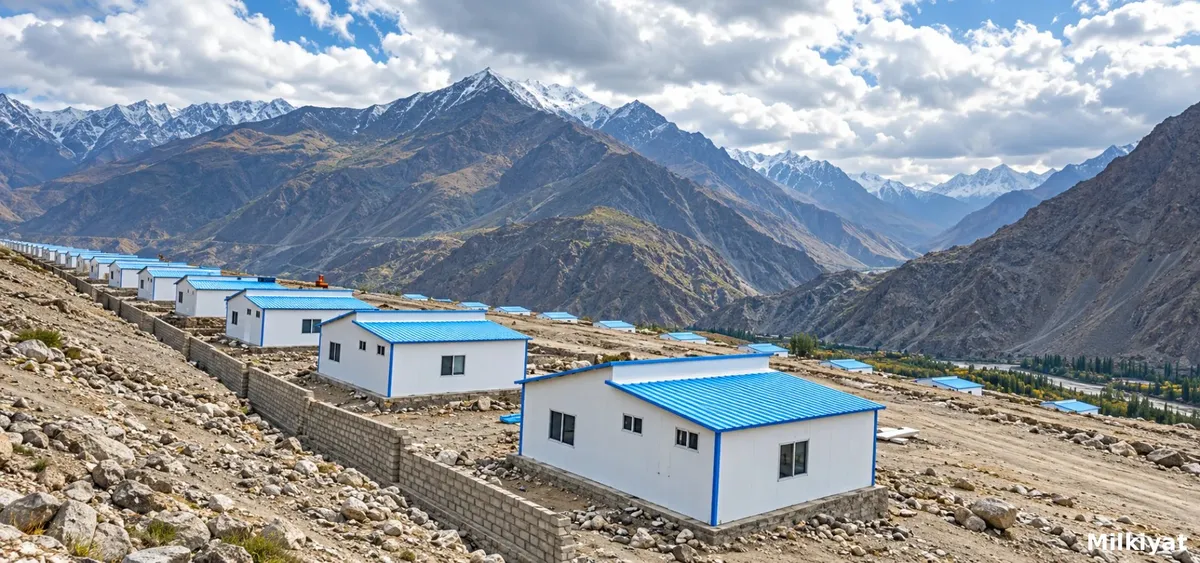
This programme carries a particularly concrete housing and infrastructure component rather than a general climate resilience mandate. It includes 216 water supply and sanitation schemes, climate vulnerability assessments across all 110 union councils in the region, micro hydropower and clean energy systems providing roughly 1.2 to 1.3 MW of capacity, the green retrofitting of 3,000 existing homes, and the construction of 700 new climate resilient, energy efficient houses. Covering nearly the entire region's union councils with vulnerability assessments, alongside a specific, numbered housing construction and retrofit target, gives this programme a level of granularity that suggests genuine implementation planning rather than a broad framework announcement.
Why This Builds on an Earlier Financing Agreement
This launch is not the first formal step in this partnership. Pakistan and France signed a separate €35.6 million financing agreement specifically for the Gilgit-Baltistan rural development project roughly six weeks before this formal launch, meaning the current announcement represents the operational start of a partnership whose financing had already been substantially secured rather than a first announcement of intent. This sequencing, financing agreement first, formal launch afterward, is a reasonable basis for treating this programme as further along toward actual implementation than an initial announcement alone would suggest.
Why Retrofitting 3,000 Homes Matters as Much as Building 700 New Ones
The inclusion of green retrofitting for 3,000 existing homes alongside constructing 700 new climate resilient houses is a meaningful design choice, since retrofitting reaches a substantially larger number of households more quickly and at lower cost per household than new construction alone would. For a region highly exposed to floods and landslides, upgrading the resilience of existing housing stock at scale, rather than concentrating resources entirely on a smaller number of new builds, addresses the climate vulnerability of a much broader share of the existing population in the near term.
Why This Could Set a Model Beyond Gilgit-Baltistan
Given the scale and detail of this programme, spanning water infrastructure, energy systems, and both new construction and retrofit housing, it has real potential to function as a working model for climate resilient construction standards that could inform similar efforts elsewhere in Pakistan, particularly in other regions exposed to flooding and landslide risk. How well this programme performs in practice, and what specific building standards and materials prove effective for the new and retrofitted homes, will be worth tracking as a reference point for climate resilient housing policy more broadly.
What This Means for Housing and Construction in the Region
For the construction sector within Gilgit-Baltistan specifically, a programme of this scale represents a meaningful, internationally financed source of demand for building materials, skilled labour, and contracting work over the life of the project, concentrated in water infrastructure, energy systems, and residential construction and retrofitting. Given the substantial population this programme is intended to benefit and the level of detail already specified across its various components, this is a genuinely significant development story for the region rather than a symbolic climate announcement, and its implementation progress over the coming months and years is worth tracking closely.