News
Government Plans Edible Oil Industrial City at Port Qasim

By Mariam Khan
Real Estate Analyst
3 min read
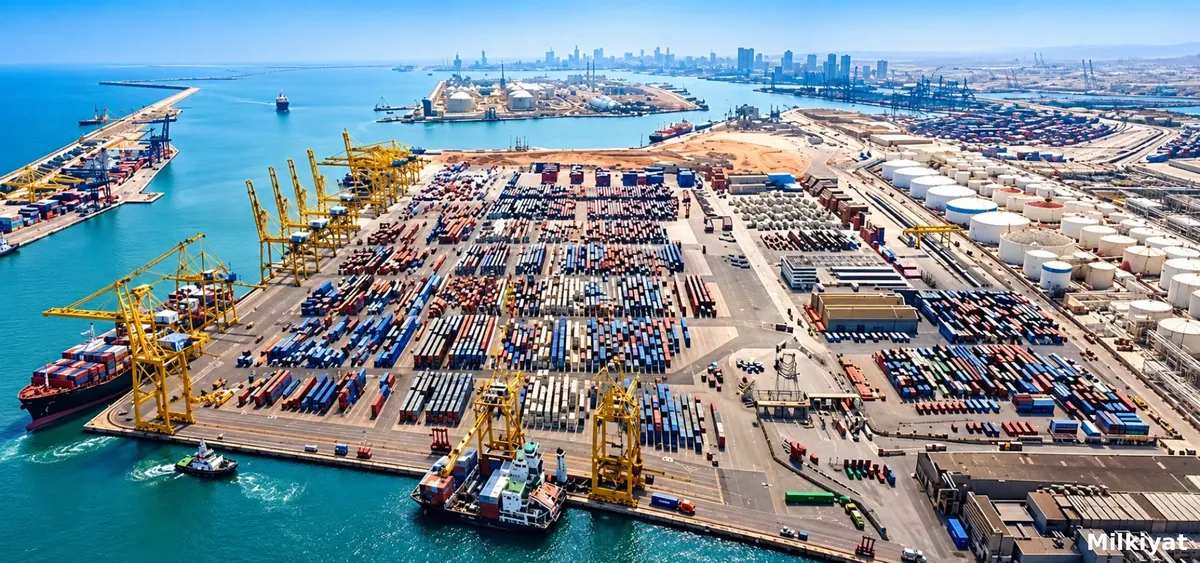
The federal government intends to establish an Edible Oil Industrial City at Port Qasim, according to a report published by Business Recorder on September 25, 2026. Federal Maritime Affairs Minister Muhammad Junaid Anwar Chaudhry said the government intends to develop industrial and commercial zones at the port and allot land to investors presenting viable business plans. The government has also taken up existing land related issues at Port Qasim and intends to resolve them as development progresses.
This Adds a Third Dedicated Industrial Cluster to the Same Corridor
The Edible Oil Industrial City joins two other dedicated Port Qasim clusters already announced this year, a 150 acre automotive processing zone and a 400 acre garments city, both structured around Port Qasim Authority provided infrastructure paired with private manufacturing investment. Taken together, these three announcements point to a deliberate, sector by sector industrial zoning strategy for the Port Qasim corridor rather than a single, general purpose industrial expansion, with edible oil processing now added alongside automotive and apparel as a named priority sector.
Why Edible Oil Processing Specifically Fits a Port Location
Edible oil manufacturing in Pakistan relies heavily on imported crude palm oil and other feedstocks brought in by sea, making direct port access a significant logistical advantage for processing facilities compared to inland plants that require additional transport of bulk liquid cargo after unloading. Locating this industrial city directly at Port Qasim would let edible oil processors receive imported feedstock, refine and package it, and distribute finished product with fewer intermediate handling steps than the current model many processors rely on today.
Why Resolving Existing Land Issues Is a Meaningful Precondition
The minister's specific mention that the government has taken up existing land related issues at Port Qasim and intends to resolve them as development progresses is a notable acknowledgment that unresolved land matters could otherwise constrain this and other announced zones. This is a genuinely useful detail for investors to weigh, since a plan to actively resolve land issues alongside development is a more credible signal than an announcement that ignores this kind of underlying friction, though it also confirms that some land related uncertainty currently exists within the corridor.
Why This Remains an Early Stage Announcement Rather Than a Tendered Project
Unlike the garments city, which already has a confirmed anchor tenant and detailed utility capacity figures, or the automotive zone, which has a specific 264 unit layout, the Edible Oil Industrial City has so far been described only in terms of the government's intent to develop it and allot land to investors with viable business plans. This places it at an earlier stage of development than its two sister projects, and investors should treat it accordingly, watching for a specific acreage figure, plot allocation process, and infrastructure commitment before treating this as a bookable opportunity.
What This Means for Industrial and Commercial Land Around Port Qasim
Three named industrial clusters within the same corridor, automotive, apparel, and now edible oil processing, collectively point to sustained and broadening demand for industrial plots, warehousing, and supporting commercial and logistics property around Port Qasim over the coming years. Investors and businesses evaluating industrial land near the port should continue tracking each of these three announcements separately given their differing stages of development, while recognising that this accumulating pattern of sector specific zoning is likely to keep raising the profile of the broader Port Qasim industrial corridor as a whole.