Blog
Has Pakistan’s Property Market Actually Crashed? A Complete Investigative Report

Real Estate Analyst
Updated 6 min read
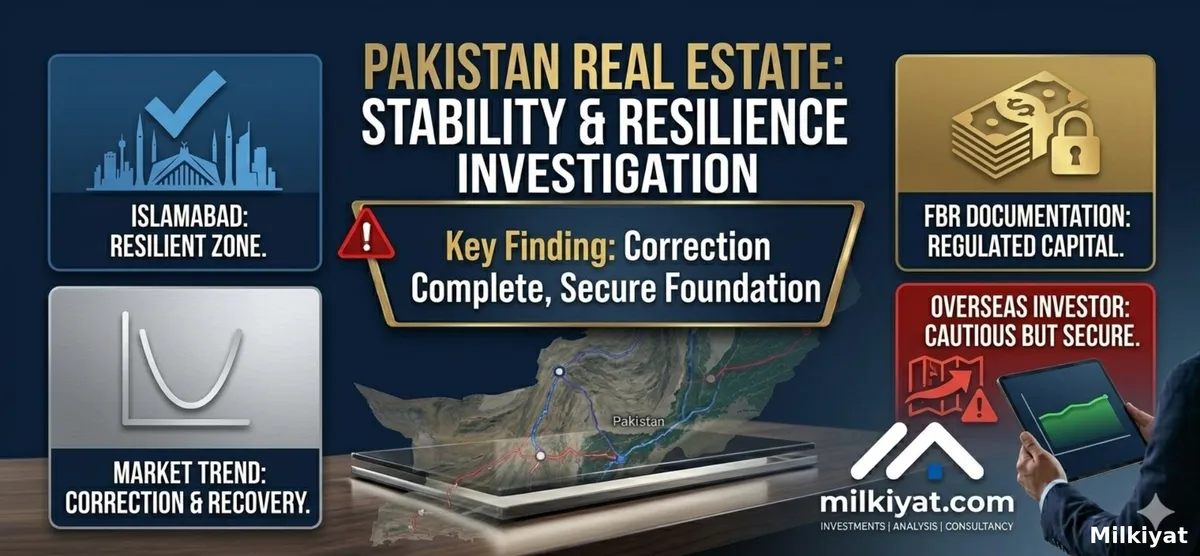
Pakistan’s real estate market has been one of the most intensely debated economic sectors in recent years. Investors, overseas Pakistanis, developers, and local homebuyers are all asking the same pressing question: “Has Pakistan’s property market actually crashed?” The true answer is more nuanced than a simple yes or no. While transaction volumes have plummeted and investor sentiment has weakened across major cities, the broader market has not collapsed in the traditional sense. Instead, Pakistan’s property sector is undergoing a major correction and structural transition toward a more documented economy.
What Does a "Real Estate Crash" Mean in Pakistan's Context?
In global economics, a real estate crash typically involves a massive, sudden collapse in asset prices, widespread bank defaults, forced foreclosures, and severe oversupply. Pakistan's current property market correction looks entirely different. Instead of a financial default crisis, the market is experiencing:
- Severe Liquidity Shortages: Capital is locked up or sitting on the sidelines due to alternative high-yield assets.
- Reduced Transaction Volumes: A sharp drop in active buyers and sellers, making properties harder to flip.
- Diminished Speculative Trading: The sudden departure of short-term traders who drove artificial price bubbles. Despite lower trading volumes, prime real estate developments in major hubs like Islamabad, Lahore, and Karachi have preserved long-term value. Data from major property portals like Zameen shows that premium sectors have held their baseline pricing relatively stable, resisting a free-fall collapse.
6 Core Reasons Behind the Pakistan Property Market Slowdown
The current real estate slowdown is driven by structural economic shifts and tighter regulatory frameworks rather than a simple drop in demand.
1. Aggressive Taxation on Property Transactions
The primary catalyst for the slowdown is the tightening of FBR tax regulations. To meet structural reforms, the government implemented:
- Higher Capital Gains Tax (CGT) percentages on early exits.
- Increased Advance Taxes for both active filers and non-filers.
- Strict documentation and wealth statement requirements. Because Pakistan’s property sector historically relied on undocumented money flows and speculative investment, these compliance pressures have effectively drained artificial trading liquidity from the market.
2. Hyperinflation and Tight Monetary Policy
Record-high inflation has crushed domestic purchasing power. With the State Bank of Pakistan maintaining high interest rates to manage macroeconomic risks, consumer capital has shifted away from real estate. Middle-class buyers face reduced savings, making home affordability and apartment purchases highly secondary to basic living costs.
3. Skyrocketing Construction Material Costs
The rapid depreciation of the Pakistani Rupee has triggered immense supply-side shocks for developers.
| Construction Material | Cost Drivers | Impact on Projects |
|---|---|---|
| Steel Rebar | Local manufacturing costs & energy tariffs | Higher structural cost per square foot |
| Cement & Concrete | Fuel prices & high domestic taxation | Increased baseline cost for grey structures |
| Imported Finishes | Currency devaluations & luxury duties | Severe delivery delays in premium projects |
| These hyper-inflated inputs have forced many individual buyers to delay their building timelines and squeezed developers' profit margins. |
4. The Decline of Speculative "File Trading"
Between 2016 and 2021, the market was fueled by a speculative "file culture," where short-term investors traded un-allocated plot files purely for quick profits (flipping) rather than real utility. With higher trading taxes and a lack of fresh liquidity, this speculative cycle has completely broken. Real estate is returning to an asset class judged by real development rather than marketing hype.
5. Macro-Political Uncertainty
Real estate markets thrive on stability, regulatory predictability, and clear long-term visibility. Continual shifts in political and economic policies have induced investor hesitation, leading to localized capital flight and delayed corporate commercial investments.
6. Cautious Sentiment Among Overseas Pakistani Investors
Overseas Pakistanis have traditionally been the bedrock of premium property markets like DHA and Bahria Town. However, high currency volatility and long delays in delivery from unregulated housing schemes have made overseas buyers cautious. Many have temporarily shifted their capital portfolios to more transparent, stable regional markets like Dubai and the wider UAE real estate sector.
Why Islamabad's Real Estate Market Remains Highly Resilient
While mid-tier projects across the country have stalled, the federal capital’s property market continues to exhibit strong baseline resilience.
- Major Infrastructure Triggers: High-profile connectivity projects—including the Rawalpindi Ring Road, the Margalla Avenue link, and extensive expansions along the Islamabad Expressway and the CPEC Airport Corridor—keep unlocking genuine long-term value for surrounding developments.
- Limited Premium Supply: The Capital Development Authority (CDA) maintains strict land zoning laws. This restricted supply of premium, legally secure residential sectors ensures that value stays stable over time.
- Strong End-User Preferences: Islamabad remains the top choice for retiring overseas Pakistanis due to its superior urban masterplanning, security, lifestyle infrastructure, and higher overall legal transparency.
Which Property Sectors Suffered the Most Serious Corrections?
The real estate correction has hit unevenly, with non-productive and poorly regulated assets bearing the brunt of the downturn.
Commercial Real Estate Stagnation
Commercial plazas have slowed significantly. Retail spending cuts and corporate consolidation have lowered the demand for new office layouts and commercial storefronts, heavily affecting uncompleted commercial centers.
Unapproved and Illegal Housing Schemes
Societies lacking clear regulatory approvals from administrative bodies (such as the CDA, RDA, or LDA) have seen massive buyer distrust. Investors are aggressively liquidating high-risk positions, shifting capital solely into approved, possession-ready schemes.
Hype-Driven, Mid-Tier Projects
Projects built entirely on aggressive marketing campaigns without solid infrastructure progress on the ground have suffered major liquidity failures. In today's market, buyers completely prioritize tangible development over digital renderings.
Is the Market Recovering? What Smart Investors Are Doing
The era of effortless, short-term speculative gains from property flipping is over. Pakistan's real estate ecosystem is transitioning into a mature, utility-focused market driven by legal compliance and actual development. Recent corrections in FBR valuation rates across selected urban sectors have helped lower transaction barriers, bringing genuine buyers back to negotiation tables. Experienced investors are now focusing their capital on specific value-driven criteria:
The 2026 Investment Blueprint: Maximum emphasis is being placed on CDA-approved, possession-ready residential plots, high-yielding commercial assets with verified tenants, and infrastructure-backed growth corridors showing actual machinery on-site.
Frequently Asked Questions (FAQs)
Has Pakistan's real estate market crashed completely?
No. The market has gone through a serious liquidity correction and a drop in transaction volumes, but asset values in premium, legally secure zones remain stable.
Why are property prices down across Pakistan?
The slowdown is the direct result of stricter FBR property taxes, hyperinflation reducing local purchasing power, expensive construction materials, and a crackdown on speculative file trading.
Which city offers the safest real estate investment option?
Islamabad continues to lead market resilience due to ongoing major infrastructure expansions (like the Ring Road) and robust investment demand from overseas Pakistanis.
Is property still a viable long-term investment in Pakistan?
Yes, but the strategy must pivot away from short-term file trading. Sustainable returns are now found in developed, legally approved projects that offer long-term capital appreciation and immediate rental yields.