News
Islamabad Expressway Expansion: The 5 Ultimate Profit Zones for 2026

By Bibi Masooma
Real Estate AnalystVerified author
5 min read
Executive Summary
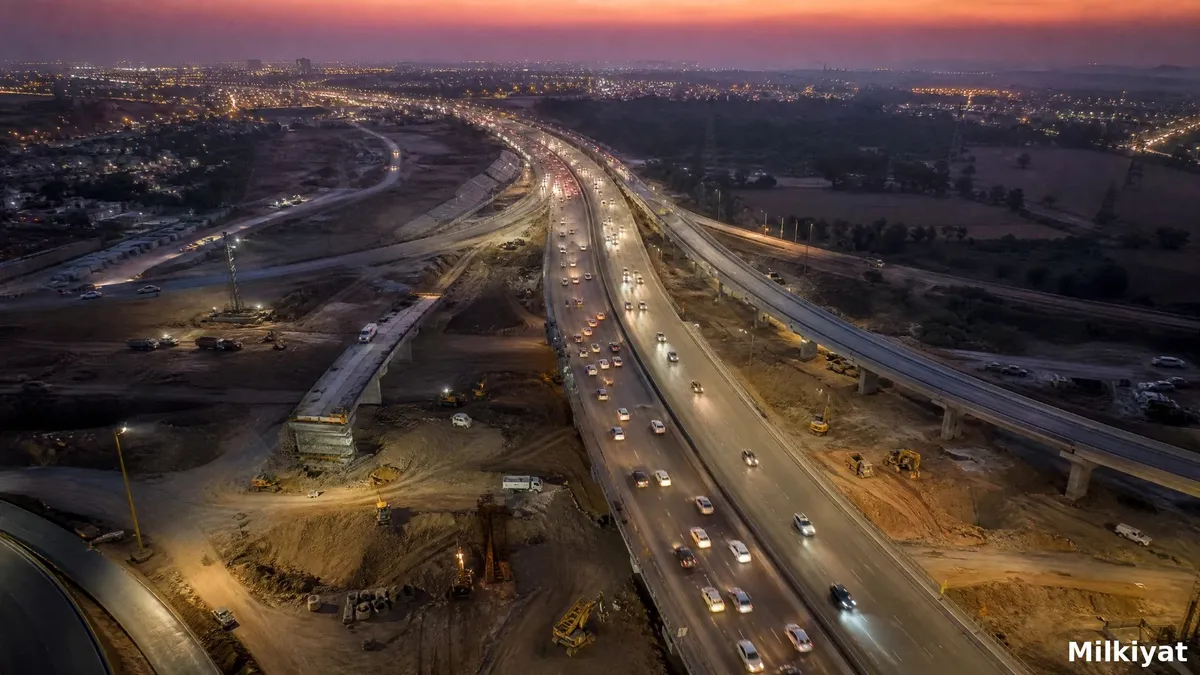
Islamabad’s southern gateway is undergoing a radical transformation. The Islamabad Expressway Signal-Free Corridor, a massive infrastructure undertaking, is entering its final stages of rehabilitation and widening from Koral to Rawat. With a total project length of 24 kilometres and a multi-billion rupee budget, this corridor is no longer just a transit route—it is the capital's most lucrative real estate artery. As built-up land along this corridor has surged by over 190% in the last decade, the expansion is now creating "Profit Zones" where property valuations are expected to outperform the broader market by significant margins.
The 5 Ultimate Profit Zones
Based on recent Milkiyat Infrastructure Analysis and government development schedules, five specific zones along the Expressway have emerged as the primary targets for institutional capital.
1. Zone 1: The Faizabad-I-8 Corporate Gateway
This zone serves as the bridge between the mature CDA sectors and the expanding south. With the completion of new interchanges, I-8 has transitioned into a secondary corporate hub for Blue Area firms.
- Primary Driver: Proximity to the Srinagar Highway and the main business district.
- Investment Profile: High-yield commercial rentals and premium corporate office spaces.
2. Zone 2: The Sohan & Khanna Commercial Strip
Previously a bottleneck, the widening of the Expressway at Khanna Bridge has unlocked a massive commercial frontage. Retailers are now scrambling to secure visibility along this high-traffic corridor.
- Primary Driver: Massive daily commuter volume and improved signal-free access.
- Investment Profile: Ground-floor retail and medium-format commercial plazas.
3. Zone 3: The Gulberg Greens & PWD Hub
This is the heart of the luxury suburban expansion. The Gulberg Interchange has already catalyzed a 30-40% price hike in surrounding residential and commercial blocks over the past 18 months.
- Primary Driver: High-end gated community infrastructure and dedicated signal-free entry points.
- Investment Profile: Luxury apartments and large-format shopping malls.
4. Zone 4: The Naval Anchorage & CBR Town Corridor
As the expansion reaches the southern suburban fringe, Naval Anchorage and CBR Town are seeing a rapid population influx. The new service roads are compressing the travel time to Zero Point to under 20 minutes.
- Primary Driver: Improved connectivity for long-distance commuters and high-quality residential living.
- Investment Profile: 10 Marla and 1 Kanal residential plots for long-term capital gain.
5. Zone 5: The Rawat T-Intersection & Logistics Gateway
At the convergence of the Expressway and the GT Road, Rawat is evolving into a logistics and industrial-commercial powerhouse. This is the gateway for all heavy transport entering the capital from the south.
- Primary Driver: The proposed Rawalpindi Ring Road connection and industrial-commercial transition.
- Investment Profile: Warehousing, logistics centers, and large-scale commercial land holdings.
Comparative Investment Potential
| Profit Zone | Primary Asset Class | Expected ROI (12-18 Months) | Liquidity Level |
|---|---|---|---|
| Faizabad-I-8 | Corporate Offices | 15-18% | High |
| Sohan-Khanna | Retail Shops | 20-25% | Medium |
| Gulberg-PWD | Luxury Apartments | 25-30% | High |
| Naval-CBR | Residential Plots | 18-22% | High |
| Rawat Gateway | Logistics/Warehousing | 22-28% | Medium |
Market Dynamics: Why the Expansion Matters
The expansion is solving the single biggest barrier to entry for southern Islamabad: Congestion. By converting the Expressway into a signal-free corridor from Zero Point all the way to the GT Road, the CDA is effectively expanding the city's "habitable core."
As noted in recent Bloom Pakistan Digital Reports, the rehabilitation of the IJP Road and the Expressway widening are working in tandem to streamline the capital's logistics. For investors, this means that "location premium" is shifting away from just the F and G sectors toward the well-connected southern suburbs.
Strategic Risks for Investors
Despite the bullish outlook, sophisticated investors are managing several key risks:
- Development Timelines: While work is officially underway on the Koral to Rawat stretch, administrative delays in bridge construction can impact short-term liquidity.
- Zoning Conversions: The transition from residential to commercial along the Expressway frontage is subject to strict CDA and RDA regulations. Verify all NOCs before investing in "commercial-convertible" land.
- Utility Infrastructure: As population density increases in the southern zones, the pressure on water and electricity infrastructure is rising. Prioritize societies with independent grid stations and water filtration plants.
Conclusion
The Islamabad Expressway expansion is not just a public works project; it is a fundamental reordering of the capital’s real estate hierarchy. The 5 Profit Zones identified in this report represent the most logical destinations for smart capital in 2026. As the final layers of asphalt are laid, the gap between suburban and central property prices will continue to close, rewarding those who positioned themselves early in the expansion’s path.
Resources and References
- Milkiyat.com Insights: Islamabad Infrastructure Projects 2026
- Bloom Pakistan Digital: Islamabad Expressway Widening Update - August 2026
- Capital Development Authority (CDA): Official Project Announcements - December 2025
- The Pakistan Connect: Expressway Real Estate Transformation Analysis
- Preprints.org Research: Urban Sprawl Along the Islamabad Expressway Corridor
- The Express Tribune: Islamabad Expressway Signal-Free Corridor Plans
- Imlaak Real Estate Guide: Pakistan Investment Trends 2025-2026
- Official PML-N Updates: Signal-Free Corridor Layout Plan