News
K-IV Augmentation to Lay 94km of Major Water Pipelines Across Karachi

By Mariam Khan
Real Estate Analyst
3 min read
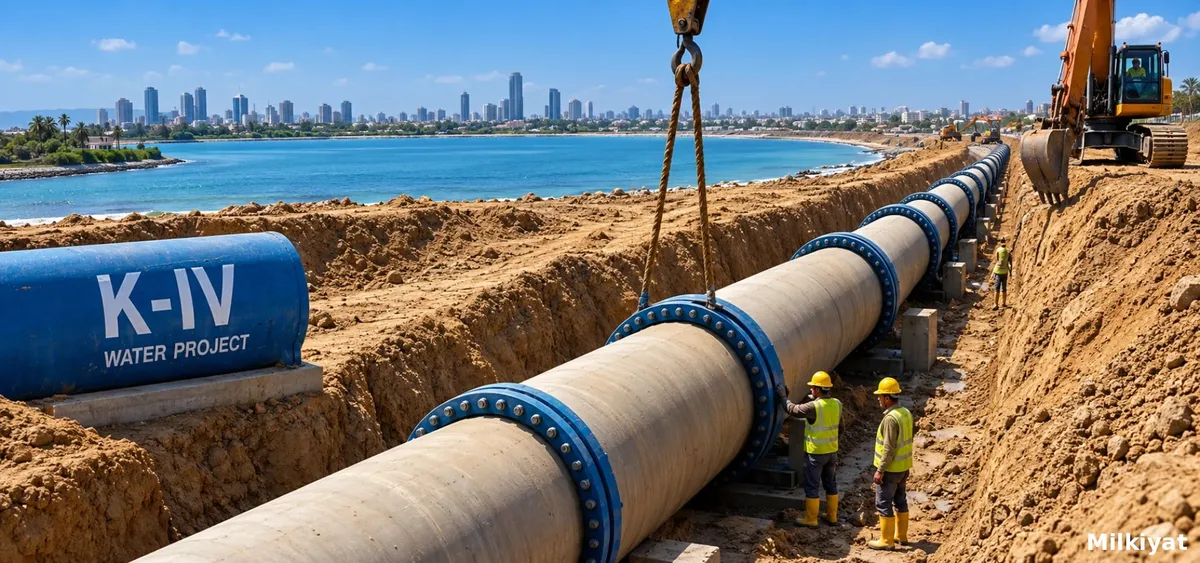
The K-IV water supply augmentation is moving toward construction of a 94 kilometre transmission network through major Karachi corridors, including Northern Bypass–Gulbai, Abul Hasan Isphahani Road, Maskan–Gulshan Chowrangi, Hasan Square–Liaquatabad and Nazimabad–Gulbai. The work is expected to continue for years and could cause substantial traffic disruption during construction.
Why K-IV's Scale Makes This More Than a Routine Utility Project
K-IV is widely regarded as one of Karachi's most consequential infrastructure projects, and a 94 kilometre transmission network spanning five distinct major corridors reflects the genuine scale this augmentation has reached as it approaches construction. This is not a localised pipeline upgrade but a city spanning transmission system intended to address Karachi's chronic water shortages at a structural level, which is why its progress carries weight well beyond the immediate construction corridors themselves.
Why Chronic Water Shortage Is the Real Constraint on Development Capacity
Karachi's persistent water shortages have long functioned as a genuine constraint on residential development, property usability and overall development capacity across the city, not merely an inconvenience for existing residents. A project of K-IV's scale, once completed, would represent a meaningful structural improvement to this constraint, and its progress toward actual construction is a more concrete signal of eventual relief than earlier planning stage announcements have been.
Why the Multi-Year Construction Timeline Demands a Longer-Term View
With construction work expected to continue for years rather than months, this is fundamentally a long duration infrastructure undertaking, and both the water supply benefits and the construction related disruption along affected corridors need to be assessed on a multi year horizon rather than treated as a short term event. This distinguishes K-IV from faster moving infrastructure projects we have tracked elsewhere, where completion timelines measured in months rather than years.
Why the Five Named Corridors Deserve Individual Attention
Each of the five named corridors, Northern Bypass–Gulbai, Abul Hasan Isphahani Road, Maskan–Gulshan Chowrangi, Hasan Square–Liaquatabad and Nazimabad–Gulbai, passes through different residential and commercial contexts across Karachi, meaning the degree of construction disruption and the eventual accessibility and water supply benefit will likely vary meaningfully from corridor to corridor. Property owners and businesses along these specific routes should track their own corridor's construction schedule individually rather than assuming uniform impact across the entire 94 kilometre network.
Why Traffic Disruption Is the Immediate Cost Before Any Long-Term Benefit
Substantial traffic disruption during construction is the immediate, near certain cost that property owners and businesses along these corridors will face well before the water supply benefits of the completed network materialise, and this gap between near term disruption and longer term benefit is an important distinction for anyone operating a business or holding property directly along the affected routes. Commercial property owners and tenants along these corridors in particular should prepare for extended periods of reduced accessibility as work proceeds over the coming years.
What This Means for Property Owners and Businesses Along the Affected Corridors
Property owners, businesses and residents along the Northern Bypass–Gulbai, Abul Hasan Isphahani Road, Maskan–Gulshan Chowrangi, Hasan Square–Liaquatabad and Nazimabad–Gulbai corridors should prepare for a multi year period of construction related traffic disruption as this phase of K-IV moves forward. Longer term, residential and commercial development across Karachi more broadly should benefit from reduced water supply constraints once this transmission network is completed, making K-IV's progress toward actual construction a meaningful structural development worth continuing to track as it advances through the coming years.