News
Karachi Launches 35 MGD Wastewater Treatment Plant to Boost Water Supply

By Mariam Khan
Real Estate Analyst
3 min read
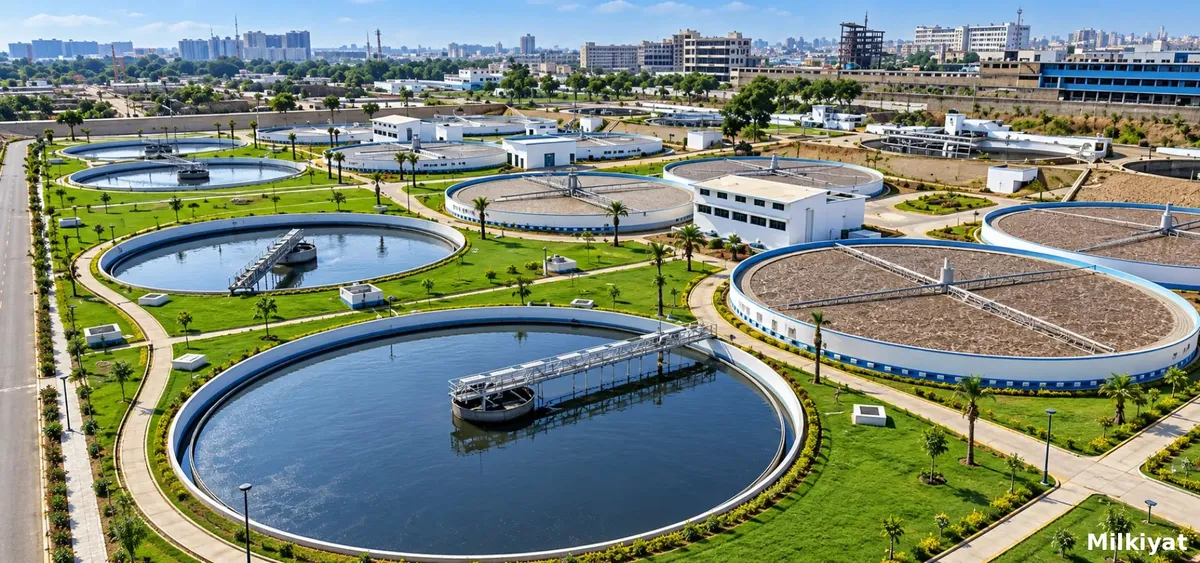
Karachi has launched the Haroonabad Treatment Plant-I, designed initially to supply 35 million gallons per day of treated wastewater to industries. This is expected to free an equivalent volume of freshwater currently consumed by industrial users for diversion toward domestic supply. Sindh officials are positioning the project as part of Karachi's water security and sustainable industrial development strategy.
Why Supplying Industry With Treated Water Is the Core Idea
The plant does not add water to the city directly. It supplies treated wastewater to industrial users, who would stop drawing the same volume of freshwater, which could then be redirected to domestic supply. This is a different mechanism from the upstream source and transmission projects we have tracked separately, such as the K-IV pipeline network and the Kalri Baghar Feeder and Keenjhar Lake improvement, which bring more freshwater into the system. Haroonabad works from the demand side, reducing how much freshwater industry consumes.
Why 35 MGD Is a Meaningful Volume Against Karachi's Shortfall
At 35 million gallons per day, the volume that could be released for domestic use is significant given how chronic Karachi's water shortage is, and the word "initially" in the project description suggests capacity may be expanded later. The benefit depends, however, on industrial users actually switching to treated water and on the released freshwater being physically routed to residential areas, neither of which this announcement confirms.
Why Industrial Estates Stand to Benefit Directly
A dependable treated water supply addresses a constraint on industrial development in Karachi, since access to water affects where industrial estates can expand and how reliably existing ones can operate. Sindh officials framing the project as part of a sustainable industrial development strategy points to this link between water security and industrial land use, which matters for those holding or buying industrial plots.
Why This Is Launch-Stage News, Not Delivered Relief
The report describes the plant as launched, and does not say when the full 35 MGD will be flowing to industrial users or when any freed freshwater will reach households. Residents in water-stressed areas should not expect an immediate change in supply, and readers should look for operational milestones, such as the first industrial connections and measurable reductions in industrial freshwater draw, before treating the benefit as realised.
What This Means for Developers, Industrial Owners and Residents
Developers and investors in Karachi should treat this as another sign that water security is receiving attention across several projects at once, alongside K-IV and its upstream improvements. Industrial estate owners and tenants should watch how treated water is priced and allocated, while residents of water-stressed neighbourhoods should watch for any announced plan to route the freed freshwater to domestic supply, since that is the step that would make this plant matter for housing.