News
Lahore Is Getting Its Largest Ever Wastewater Treatment Plant. Here Is Why That Matters for Property

By Mariam Khan
Real Estate Analyst
4 min read
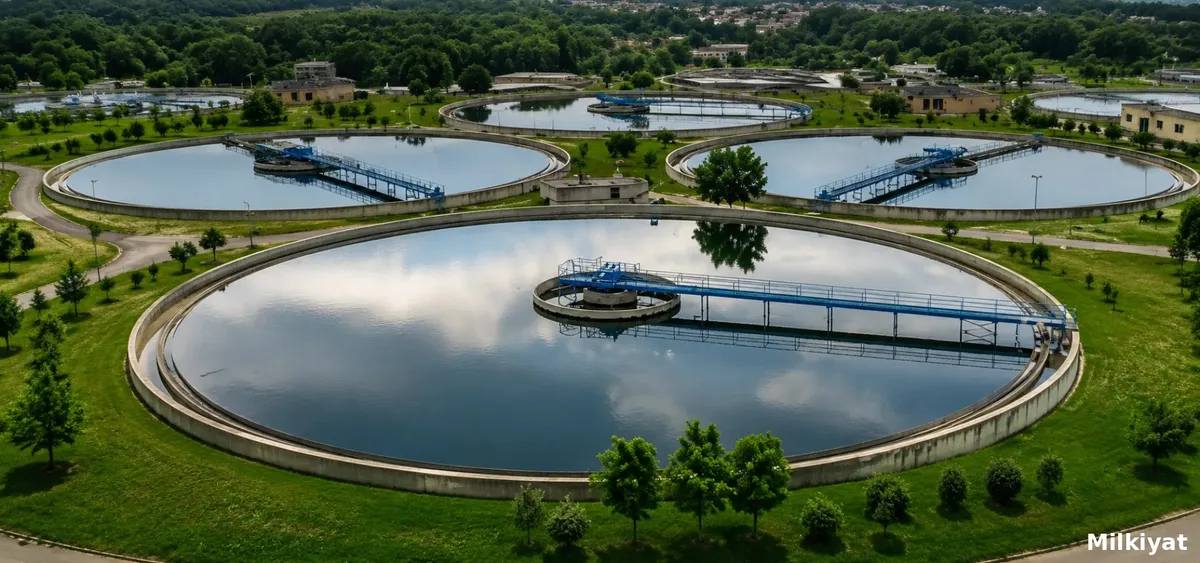
The federal government has cleared funding of roughly fifty six billion rupees for what is being described as Pakistan's largest wastewater treatment facility, to be built in Lahore. With approval secured, the project can now move into the bidding stage, and officials are targeting a formal launch within the next six months. For a city where sewerage capacity has long lagged behind the pace of new construction, this is one of the more consequential infrastructure decisions to reach the approval stage in recent memory.
Lahore's sewerage system has been under sustained strain for years, a pressure that shows up most visibly during the monsoon, when undertreated wastewater and inadequate drainage combine to worsen urban flooding across large parts of the city. The Water and Sanitation Agency in Lahore has, over the past several years, been quietly assembling a pipeline of major treatment and sewer projects, several of them at the trunk sewer and treatment plant level, aimed at closing this gap. A new plant of this scale, once operational, adds meaningful treatment capacity to a system that has historically processed only a fraction of the city's wastewater before it re enters the environment.
Why sewerage infrastructure is a property story, not just a utilities one
It is easy to treat a wastewater treatment announcement as background civic news, unrelated to what happens on the ground in a specific housing society or neighbourhood. In practice, sewerage capacity shapes real estate outcomes in ways that show up gradually but persistently. Areas served by adequate treatment and drainage infrastructure see fewer sewage backups, less groundwater contamination risk, and materially reduced monsoon season flooding compared to areas still relying on overstretched or undertreated systems. Over a multi year horizon, this translates into a genuine difference in how liveable, and how resilient, a given part of the city is, independent of anything a developer's marketing material says about the area.
Large treatment investments also tend to unlock further downstream infrastructure work, since expanded treatment capacity is often a prerequisite for expanding the trunk sewer network that actually connects individual neighbourhoods to that capacity. A single large plant rarely solves a city's sewerage problem on its own, but it is frequently the step that makes the next several years of connected sewer expansion possible.
What this could mean for specific parts of Lahore
The practical benefit of a project like this depends heavily on which parts of the city end up connected to the new capacity, and on what timeline. Areas already served by a functioning trunk sewer network stand to see the most immediate improvement in treatment quality once the new plant comes online, while areas still lacking that connecting infrastructure will need further, separate investment before they see any direct benefit. Buyers and current owners in Lahore's newer developing societies, where sewerage infrastructure is often still being built out alongside residential construction rather than ahead of it, have a specific reason to track how this project's connected network expands over the coming years, since that expansion, not the treatment plant alone, is what will eventually determine whether their own street sees a real change.
A six month runway before anything visible changes
It is worth being clear about the timeline here. Approval of funding and a target launch within six months means this project is entering its bidding and contracting phase, not breaking ground immediately. Large treatment plant projects of this scale typically take years from groundbreaking to full operational capacity, and the connected sewer network expansion that determines a given neighbourhood's actual benefit often follows even further behind the plant itself. Buyers should treat this as a genuinely positive long term signal for Lahore's urban infrastructure trajectory, not as something that changes conditions on the ground in the near term.
The broader pattern
This approval sits within a longer running effort to modernise Lahore's water and wastewater infrastructure, an effort that has, over recent years, moved several large treatment and sewer projects through provincial development approval processes, with financing support in some cases coming from international development institutions alongside domestic funding. Readers wanting to understand what a project of this kind actually involves can review a general explanation of how a wastewater treatment plant works, and the Punjab Planning and Development Board, which regularly publishes updates on major infrastructure schemes moving through provincial approval, is a useful source for tracking how this and related projects progress toward construction over the coming months.