News
LDA Digitises Enforcement Against Illegal Construction and Unauthorised Commercial Use

By Mariam Khan
Real Estate Analyst
5 min read
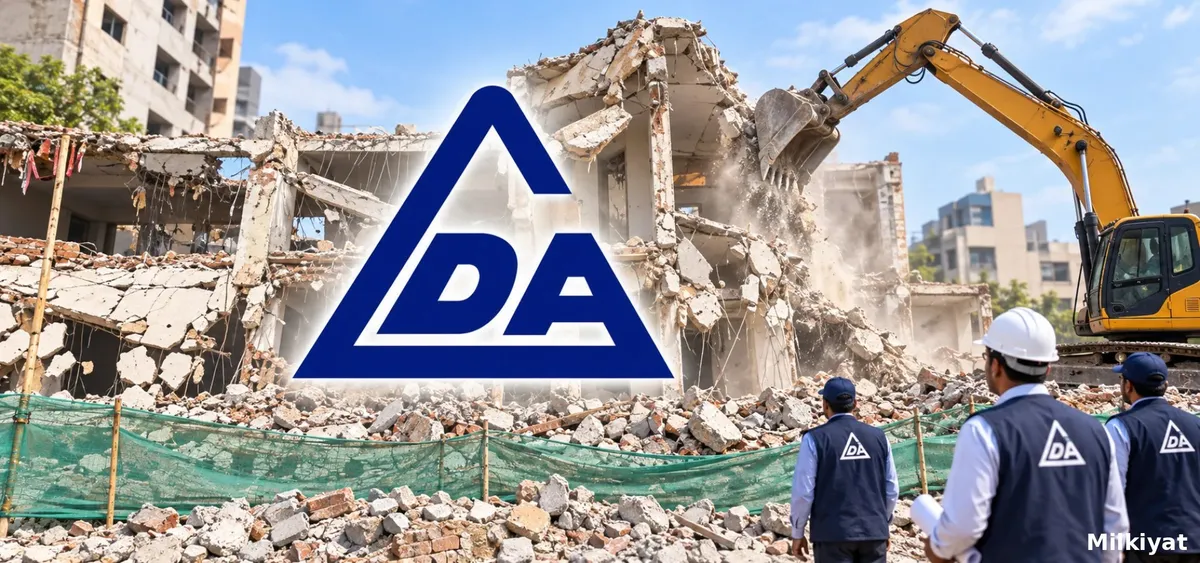
The Lahore Development Authority has introduced digital monitoring of enforcement action against illegal construction, unauthorised commercial use of properties, land use violations, and non payment of dues, through newly revamped standard operating procedures officials say are intended to bring greater transparency and accountability to field operations.
How the New System Actually Works
Under the new procedures, notices, sealing, and demolition proceedings will now be processed through a digital file management mechanism rather than manual paperwork. Notices will carry QR codes, while geo-tagged photographs and other relevant enforcement records will be uploaded and monitored online. LDA has also introduced digital record keeping for de-sealing proceedings, meaning the full lifecycle of an enforcement case, from initial notice through to any eventual resolution, is now intended to exist as a traceable digital record rather than a file that can be lost, altered, or delayed through manual handling.
The Three Categories Properties Are Now Sorted Into
Properties facing enforcement action have been divided into three distinct categories: illegal construction, unauthorised change in the use of an existing building, and non payment of dues. Property owners will reportedly have 15 days to resolve unauthorised commercial use violations and five days to address illegal construction before enforcement proceeds, giving owners a defined, time bound compliance window rather than an open ended notice period.
The New Committee Structure Behind Enforcement Decisions
LDA Director General Tahir Farooq said a dedicated committee, chaired by the Chief Town Planner and including the Chief IT Officer alongside directors of revenue, law, and town planning, will now decide matters relating to the declaration of a property as illegally commercialised, the issuance, withdrawal, or correction of notices, and subsequent enforcement action. Farooq said the committee will examine the complete planning, legal, and revenue position of each property before reaching a decision, scrutinising approved or unapproved building plans, and the temporary or permanent status of any commercialisation, alongside complaints, inspection reports, court stay orders, and injunctions concerning the property. Any previous approval, exemption, composition, or regularisation granted by a competent authority will likewise be examined before a final decision is made. De-sealing will only occur once fines are paid, the property is restored to its legal status, or the competent authority grants formal approval.
This Builds Directly on LDA's Recent Digitisation Push
This enforcement digitisation is not an isolated initiative, and follows directly from LDA's broader move earlier this year to digitise property transactions themselves. From 1 July 2026, all property buying and selling within LDA controlled housing schemes has been required to proceed exclusively through a Property Certificate issued by the Punjab Land Records Authority, with no transaction legally recognised without that certificate, and any transfer conducted without it triggering legal action under the LDA Act, 1975. Read together, these two initiatives represent a genuinely coordinated push to digitise both sides of LDA's regulatory function, how property is legally bought and sold, and how illegal construction and unauthorised use are identified and enforced against.
Part of a Broader, Already Active Enforcement Pattern
This digital system also arrives on top of visible physical enforcement activity LDA has already carried out this year. In July 2026, enforcement teams from the Directorate of Metropolitan Planning demolished roads, boundary walls, sewerage systems, and other illegally developed infrastructure across 14 illegal housing schemes in different parts of Lahore, sealing site offices in the process, under the direct supervision of the Chief Metropolitan Planner. This new digital monitoring framework is likely to formalise and extend the same underlying enforcement priority, rather than representing a departure from it.
Why the Committee Structure Matters as Much as the Technology
The Chief Town Planner led committee's mandate to review a property's full planning, legal, and revenue history, including any prior approvals, exemptions, or court orders, before making a final determination, adds a genuine layer of institutional accountability on top of the digital record keeping itself. This combination, a documented, geo-tagged, QR-coded case file reviewed by a defined, multi-department committee, is specifically designed to close the kind of gap where an enforcement case could previously stall, disappear, or be quietly resolved through informal, undocumented means at the individual inspector or officer level.
What Remains Unconfirmed
The specific rollout timeline for this system across all of LDA's jurisdiction, and how existing, already pending enforcement cases will be transitioned into the new digital framework, have not been detailed. The practical test of this system's effectiveness will be whether the promised transparency and accountability actually reduces the incidence of cases being resolved informally, something that will only become clear as the system operates over time.
What This Means for Property Owners, Builders and Commercial Investors
Digital records and geo-tagging genuinely raise the difficulty of illegal construction or unauthorised commercial conversion cases quietly disappearing through manual, undocumented processes, meaningfully increasing compliance risk for anyone currently operating outside their property's approved use or construction plan. Property owners with an existing unauthorised commercial conversion should treat the specific 15 day window seriously, given the digital system's design intent to track compliance deadlines consistently rather than allow informal extensions. Builders and developers should similarly treat the five day illegal construction compliance window as a genuinely enforced deadline going forward, rather than one subject to the kind of informal negotiation or delay that manual case handling has historically allowed. Commercial investors evaluating any Lahore property should now factor in that a building's actual approved use and construction status is more likely to be accurately, consistently tracked and enforced than under LDA's previous manual system, making independent verification of a property's approved status, rather than reliance on its current, visible use, an increasingly important step before any transaction.