News
Pakistan Allocates Rs30bn for Hyderabad-Sukkur M-6 Motorway

By Mariam Khan
Real Estate Analyst
3 min read
The federal government has allocated Rs30 billion for the 306 kilometre Hyderabad to Sukkur M-6 Motorway during fiscal year 2026-27, comprising Rs28 billion in foreign assistance and Rs2 billion in local funding, against a total demand of Rs70 billion that project officials had originally sought for the year. The project's approved cost stands at approximately Rs363.7 billion, having been rationalised down from an earlier estimate closer to Rs395 billion.
How the Motorway Has Been Structured Into Five Sections
To manage financing and construction more efficiently, the National Highway Authority has divided the motorway into five distinct sections: Hyderabad to Tando Adam, Tando Adam to Nawabshah, Nawabshah to Naushahro Feroze, Naushahro Feroze to Ranipur, and Ranipur to Sukkur. Each section carries its own financing arrangement rather than being funded as a single block. The first two sections are being developed through a public private partnership model, the third section is being financed through the OPEC Fund, and the fourth and fifth sections are being financed through the Islamic Development Bank.
Why the Rs30bn Falling Short of Rs70bn Matters
The gap between the Rs30 billion actually allocated for this fiscal year and the Rs70 billion project officials had sought is a meaningful signal about the pace this project is likely to move at over the coming year. A shortfall of this scale, less than half of what was requested, typically translates into slower progress across whichever sections depend most heavily on the current year's federal allocation, even as sections financed through the OPEC Fund and Islamic Development Bank may be somewhat insulated from this specific funding gap given their separate financing sources.
Why M-6 Is a Genuinely Significant Missing Link
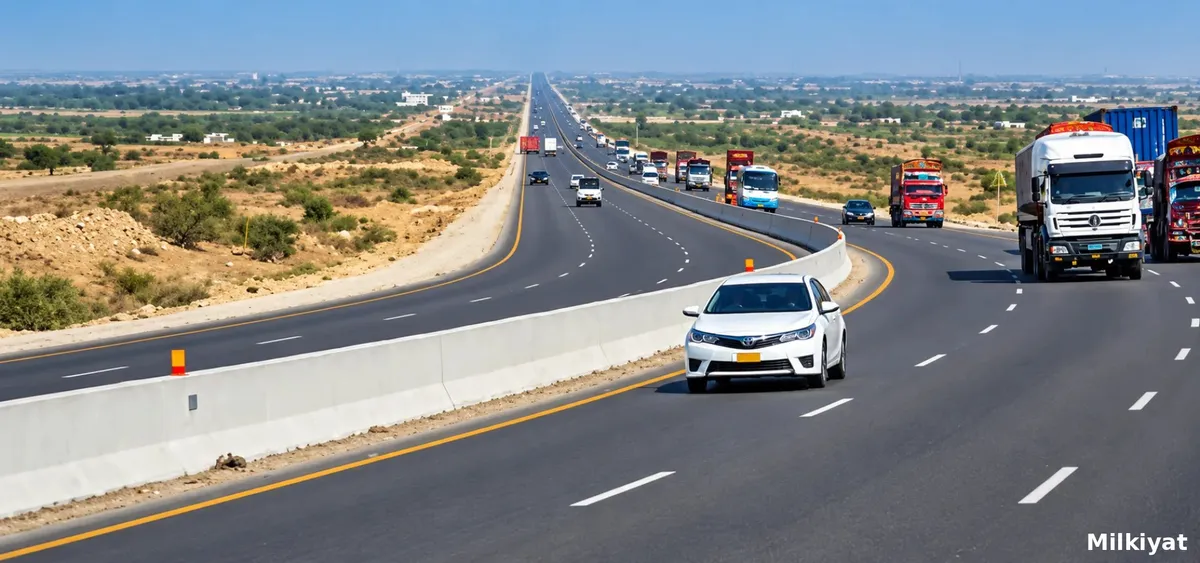
The six lane motorway is designed to complete a major missing section of Pakistan's north south motorway corridor, connecting Hyderabad and Sukkur directly and closing a long standing gap in what would otherwise be a continuous, high speed motorway network running through Sindh. Completing this corridor has implications well beyond the immediate Hyderabad Sukkur route itself, since it would meaningfully improve connectivity for freight and passenger traffic moving along the broader north south axis that links Karachi to upper Sindh and onward to Punjab.
What This Means for Land and Development Along the Corridor
For property and development interests along the Hyderabad Sukkur corridor, a motorway of this scale is a long term catalyst for industrial estates, logistics and warehousing facilities, roadside commercial development, and land demand generally, with the areas around interchanges and the cities the five sections connect, Tando Adam, Nawabshah, Naushahro Feroze, and Ranipur, likely to see the most concentrated interest as construction progresses. Given the current funding shortfall against what was requested, however, investors and developers should treat the project's completion timeline as genuinely uncertain rather than assume the pace implied by the Rs363.7 billion approved cost will be matched by steady, adequately funded progress each year. Land and development decisions tied to this corridor should be paced against actual construction milestones on each of the five sections rather than the motorway's original approval timeline.