News
Pakistan Approves Higher Cash Transaction Reporting Limit, Reportedly Raising Threshold to Rs3 Million

By Mariam Khan
Real Estate Analyst
3 min read
ShareWhatsApp
News
By Mariam Khan
Real Estate Analyst
3 min read
SIFC directs the Petroleum Division to prepare a biomethane policy within four weeks following TerraGrid Energy's proposed waste-to-gas project in Faisalabad.
Compare D-12/1, D-12/2, D-12/3 and D-12/4 in Islamabad, including property prices, locations, plot options and buying considerations.
Explore houses for sale in I-10 under PKR 3 crore, compare 4 marla options, check sub-sector prices and understand what your budget can buy.
Discover how to evaluate Margalla-view apartments in E-11 Islamabad, compare floor premiums, check building quality and assess property prices before buying.
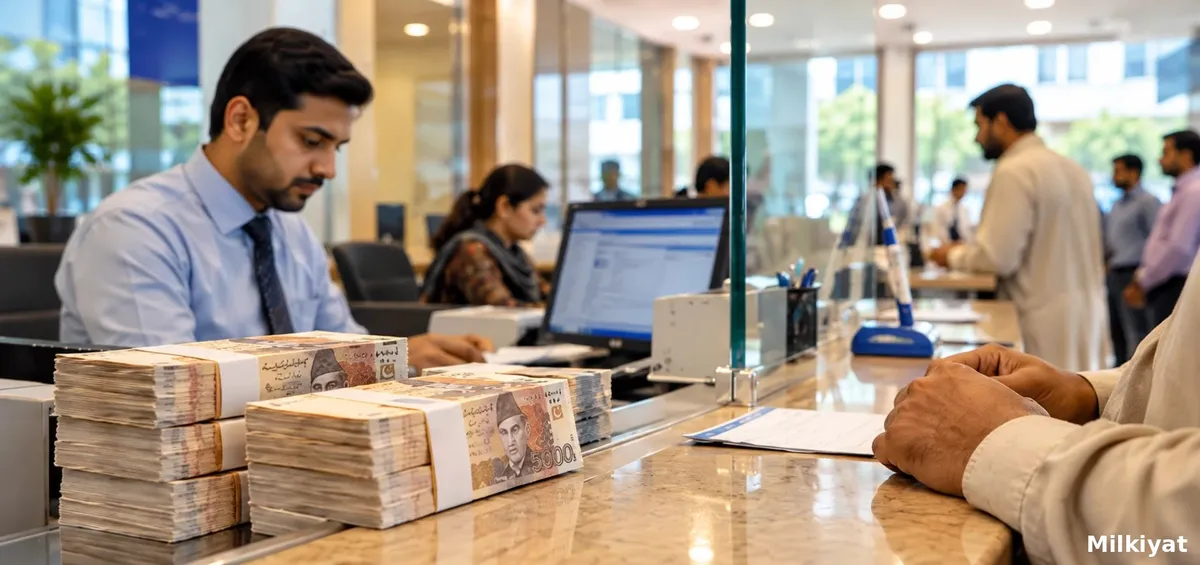
Pakistan's National Executive Committee on Anti-Money Laundering and Countering the Financing of Terrorism has approved revisions to the reporting thresholds for cash transactions. The committee, chaired by Finance Minister Muhammad Aurangzeb, approved the revision on October 27, 2026. The official government statement confirms that revised thresholds were approved, but it does not give the new amount. A media report of October 28 says the threshold for mandatory Currency Transaction Reports (CTRs) rises by 50 percent, from Rs2 million to Rs3 million. That figure is reported. It is not in the official statement, and the effective date has not been confirmed. The statement is available on the Press Information Department site.
The official statement confirms approval of revised thresholds. The Rs3 million figure, and the move from Rs2 million, come from the media report. A rise from Rs2 million to Rs3 million is an increase of 50 percent (our own calculation), which matches the report. Until a notification is published, the figure should be treated as reported and not as official.
A Currency Transaction Report is a report that regulated businesses file with the Financial Monitoring Unit when a cash transaction reaches the set threshold. A higher threshold would change when qualifying cash transactions must be reported. Guidance on filing is published by the Financial Monitoring Unit.
Real-estate agents and developers can fall within anti-money-laundering reporting requirements, so the revision is relevant to the property sector. It is not a property-tax reduction, and it is not an exemption from financial scrutiny. Suspicious Transaction Reports, customer verification and other compliance obligations remain separate requirements. The reports do not say how many property transactions the change would affect.
The reports do not give the effective date, the full list of revised thresholds or the reasons for the change beyond the review of the framework. Finance policy is published by the Ministry of Finance. The notification that sets the new threshold should be checked before it is described as operating.
Agents and developers should not change their practice until the official notification is issued, and should keep up the verification of customers and the reporting of suspicious transactions as before. Buyers should keep proper records of payments whatever the threshold. The signals to watch are the official notification, its effective date, guidance from the Financial Monitoring Unit and any changes to other thresholds.