News
Pakistan Begins Study for $500m Strategic Petroleum Reserves

By Mariam Khan
Real Estate Analyst
5 min read
Federal Minister for Petroleum Ali Pervaiz Malik chaired the kick off meeting for a feasibility study on establishing Strategic Petroleum Reserves in Pakistan on 25 August 2026, with international energy consultancy Wood Mackenzie selected to undertake the study following a competitive tender process that attracted four bids. The proposed storage programme is reported at around 500 million dollars and is being pursued after the Strait of Hormuz crisis highlighted Pakistan's vulnerability to fuel supply disruptions.
Who Was in the Room
The kick off meeting was attended by Wood Mackenzie Vice President Christopher Darry, Director Chris Brown, Principal Consultant Jordan Macdonald, and Senior Vice President Aamir Malik, alongside representatives of Attock Refinery Limited, the Pakistan Institute of Development Economics, Government Holdings Private Limited, the Ministry of Maritime Affairs, and Pakistan LNG Limited. The minister was briefed on the scope and objectives of the study, after which the meeting agreed on timelines and the overall architecture for the assignment.
What the Study Will Actually Cover
The feasibility study will assess the technical feasibility, integrity, safety, and operational requirements of proposed strategic storage facilities, alongside international and regional benchmarks, policy and regulatory requirements, and short, medium, and long term implementation options. It will also examine legal, regulatory, financial, commercial, and institutional arrangements, including possible public private partnership models, and will assess existing infrastructure that could potentially be repurposed for strategic storage, taking connectivity and logistics requirements into account. The study is expected to produce estimates of capital expenditure, financing options, and an implementation timeline, giving the government what Minister Malik described as an informed, evidence based basis for deciding whether and how to proceed with such a major strategic initiative, including the possibility of a phased rollout.
Why This Is Happening Now
Minister Malik said the government is pursuing reforms and initiatives to advance Pakistan's energy security, describing energy security as intrinsically linked to national security and reducing vulnerability to external shocks as a key government priority. Existing rules already require oil marketing companies and refineries to maintain at least 21 days of consumption coverage of petroleum products at all times, but these commercial reserves exist solely to support ongoing operations rather than to function as a dedicated emergency strategic reserve, a distinction that is central to why a separate, purpose built strategic reserve is now being studied.
Part of a Longer Running Government Process
This kick off meeting is not the government's first formal step toward this goal. As early as April 2026, the Ministry of Energy's Petroleum Division had already formed a high level committee specifically to develop and operationalise Strategic Petroleum Reserves, headed by the Special Secretary of the Petroleum Division and including representation from the Oil and Gas Regulatory Authority, Pakistan State Oil, and Inter State Gas Systems, with that committee tasked to submit recommendations and an implementation roadmap by 8 May 2026. The current Wood Mackenzie feasibility study represents the next concrete phase following that earlier committee work, with the consultancy's bid submission deadline having closed on 1 July 2026 and technical and financial evaluation of the four competing bids completed over the following weeks before Wood Mackenzie's formal selection.
The Institutional Backdrop
The Petroleum Division sits within Pakistan's Ministry of Energy and is tasked with ensuring a secure and sustainable supply of oil and gas for the country's economic and strategic needs, alongside coordinating development of natural energy resources and minerals. Originally established as a standalone ministry in April 1977, the division was merged into the Ministry of Energy in August 2017. This Strategic Petroleum Reserves initiative sits alongside a separate but related energy security measure already approved by the Economic Coordination Committee, a bonded storage scheme allowing foreign fuel suppliers to establish their own storage facilities in Pakistan at approved coastal and inland locations, both measures forming part of the same broader post Hormuz energy security push.
What Remains Unconfirmed
This is a feasibility study, not a committed, funded construction project. No final decision on whether to proceed, at what specific locations, or under what financing structure has been made, and the 500 million dollar figure represents a reported programme estimate rather than an approved budget. The study itself is designed specifically to inform that decision, meaning the practical, on the ground impact of this initiative remains contingent on the study's findings and a subsequent government decision to proceed.
What This Means for Industrial Land and Logistics Infrastructure
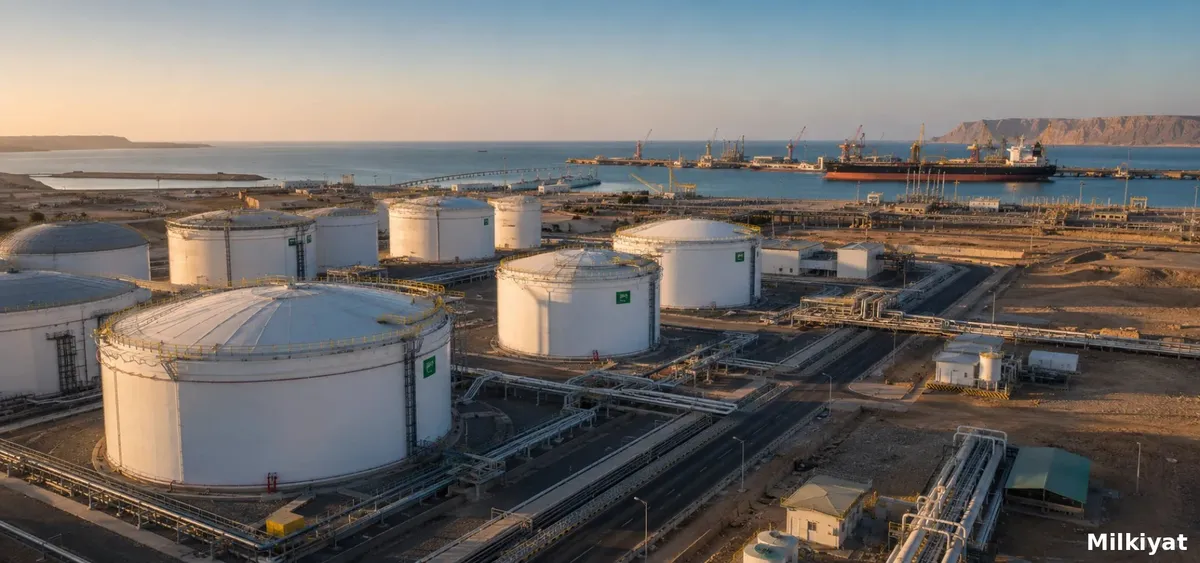
If Pakistan does proceed with dedicated strategic petroleum storage following this study, the programme would likely require specialised industrial land, storage tanks, terminals, and connecting logistics infrastructure, potentially at coastal locations with existing petroleum handling capacity or inland sites with strong pipeline and transport connectivity. This would sit alongside the industrial and logistics property implications already associated with the separately approved bonded storage scheme for foreign suppliers, since both measures point toward continued, tangible investment in Pakistan's fuel storage and handling infrastructure over the coming years. More broadly, a functioning strategic reserve could reduce the exposure of construction and infrastructure projects nationally to sudden fuel supply interruptions and extreme transport cost volatility of the kind seen during the Strait of Hormuz disruptions, a factor relevant to construction planning and cost management across the property sector generally. Investors and businesses evaluating industrial or logistics land with potential fuel storage applications should watch specifically for the feasibility study's findings and any subsequent government decision on implementation and location, rather than treating this kick off meeting alone as confirmation of a specific site or investment commitment.
Sources
- Wikipedia, Petroleum Division, Pakistan: https://en.wikipedia.org/wiki/Petroleum_Division_(Pakistan)
- Wikipedia, Ministry of Energy, Pakistan: https://en.wikipedia.org/wiki/Ministry_of_Energy_(Pakistan)
- Wikipedia, Petroleum Secretary of Pakistan: https://en.wikipedia.org/wiki/Petroleum_Secretary_of_Pakistan