Blog
Artificial Intelligence and the Forty-Two Billion Dollar Lifeline: Inside Pakistan’s Radical Economic Pivot

Real Estate Analyst
11 min read
For decades, Pakistan’s economic narrative has been a repetitive cycle of fiscal crises, emergency bailouts, and desperate negotiations with international lenders. Three years ago, the South Asian nation stood on the precipice of a historic sovereign default, with its foreign exchange reserves depleted to a critical low of nearly 3 billion dollars. Today, a quiet but radical restructuring is taking shape. Driven by an unprecedented influx of remittances and a stringent IMF-backed reform program, Islamabad is attempting to re-engineer its economy.
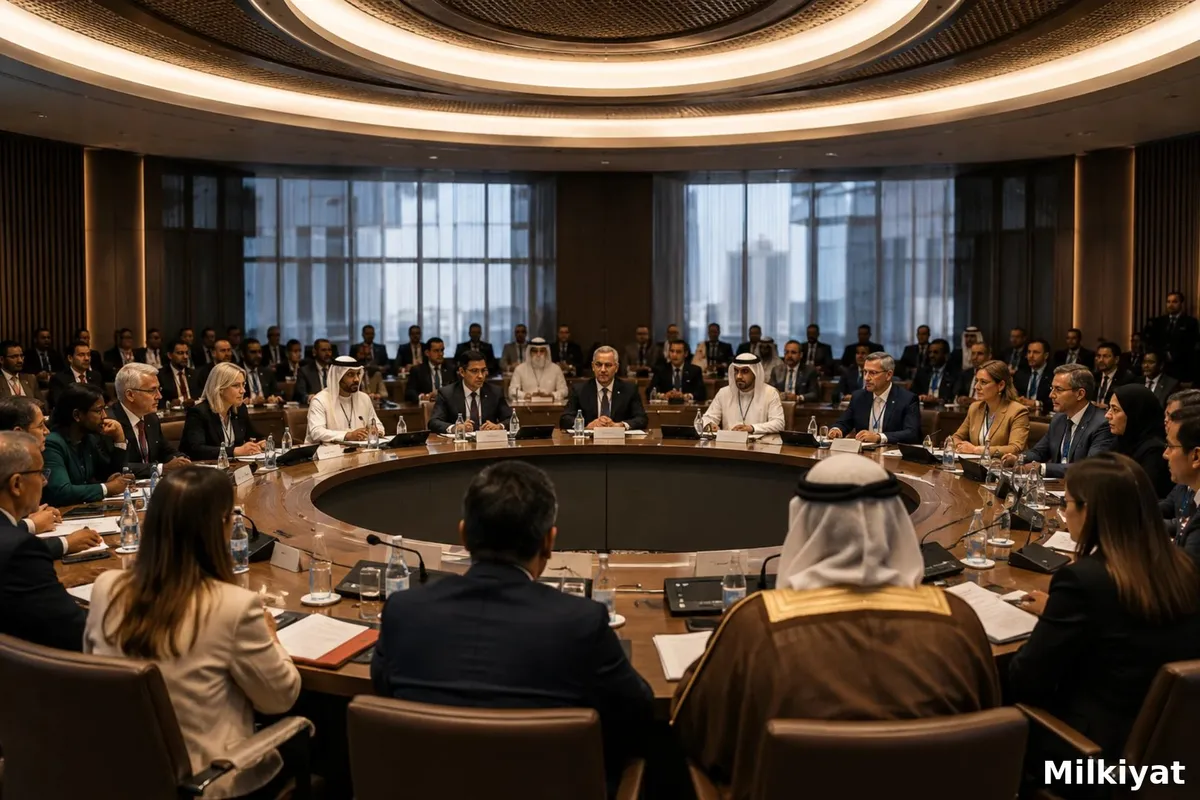
At the heart of this economic pivot is a dual-track strategy unveiled by Federal Minister for Finance and Revenue Senator Muhammad Aurangzeb at the Pakistan Banking Summit 2026 in Karachi [1] [2]. On one hand, the government is leveraging a record-breaking surge in workers’ remittances—expected to touch 42 billion dollars this fiscal year—to stabilize its volatile external account. On the other, it is launching a sweeping domestic tax reform that seeks to dismantle the country’s notoriously corrupt and inefficient tax administration by replacing human tax collectors with artificial intelligence, machine learning, and large language models [3] [4].
The Remittance Fortress and the Battle for Formal Channels
In the global balance of payments, workers' remittances have long been the silent engine of Pakistan’s survival. In the current fiscal year, this engine has shifted into overdrive. Central bank projections suggest that formal remittance inflows from overseas Pakistanis will close between 41 billion and 42 billion dollars, with expectations that this threshold will expand to 44 billion dollars in the subsequent fiscal year [5].
This massive influx is the direct consequence of systemic regulatory interventions. Historically, a significant portion of capital sent home by the millions of Pakistani laborers working in the Gulf States bypassed the formal banking sector, moving instead through the shadow hundi and hawala networks. By implementing structural reforms across domestic exchange companies and launching a coordinated law enforcement crackdown on illegal currency dealers, the State Bank of Pakistan (SBP) has successfully rerouted billions of dollars into the regulated banking system.
This surge in formal liquidity has fundamentally reshaped the country’s external profile. The current account, which historically hemorrhaged foreign exchange during periods of domestic growth, has remained balanced, enabling the central bank to aggressively purchase dollars from the interbank market to rebuild its depleted reserves. Consequently, foreign exchange reserves are projected to close the fiscal year at approximately 18.4 billion dollars, with a medium-term target of exceeding 20.2 billion dollars by the end of December 2026 [5].
| Key Macroeconomic Indicator | FY26 Performance / Estimate | FY27 Target / Projection |
|---|---|---|
| Workers' Remittances | $41.0B – $42.0B | $44.0B |
| Central Bank FX Reserves | $18.4B | $20.2B (by Dec 2026) |
| GDP Growth Rate | 3.7% | 3.75% – 4.75% |
| Primary Fiscal Balance | 1.6% of GDP (Target Met) | 2.0% of GDP |
| Sovereign Debt-to-GDP | Under 70% | Projected Decrease |
Despite this stabilization, the domestic economy is not yet entirely out of the woods. Global energy price volatility linked to geopolitical tensions in the Middle East continues to pose a threat to domestic price stability. SBP Governor Jameel Ahmad has warned that inflation could temporarily fluctuate, though the central bank remains committed to anchoring consumer prices within its medium-term target of 5 to 7 percent.
Dismantling the "Inspector Raj": Tax Enforcement by Algorithm
While remittances provide a temporary external shield, Pakistan’s chronic fiscal deficit remains its primary internal vulnerability. For decades, the state’s tax-to-GDP ratio has hovered among the lowest in the world, plagued by systemic evasion and a narrow tax base that disproportionately burdens the documented corporate sector and the salaried middle class.
To address this structural pathology, the state is executing a profound institutional divorce. Under an agreement with the IMF, the government separated tax policy from revenue collection. The newly established Tax Policy Office (TPO), relocated to the Finance Division and led by Director General Dr. Najeeb Memon, now holds sole responsibility for formulating fiscal rules [6] [7] [8]. This ensures that tax design is driven by long-term economic strategy rather than the short-term, predatory revenue-hunting that previously characterized the Federal Board of Revenue (FBR).
With the FBR stripped of policymaking power, its administrative model is undergoing a digital overhaul. The government’s new operating model, approved by Parliament, aims to eliminate the "Inspector Raj"—the historical system where individual tax officers wielded unchecked discretionary powers to audit, penalize, and negotiate with taxpayers, creating a breeding ground for collusion and extortion.
Under the automated system, human intervention is minimized. The FBR is feeding third-party data from banks, utilities, real estate registries, and the National Database and Registration Authority (NADRA) into a centralized, integrated "data lake". Advanced machine learning algorithms and large language models analyze this data to identify discrepancies between an individual's declared income and their actual wealth and consumption patterns. When a mismatch is identified, the system automatically generates and dispatches electronic tax notices, bypassing the local tax officer entirely.
┌────────────────────────────────────────────────────────┐
│                   THE DATA CORRIDOR                    │
│                                                        │
│  [ NADRA Identity Data ]     [ Commercial Bank Records ] │
│           │                             │              │
│           ▼                             ▼              │
│     ┌─────────────────────────────────────────┐        │
│     │            CENTRAL DATA LAKE            │        │
│     └────────────────────┬────────────────────┘        │
│                          │                             │
│                          ▼                             │
│     ┌─────────────────────────────────────────┐        │
│     │       AI / ML / LLM ENGINE ANOMALY      │        │
│     └────────────────────┬────────────────────┘        │
│                          │                             │
│                          ▼                             │
│     ┌─────────────────────────────────────────┐        │
│     │     AUTOMATED ELECTRONIC TAX NOTICE     │        │
│     └─────────────────────────────────────────┘        │
└────────────────────────────────────────────────────────┘
This transition toward automated, data-driven enforcement has already yielded concrete fiscal results. The state recently introduced digital monitoring and track-and-trace technology across several consolidated industries, beginning with sugar and expanding into cement, beverages, tobacco, and textiles. By digitally tracking production lines, the government bypassed traditional reporting loopholes, generating an additional 60 billion rupees (approximately 215.4 million dollars) in sales tax from the sugar sector alone.
To institutionalize these changes and give the private sector a predictable environment, the Ministry of Finance has pledged to unveil a comprehensive, medium-term tax strategy within the next six months, guaranteeing a stable fiscal roadmap for the next four to five years [5].
From Bilateral Rollovers to Capital Market Sophistication
Perhaps the most significant structural change in Pakistan’s macroeconomic management is the radical shift in how the state handles its sovereign debt. For years, Pakistan’s debt management was characterized by a reliance on short-term, bilateral loans and regular requests for rollovers from friendly nations—a practice that carried significant geopolitical and refinancing risks.
The government is actively implementing a transition toward market-based commercial financing. The goal of this strategy is not to increase the net volume of Pakistan's external liabilities, but to execute "replacement trades". By issuing longer-term, market-priced bonds, the state plans to gradually retire its expensive, short-term bilateral debt, thereby extending its maturity profile and reducing refinancing pressure.
The Panda Bond Benchmark
A critical proof of concept for this strategy occurred in mid-May 2026, when Pakistan entered China’s onshore domestic debt market for the first time. The government successfully issued its inaugural Panda Bond, raising 1.75 billion yuan (approximately 250 million dollars) [9] [10] [11]. The three-year paper attracted immense interest, finishing oversubscribed more than five times.
Crucially, the transaction was priced at a historic coupon rate of 2.5 percent—the lowest borrowing cost Pakistan has ever achieved on a sovereign bond [10]. This exceptionally low pricing was made possible by an innovative partial-guarantee structure backed by the Asian Development Bank (ADB) and the Asian Infrastructure Investment Bank (AIIB), which elevated the bond's local rating to AAA despite Pakistan's speculative-grade sovereign rating of B- [10]. The issuance represents the first tranche of a broader 7.2 billion yuan program designed to establish a reliable, sustainable funding pipeline in the world’s second-largest capital market.
Launching Dollar-Settled, Rupee-Linked Synthetic Bonds
Building on the momentum of the Panda Bond and a 750 million dollar Eurobond placed in April 2026, the Ministry of Finance has formally issued Requests for Proposals (RFPs) to global investment banks for a novel asset class: dollar-settled, rupee-linked bonds [12] [13].
| Bond Instrument | Structure & Settlement Mechanics | Regulatory / Guarantor Support | Pricing Benchmarks |
|---|---|---|---|
| Eurobond | Issued in USD; settled in USD. | Standard sovereign issuance under international law. | Greenshoe option exercised to reach $750M on strong demand. |
| Panda Bond | Issued in Renminbi (RMB); onshore Chinese capital market. | Partial credit guarantees from ADB and AIIB to secure AAA rating. | Historical low coupon of 2.5% for 3-year tenor. |
| Rupee-Linked Bond | Rupee-denominated yield exposure; settled exclusively in USD. | Direct sovereign liability; first-of-its-kind instrument for Pakistan. | Under evaluation; RFPs issued to assess global market pricing. |
This synthetic structure offers global institutional investors direct exposure to the high-yield dynamics of the Pakistani rupee while settling all transactions, interest payments, and principal redemptions exclusively in US dollars. This design mitigates the operational friction and convertibility risks traditionally associated with clearing local currency in domestic accounts, allowing the government to tap deep pools of international capital without creating an immediate drain on its domestic foreign exchange reserves.
For the upcoming fiscal year, Pakistan has structured a massive commercial borrowing program. Budget documents indicate plans to raise Rs580 billion (approximately 2.08 billion dollars) from international bond markets—a fivefold increase from the previous year—alongside Rs681.5 billion (approximately 2.45 billion dollars) in commercial bank loans, bringing total planned commercial market borrowing to 4.53 billion dollars [5].
Dismantling the Sovereign Monopolization of Bank Credit
For years, the Pakistani banking sector has operated under highly distorted market incentives. Chronically high fiscal deficits forced the state to borrow aggressively from local commercial banks to cover its expenditures. This dynamic severely crowded out the private sector; commercial banks found it far more profitable and risk-free to park their capital in sovereign treasury bills than to lend to local businesses.
At the summit, Finance Minister Aurangzeb challenged this paradigm, stressing that shifting Pakistan from stabilization to long-term growth requires the banking sector to actively support the real economy. Despite these distortions, the financial sector remains a dominant contributor to the state, with the banking industry paying over 1 trillion rupees annually in corporate taxes.
To force a reallocation of credit, the government has established a dedicated SME Finance Task Force. Led by the central bank and comprising senior representatives from the Pakistan Banks' Association (PBA) and the Small and Medium Enterprises Development Authority (SMEDA), the task force is designing risk-sharing and partial credit guarantee structures to encourage lending to small and medium enterprises [14].
This push is accompanied by rapid digital integration. The central bank reported significant growth in targeted credit corridors, with agricultural lending up 39 percent, housing lending up 90 percent, and SME credit allocations rising by 111 percent. Furthermore, Parliament’s passage of the Virtual Assets Act 2026 has established a modern regulatory framework enabling commercial banks to safely open accounts for licensed virtual asset service providers under strict KYC guidelines, paving the way for digital asset integration and the potential tokenization of sovereign debt [15].
The Structural Burden: Will the Reforms Hold?
Pakistan’s economic trajectory is showing signs of fundamental change. The IMF Executive Board's completion of the third review under the Extended Fund Facility (EFF) and the second review of the Resilience and Sustainability Facility (RSF) on May 8, 2026, unlocked a combined disbursement of 1.3 billion dollars, signaling international approval of the state’s fiscal discipline [16] [17].
The country’s fiscal performance has been robust under the program, meeting its end-of-year primary surplus targets. Yet, the social and political cost of these reforms is substantial. To achieve a primary surplus of 1.6 percent of GDP in the outgoing fiscal year and a target of 2.0 percent for the next, the government has had to implement aggressive spending cuts, raise energy tariffs to prevent the accumulation of circular debt, and maintain high tax rates on the documented corporate sector and salaried individuals.
The introduction of algorithmic, automated tax notices and the shift toward sophisticated international debt instruments represent a genuine attempt to address long-standing structural inefficiencies. However, the ultimate success of these reforms hinges on political durability and consistent policy implementation. If the government can successfully transition from short-term fiscal stabilization to sustainable, export-led growth while alleviating the burden on its citizens, Pakistan may finally break free from its cyclical economic woes.
References
- Finance Minister Announces Dedicated Task Force for SME Finance — Ministry of Finance, Government of Pakistan https://www.facebook.com/FinanceMinistryPK/posts/finance-minister-announces-dedicated-task-force-for-sme-finance-declares-industr/1380513860929941/ (accessed July 2026)↑
- Finance Minister Muhammad Aurangzeb Addresses Pakistan Banking Summit 2026 — TV ONE USA / YouTube https://www.youtube.com/watch?v=9e-ubvQZ2Q8 (accessed July 2026)↑
- Finance Minister says new AI-led tax model to issue notices — Ground News https://ground.news/article/finance-minister-says-new-ai-led-tax-model-to-issue-notices (accessed July 2026)↑
- Artificial intelligence to drive new tax model, says Aurangzeb — DAWN https://www.dawn.com/news/148 (accessed July 2026)↑
- Pakistan central bank expects record remittances above $41 billion — Arab News https://arabnews.com/node/2643381/pakistan (accessed May 2026)↑↑↑↑
- OICCI hosted Dr. Najeeb Memon, Director General, Tax Policy Office — OICCI / LinkedIn https://www.linkedin.com/posts/oicci-official_oicci-hosted-dr-najeeb-memon-director-general-activity-7415353705346088960-mDdk (accessed January 2026)↑
- Pakistan operationalizes Tax Policy Office in key IMF-mandated reform — Arab News Pakistan https://www.arabnews.pk/node/2620411/pakistan (accessed October 2025)↑
- Tax Policy Office to be led by finance minister — DAWN https://www.dawn.com/news/1976346 (accessed February 2026)↑
- AIIB, ADB Support Panda Bond Issuance for Green Projects in Pakistan — AIIB https://www.aiib.org/en/news-events/news/2026/aiib-adb-support-panda-bond-issuance-for-green-projects-pakistan.html (accessed May 2026)↑
- ADB, AIIB Support First Panda Bond Issuance for Green Projects in Pakistan — Asian Development Bank (ADB) https://www.adb.org/news/adb-aiib-support-first-panda-bond-issuance-green-projects-pakistan (accessed May 2026)↑↑↑
- Pakistan's Panda Bond debut signals investor confidence in economic recovery — China Economic Net (en.ce.cn) https://en.ce.cn/Insight/202605/16/t20260516_38790000.shtml (accessed May 2026)↑
- Pakistan initiates issuance of Eurobond, Sukuk, dollar-settled rupee-linked bonds — Business Recorder https://www.brecorder.com/news/40428928/pakistan-initiates-issuance-of-eurobond-sukuk-dollar-settled-rupee-linked-bonds-at-global-capital-markets (accessed July 2026)↑
- Pakistan preparing to re-enter int'l capital markets — Radio Pakistan https://www.radio.gov.pk/16-04-2026/pakistan-preparing-to-re-enter-intl-capital-markets-aurangzeb (accessed April 2026)↑
- Finance Minister Announces Dedicated Task Force for SME Finance — Press Information Department (PID) https://pid.gov.pk/press-releases/pr-no-54-finance-minister-announces-dedicated-task-force-for-sme-finance-declares-industry-wide-expansion-of-access-to-finance-as-mission-critical-karachi-july-07-2026-pid (accessed July 2026)↑
- Pakistan's Virtual Assets Act is a step forward – but is it enough? — LSE Business Review https://blogs.lse.ac.uk/businessreview/2026/07/07/pakistans-virtual-assets-act-is-a-step-forward-but-is-it-enough/ (accessed July 2026)↑
- SBP has received about US$1.3 billion under the IMF's EFF and RSF programs — State Bank of Pakistan (SBP) / X https://x.com/StateBank_Pak/status/2054411332842406080?lang=en (accessed May 2026)↑
- IMF Executive Board Completes Third Review of the Extended Arrangement — International Monetary Fund (IMF) https://www.imf.org/en/News/Articles/2026/05/08/pr26156-pakistan-imf-executive-board-completes-third-review-eff-second-rsf (accessed May 2026)↑