News
Pakistan Introduces Bill to Merge Privatisation and PPP Authorities, Proposes New Infrastructure Investment Framework

By Mariam Khan
Real Estate Analyst
3 min read
ShareWhatsApp
News
By Mariam Khan
Real Estate Analyst
3 min read
World Bank classifies $55 million of Sindh's $150 million Property Revenues Enhancement Programme as climate-related finance to support urban revenue reforms.
Pakistan State Oil and Oman's OQ Trading sign a petroleum supply agreement with a $200 million credit facility to strengthen Pakistan's fuel import reliability.
Standard Chartered forecasts Pakistan's policy rate could reach 13% by June 2027, citing inflation and high oil prices that may increase borrowing costs.
SIFC directs the Petroleum Division to prepare a biomethane policy within four weeks following TerraGrid Energy's proposed waste-to-gas project in Faisalabad.
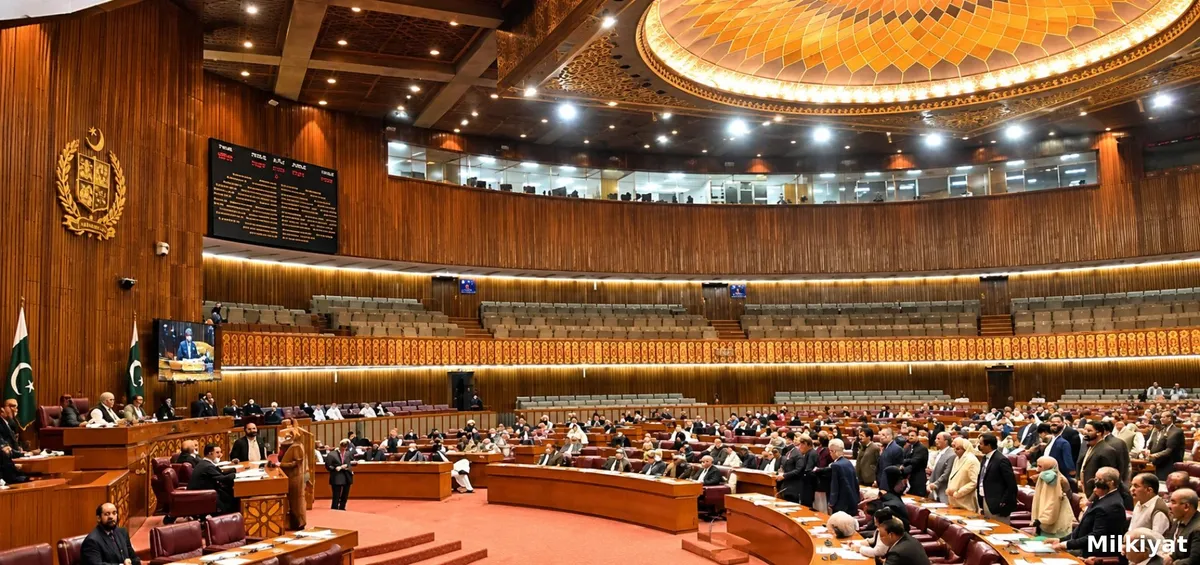
The federal government has introduced legislation in the National Assembly to establish a new Privatisation and Public-Private Partnership Commission (PPPPC). The bill was reported on October 26, 2026. It would merge the existing Privatisation Commission (PC) and the Public Private Partnership Authority into a single institution. The bill has been introduced. It has not yet become law, and the reports we have seen do not say when it will be debated or voted on.
Under the proposed framework, the commission would oversee infrastructure partnerships, project approvals, investment arrangements and associated financing mechanisms. The reports do not set out how the two bodies' current staff, projects and powers would be combined, so we do not describe the transition.
The proposed law would also allow public funds to support land acquisition, site handover and right-of-way requirements for infrastructure projects. This is one of the most significant parts of the bill, because land and access are often the main obstacles for projects built with private partners. The reports do not say how much money is involved, which projects would qualify or what safeguards would apply to landowners. We therefore describe it only as a proposed power.
The reports do not give the bill's full text, any amendments or the government's reasons beyond the framework described. Bills introduced in the National Assembly can be changed or fail, and parliamentary records are published by the National Assembly of Pakistan. Fiscal policy is set by the Ministry of Finance.
The proposed changes could affect how major infrastructure projects are financed, approved and implemented across Pakistan. A consolidated framework could help coordinate private investment in roads, transport facilities and other infrastructure. The effect on project delivery will depend on parliamentary approval and implementation. The reports do not link the bill to land values near any project, and we do not claim any effect.
Landowners near planned infrastructure should follow official notices on acquisition and compensation, since nothing changes until the bill becomes law. Developers and investors in public-private projects should watch how project approvals would be handled. The signals to watch are the committee stage, any amendments to the land-acquisition provisions, passage by both houses and the creation of the new commission.