News
Pakistan Plans Nationwide Digitisation of Agricultural Land Records Under AgriStack

By Mariam Khan
Real Estate Analyst
5 min read
ShareWhatsApp
News
By Mariam Khan
Real Estate Analyst
5 min read
News
By Mariam Khan
Real Estate Analyst
5 min read
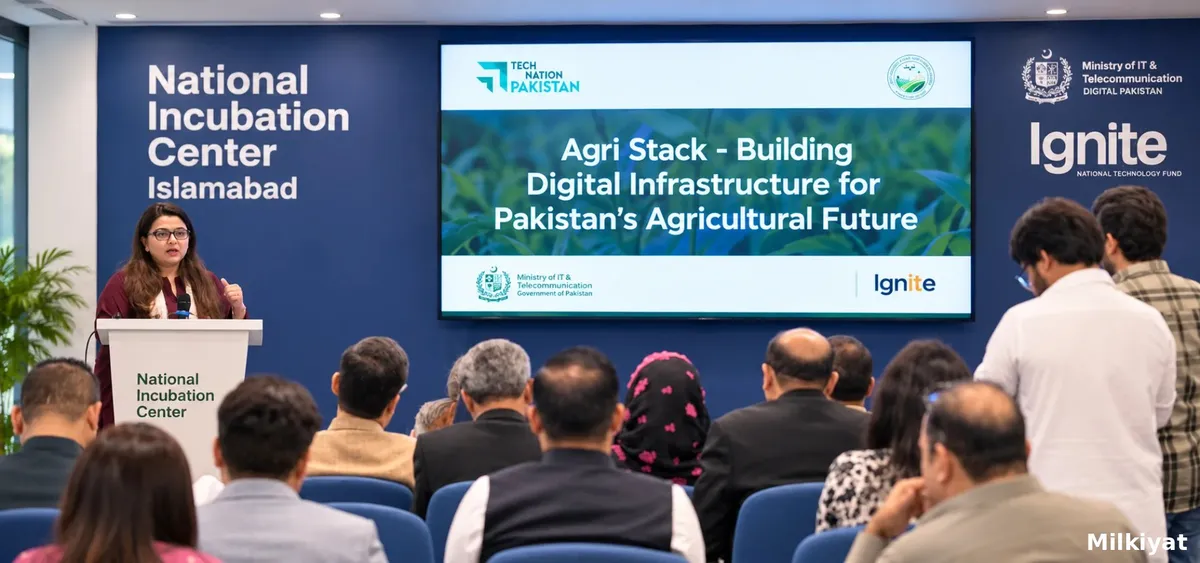
The federal government proposed developing a Digital Farmers' Diary and AgriStack system at a high level meeting chaired by Prime Minister Shehbaz Sharif on 11 September 2026, under which farmers' records and agricultural land data across the country would be digitised alongside soil and water testing information. The meeting focused on promotion of the agriculture sector and enhancement of agricultural exports.
It is important to understand this correctly, since the framing of a proposal being newly presented understates how long this initiative has actually been under development. AgriStack was first launched more than a year earlier, in August 2025, led jointly by the Ministry of Information Technology and Telecommunication and the Ministry of National Food Security and Research, in collaboration with Pakistan's own, known as LIMS, and the Special Investment Facilitation Council. That original launch convened federal and provincial government representatives, agri-tech startups, telecom companies, fintechs, international development partners, farmer associations, and academia, and endorsed formation of a steering committee co-chaired by the two ministries, alongside a technical working group on data and cybersecurity, with pilot projects planned over a 12 to 18 month period from that time. This September meeting represents a further, high level review of that same initiative's progress, rather than its initial proposal.
LIMS, which underpins much of this digitisation effort, was inaugurated by Prime Minister Shehbaz Sharif alongside the Chief of Army Staff, reflecting genuinely high level backing for the initiative, and operates under Director General Major General Muhammad Ayub Ahsan Bhatti. The platform's stated purpose centres on enhancing modern agro-farming practices and improving food security and agricultural exports, with land data integration functioning as one of its core components alongside farmer identity verification.
Under the AgriStack framework, the platform, also referred to as PAKGROW, is intended to assign every farmer a digital identity linked to their land records, crop data, weather forecasts, and market prices, integrating satellite based crop monitoring with secure digital identities and real time market access. The stated goal is enabling verified farmer identities, land data integration, precision agricultural advisory, and more efficient delivery of services including subsidies, crop insurance, and credit access, addressing structural challenges including fragmented data, absent farmer identification, inefficient subsidy delivery, and weak market access.
While AgriStack is primarily an agricultural modernisation initiative, its core land data integration component carries genuine relevance for property and land record transparency more broadly. Bringing agricultural land records onto a unified, verified digital platform, linked to confirmed farmer identities, could improve the accuracy and accessibility of land ownership information in rural areas in a manner comparable to the urban land digitisation efforts already under way through initiatives like Punjab's own housing scheme digital record systems, even though AgriStack's primary purpose remains agricultural service delivery rather than urban property transaction facilitation.
The same meeting also considered introducing the Pakistan Good Agriculture Practices system to promote farming practices yielding better results, and was told the National Agriculture and Food Security Council would be made functional, with provincial chief ministers representing their respective provinces on that council. Officials informed the meeting that Pakistan's agricultural exports reached 5.18 billion dollars during the previous financial year, with rice, fisheries, halal meat, potatoes, sesame, tobacco, mangoes, and maize among the major export categories, and the meeting separately considered expanded financing facilities for agricultural exporters.
Given that the original 12 to 18 month pilot timeline was set from the initiative's August 2025 launch, this September 2026 review sits roughly at or beyond that original pilot window, though no specific confirmation of pilot project outcomes or a nationwide rollout timeline has been detailed in available reporting from this particular meeting. The specific mechanism for how AgriStack's land data would interact with, or remain separate from, existing provincial land record authorities has also not been detailed.
If genuinely delivered at scale, a unified, verified digital record linking farmer identity directly to specific agricultural land holdings could meaningfully improve ownership and boundary documentation in rural areas historically reliant on more fragmented, manually maintained land records. This would carry indirect but real relevance for anyone involved in agricultural land transactions, inheritance disputes, or financing secured against farmland, since more reliable, digitally verified land records tend to reduce the kind of ownership ambiguity that has historically complicated agricultural property dealings in Pakistan.
Farmers and agricultural landowners should watch for confirmation of how and when this system will actually require their participation, given the programme's stated intent to link land records directly to verified farmer identities for the purpose of subsidy, credit, and insurance delivery. Given the initiative's now year plus history without a confirmed nationwide rollout date, landowners should treat continued monitoring of official announcements as necessary before assuming any specific registration or documentation obligation applies to their own land immediately.
The federal government proposed developing a Digital Farmers' Diary and AgriStack system at a high level meeting chaired by Prime Minister Shehbaz Sharif on 11 September 2026, under which farmers' records and agricultural land data across the country would be digitised alongside soil and water testing information. The meeting focused on promotion of the agriculture sector and enhancement of agricultural exports.
It is important to understand this correctly, since the framing of a proposal being newly presented understates how long this initiative has actually been under development. AgriStack was first launched more than a year earlier, in August 2025, led jointly by the Ministry of Information Technology and Telecommunication and the Ministry of National Food Security and Research, in collaboration with Pakistan's own, known as LIMS, and the Special Investment Facilitation Council. That original launch convened federal and provincial government representatives, agri-tech startups, telecom companies, fintechs, international development partners, farmer associations, and academia, and endorsed formation of a steering committee co-chaired by the two ministries, alongside a technical working group on data and cybersecurity, with pilot projects planned over a 12 to 18 month period from that time. This September meeting represents a further, high level review of that same initiative's progress, rather than its initial proposal.
LIMS, which underpins much of this digitisation effort, was inaugurated by Prime Minister Shehbaz Sharif alongside the Chief of Army Staff, reflecting genuinely high level backing for the initiative, and operates under Director General Major General Muhammad Ayub Ahsan Bhatti. The platform's stated purpose centres on enhancing modern agro-farming practices and improving food security and agricultural exports, with land data integration functioning as one of its core components alongside farmer identity verification.
Under the AgriStack framework, the platform, also referred to as PAKGROW, is intended to assign every farmer a digital identity linked to their land records, crop data, weather forecasts, and market prices, integrating satellite based crop monitoring with secure digital identities and real time market access. The stated goal is enabling verified farmer identities, land data integration, precision agricultural advisory, and more efficient delivery of services including subsidies, crop insurance, and credit access, addressing structural challenges including fragmented data, absent farmer identification, inefficient subsidy delivery, and weak market access.
While AgriStack is primarily an agricultural modernisation initiative, its core land data integration component carries genuine relevance for property and land record transparency more broadly. Bringing agricultural land records onto a unified, verified digital platform, linked to confirmed farmer identities, could improve the accuracy and accessibility of land ownership information in rural areas in a manner comparable to the urban land digitisation efforts already under way through initiatives like Punjab's own housing scheme digital record systems, even though AgriStack's primary purpose remains agricultural service delivery rather than urban property transaction facilitation.
The same meeting also considered introducing the Pakistan Good Agriculture Practices system to promote farming practices yielding better results, and was told the National Agriculture and Food Security Council would be made functional, with provincial chief ministers representing their respective provinces on that council. Officials informed the meeting that Pakistan's agricultural exports reached 5.18 billion dollars during the previous financial year, with rice, fisheries, halal meat, potatoes, sesame, tobacco, mangoes, and maize among the major export categories, and the meeting separately considered expanded financing facilities for agricultural exporters.
Given that the original 12 to 18 month pilot timeline was set from the initiative's August 2025 launch, this September 2026 review sits roughly at or beyond that original pilot window, though no specific confirmation of pilot project outcomes or a nationwide rollout timeline has been detailed in available reporting from this particular meeting. The specific mechanism for how AgriStack's land data would interact with, or remain separate from, existing provincial land record authorities has also not been detailed.
If genuinely delivered at scale, a unified, verified digital record linking farmer identity directly to specific agricultural land holdings could meaningfully improve ownership and boundary documentation in rural areas historically reliant on more fragmented, manually maintained land records. This would carry indirect but real relevance for anyone involved in agricultural land transactions, inheritance disputes, or financing secured against farmland, since more reliable, digitally verified land records tend to reduce the kind of ownership ambiguity that has historically complicated agricultural property dealings in Pakistan.
Farmers and agricultural landowners should watch for confirmation of how and when this system will actually require their participation, given the programme's stated intent to link land records directly to verified farmer identities for the purpose of subsidy, credit, and insurance delivery. Given the initiative's now year plus history without a confirmed nationwide rollout date, landowners should treat continued monitoring of official announcements as necessary before assuming any specific registration or documentation obligation applies to their own land immediately.
CDA has ordered Islamabad Villas near Park Enclave and Bani Gala sealed over missing LOP and NOC approvals, while also restricting advertising and utility connections.
CDA’s urban regeneration regulations set out a framework for upgrading, redeveloping and relocating recognised katchi abadis across Islamabad.
LDA has restarted improvement work on nine Canal Road underpasses from Thokar Niaz Baig to Mall Road, covering asphalt, repairs, signage and restoration.
ADB says Pakistan’s construction sector could benefit from lower property transaction taxes and higher housing subsidies, despite continued inflation and input-cost pressures.
CDA has ordered Islamabad Villas near Park Enclave and Bani Gala sealed over missing LOP and NOC approvals, while also restricting advertising and utility connections.
CDA’s urban regeneration regulations set out a framework for upgrading, redeveloping and relocating recognised katchi abadis across Islamabad.
LDA has restarted improvement work on nine Canal Road underpasses from Thokar Niaz Baig to Mall Road, covering asphalt, repairs, signage and restoration.
ADB says Pakistan’s construction sector could benefit from lower property transaction taxes and higher housing subsidies, despite continued inflation and input-cost pressures.