News
Pakistan Proposes "Next-Generation" Economic Corridors Linking Central Asia to Arabian Sea

By Mariam Khan
Real Estate Analyst
3 min read
ShareWhatsApp
News
By Mariam Khan
Real Estate Analyst
3 min read
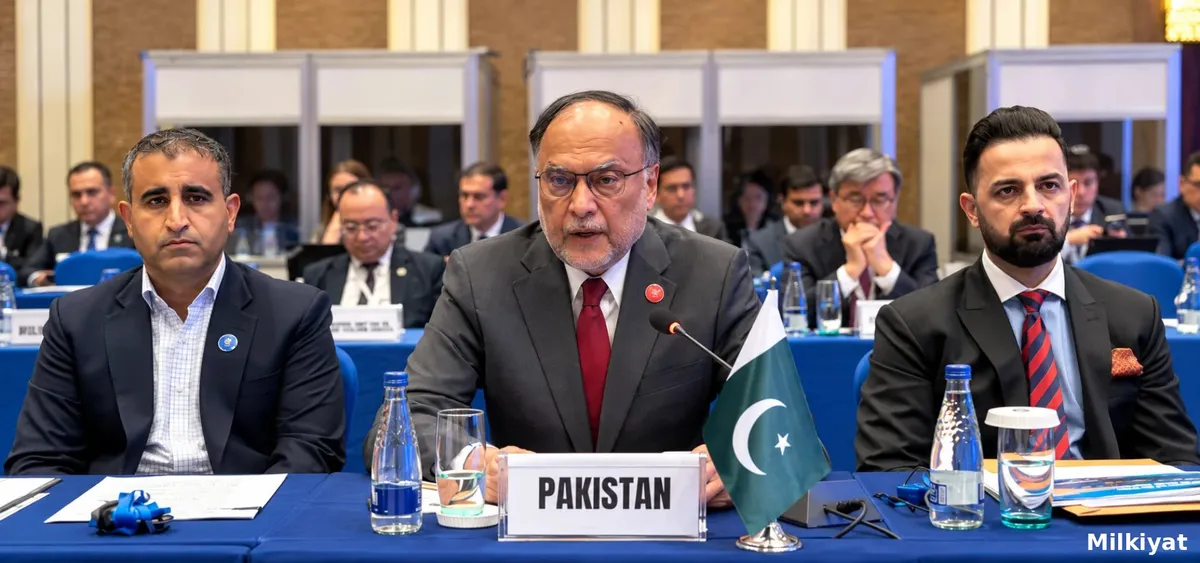
Pakistan has proposed developing next generation economic corridors under the Central Asia Regional Economic Cooperation framework. The government says CAREC Corridors 5 and 6 could connect Central Asian economies with Pakistan's Arabian Sea access and generate economic activity along the routes.
This report describes Pakistan putting forward a proposal within the existing CAREC framework rather than announcing a funded, scheduled infrastructure programme, and readers should treat it accordingly. No project list, budget allocation or construction timeline has been confirmed at this stage, which places this firmly in the category of a longer term strategic and investment positioning story rather than an imminent property or construction policy development.
The specific framing, connecting landlocked Central Asian economies with Pakistan's Arabian Sea access via Corridors 5 and 6, identifies Pakistan's coastal access as the core value proposition of this proposal, consistent with Pakistan's longstanding strategic positioning around its ports and sea access for regional trade. This is a structurally different kind of corridor story from domestic road or motorway programmes we have tracked, since its stated purpose is cross border and regional rather than purely domestic connectivity.
If CAREC Corridors 5 and 6 were to advance from proposal into funded, constructed infrastructure, the resulting improvement in regional transport connectivity could plausibly support demand for logistics parks, warehousing, industrial estates and Special Economic Zones sited along the relevant routes, given how directly transport corridor access tends to shape where this kind of commercial and industrial property development concentrates. This is the category of property demand most directly relevant to a story like this, considerably more so than residential property, which would see at most an indirect, longer term effect.
Regional economic corridor proposals of this kind typically involve multiple governments, multilateral development partners and complex cross border coordination, all of which mean the distance between a proposal being put forward and actual funded construction beginning can be considerable, often spanning years rather than months. Readers should watch for specific signals of progress, confirmed financing commitments, government agreements with CAREC partners, or funded project announcements for Corridors 5 and 6 specifically, rather than treating this proposal stage as indicating imminent construction activity.
Developers and investors with interests in logistics, warehousing, industrial estate or Special Economic Zone development should treat this as an early stage signal worth monitoring rather than a basis for near term decisions, given how much distance typically separates a regional corridor proposal from funded, executing infrastructure. The more consequential developments to watch for going forward would be confirmed financing agreements, specific route and project details, or construction timelines emerging from Pakistan's engagement with CAREC partners on Corridors 5 and 6, rather than this initial proposal itself.
Special Branch report flags safety gaps at College Road construction works in Rawalpindi after a child falls into an uncovered drain, prompting safety directives.
Federal Directorate of Education considers an engineering wing to manage repairs at 79 Islamabad schools and colleges, while CDA repairs five other buildings.
Rawalpindi WASA requests CDA to demarcate and transfer approximately 13 acres of land linked to Khanpur Dam's water supply, storage and pipeline infrastructure.
CDA reports over 41% progress on Islamabad Expressway's 8.5 km Service Road East, with all 153 underpass piles completed and drainage work continuing.