News
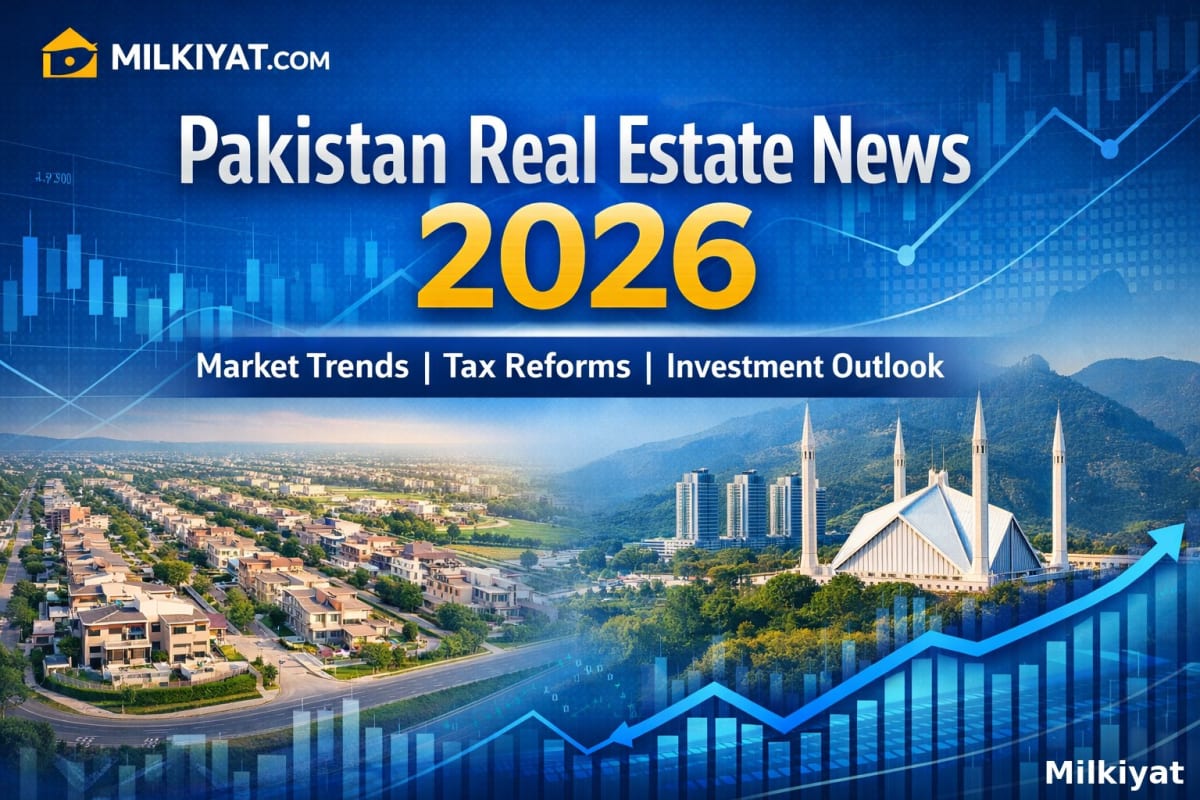
🏡 Pakistan Real Estate News 2026: Market Trends, Government Reforms & Investment Outlook

By wajahat Ali
Real Estate Analyst
Updated 3 min read
ShareWhatsApp
News
By wajahat Ali
Real Estate Analyst
Updated 3 min read
Pakistan’s real estate sector continues to remain one of the country’s largest investment industries, valued at over $400 billion. In 2026, the market is showing a transition phase—moving from speculative buying toward more stable, long-term investment patterns.
While activity has slowed compared to previous boom cycles, demand remains strong in major urban centers including Islamabad, Lahore, and Karachi, especially in housing societies and apartment projects.
The Government of Pakistan is preparing a real estate relief and reform package aimed at boosting construction activity and investor confidence.
👉 These reforms are expected to increase liquidity in the property market and attract both local and overseas investors.
The 2026 real estate market is shaped by the following key trends:
Overall, the market is becoming more end-user driven rather than investor speculation driven.
📍 Islamabad & Rawalpindi
Pakistan’s broader economy continues to influence property trends:
👉 Result: Market is stable but cautious, with gradual recovery expected.
⚠️ Risks & Challenges in 2026 Property Market
Experts suggest:
Pakistan’s real estate sector in 2026 is not in decline—it is evolving into a more regulated and stable market. Investors focusing on long-term growth, legal projects, and emerging housing demand are likely to benefit the most.
FBR notifies faceless income tax appeal rules, introducing anonymous commissioners, digital hearings and automated case allocation for tax disputes.
FBR replaces sales tax return STR-7 and revises purchase and sales invoice annexes, introducing expanded transaction and tax reporting requirements.
FBR seals a Karachi superstore outlet after finding Rs3.27 billion in off-system sales, POS violations and alleged sales tax irregularities.
Pakistan plans to split SNGPL and SSGCL into six to eight entities, restructure gas operations and shift over Rs3 trillion in circular debt.