News
Pakistan Secures Another Qatari LNG Cargo Through Strait of Hormuz

By Mariam Khan
Real Estate Analyst
3 min read
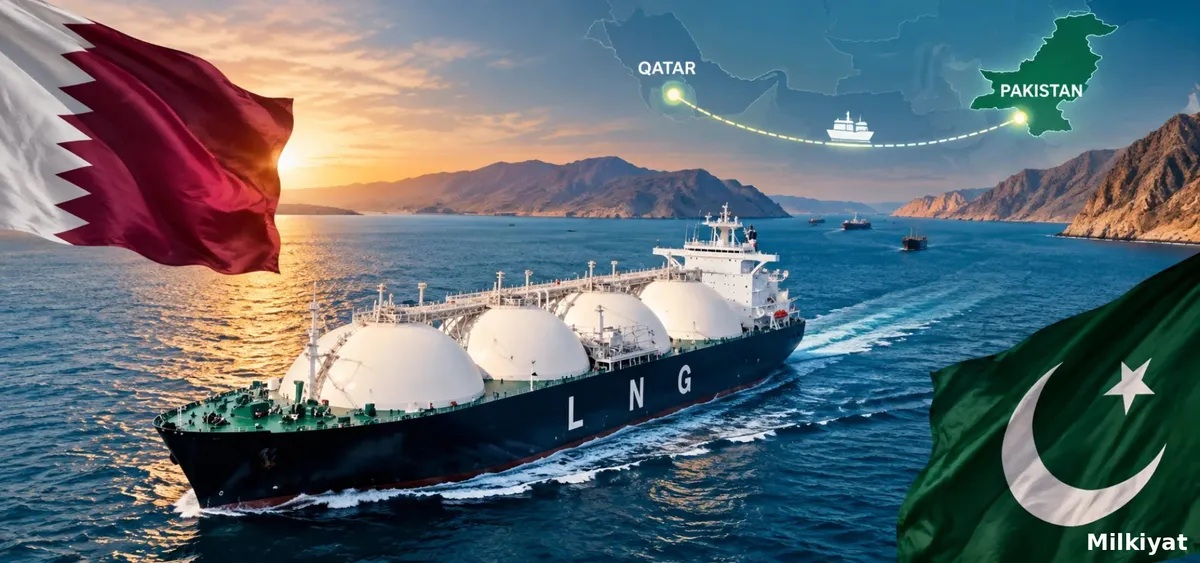
Pakistan has secured safe passage for another Qatari LNG shipment through the Strait of Hormuz, with the tanker expected to reach the country's LNG terminal on Tuesday, September 22, 2026. This will be Pakistan's second Qatari LNG delivery this month, and reduces the immediate need to turn to significantly more expensive spot market LNG purchases to cover near term demand.
Why Safe Passage Through Hormuz Is Not a Given Right Now
The Strait of Hormuz has been a central point of concern throughout the Gulf conflict that has run through most of this year, carrying roughly a third of the world's seaborne oil trade and a substantial share of global LNG shipments as well. Securing safe passage for a Qatari cargo specifically through this same chokepoint is a meaningful operational achievement in the current environment, since shipping through the strait has faced repeated disruption at various points this year, and Pakistan has previously had to rely more heavily on costlier spot market cargoes when scheduled deliveries through Hormuz were delayed or diverted.
Why This Matters More Than a Routine Delivery
Pakistan typically relies on a mix of long term supply agreements and spot market purchases to meet its LNG needs, and spot cargoes generally carry a significant price premium over contracted volumes, particularly during periods of regional supply uncertainty like the one that has persisted through much of this year. A second successful Qatari delivery within the same month reduces near term pressure to fill any supply gap through the spot market, which in turn limits one of the more direct channels through which Gulf conflict volatility has been feeding into Pakistan's domestic energy costs.
Why This Connects to Pakistan's Broader Energy Cost Picture
This delivery arrives against the backdrop of a Gulf conflict that has driven repeated volatility in international energy markets throughout the year, contributing directly to the fuel austerity measures Pakistan's government reintroduced earlier this month and to sustained pressure on domestic fuel prices. A reliable LNG supply chain, even amid that broader volatility, gives Pakistan's power and industrial sectors a degree of insulation from the most acute cost spikes that spot market dependence would otherwise expose the country to.
What This Means for Construction and Energy Intensive Industries
Reliable LNG supply reduces the immediate risk of severe energy shortages and additional cost shocks for energy intensive construction related industries, including cement, steel, glass, and ceramics manufacturing, all of which depend on stable natural gas supply for their production processes. For developers and contractors, a more secure near term gas supply picture is a modestly reassuring signal for the cost trajectory of these specific building materials, though it does not eliminate the broader exposure Pakistan's construction sector carries to the wider Gulf conflict, which continues to affect oil prices, freight costs, and transport expenses through other channels even when LNG deliveries themselves proceed smoothly.