News
Pakistan Targets $1 Billion Privatisation Proceeds, Discusses $10 Billion Currency Stabilisation Facility

By Mariam Khan
Real Estate Analyst
3 min read
ShareWhatsApp
News
By Mariam Khan
Real Estate Analyst
3 min read
Special Branch report flags safety gaps at College Road construction works in Rawalpindi after a child falls into an uncovered drain, prompting safety directives.
Federal Directorate of Education considers an engineering wing to manage repairs at 79 Islamabad schools and colleges, while CDA repairs five other buildings.
Rawalpindi WASA requests CDA to demarcate and transfer approximately 13 acres of land linked to Khanpur Dam's water supply, storage and pipeline infrastructure.
CDA reports over 41% progress on Islamabad Expressway's 8.5 km Service Road East, with all 153 underpass piles completed and drainage work continuing.
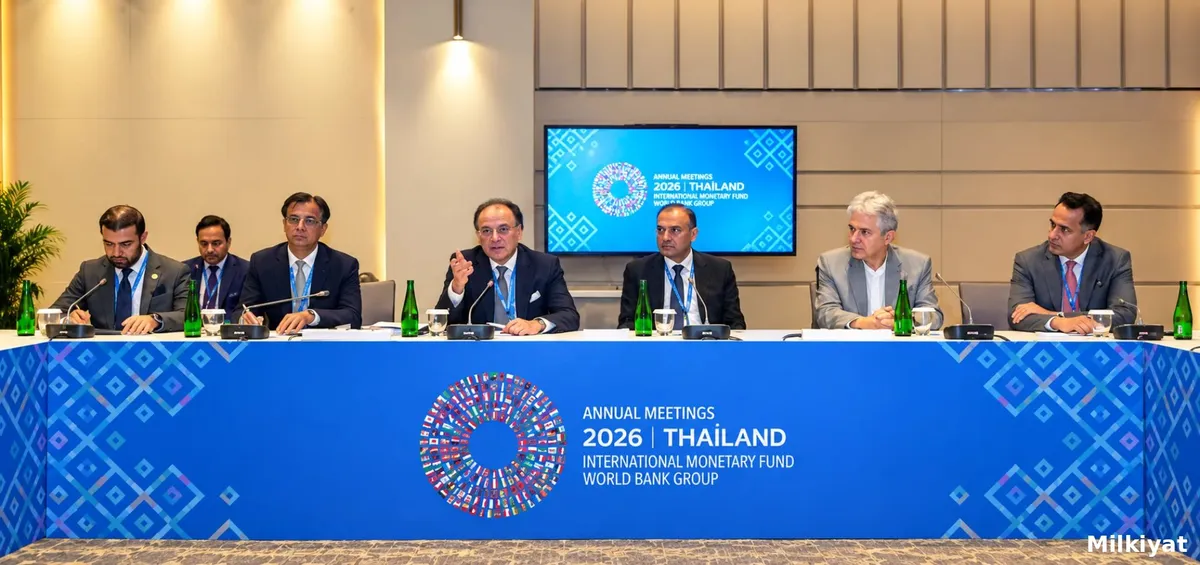
Pakistan is targeting more than $1 billion in privatisation proceeds during the current fiscal year as the government prepares to move ahead with transactions involving five or six state owned entities.
Finance Minister Muhammad Aurangzeb has also said Pakistan is discussing a proposed $10 billion currency stabilisation facility with the United States. The facility has not been finalised and no completion timeline has been announced.
For the property sector, the main relevance lies in currency stability, electricity sector reform and broader investor confidence rather than an immediate change in real estate demand.
The government's Privatisation Commission currently lists several active transactions across the power, aviation and financial sectors.
Ongoing processes include private sector participation in electricity distribution companies and the outsourcing of major airport operations.
These reforms matter for property and business activity because electricity reliability and airport infrastructure can influence operating costs, logistics and investment decisions.
However, privatisation itself does not guarantee lower electricity prices or better service. The eventual effect will depend on transaction terms, regulation and how new operators manage the assets.
Pakistan's property market is not directly linked to the exchange rate in the same way as export industries, but construction costs can still be affected by currency movements.
Imported machinery, electrical equipment, elevators, specialised fixtures and some construction inputs become more expensive when the rupee weakens.
The Finance Division has continued discussions with the United States on economic cooperation, investment and access to international capital, including broader efforts to strengthen Pakistan's external financial position.
If a large stabilisation facility is eventually agreed, it could reduce some exchange rate uncertainty. However, the proposed $10 billion arrangement remains under discussion and should not be treated as approved financing.
The finance minister has also identified elevated international oil prices as a risk to inflation.
Pakistan's Economic Survey 2025 to 2026 explains that higher global energy prices can raise domestic fuel, electricity and transport costs while also increasing pressure on the exchange rate.
For construction companies, this matters because higher fuel and freight costs can raise the delivered price of cement, steel and other building materials.
Any sustained increase in energy prices could therefore offset some of the benefits created by stronger currency stability.
The government's latest economic targets are important for the property market, but the impact is likely to be gradual.
Stronger economic growth and improved currency stability can support investment confidence, while power sector reform may influence operating conditions for residential, commercial and industrial properties.
However, none of the latest announcements establishes an immediate increase in property demand or prices.
Investors should watch whether the privatisation transactions are completed, whether the proposed currency facility moves beyond discussions and how energy prices develop over the coming months.
For continued coverage of economic policy and its impact on Pakistan's property market, readers can follow Milkiyat.