News
Pakistan's Long Term Government Borrowing Costs Jump After SBP Rate Hold

By Mariam Khan
Real Estate Analyst
3 min read
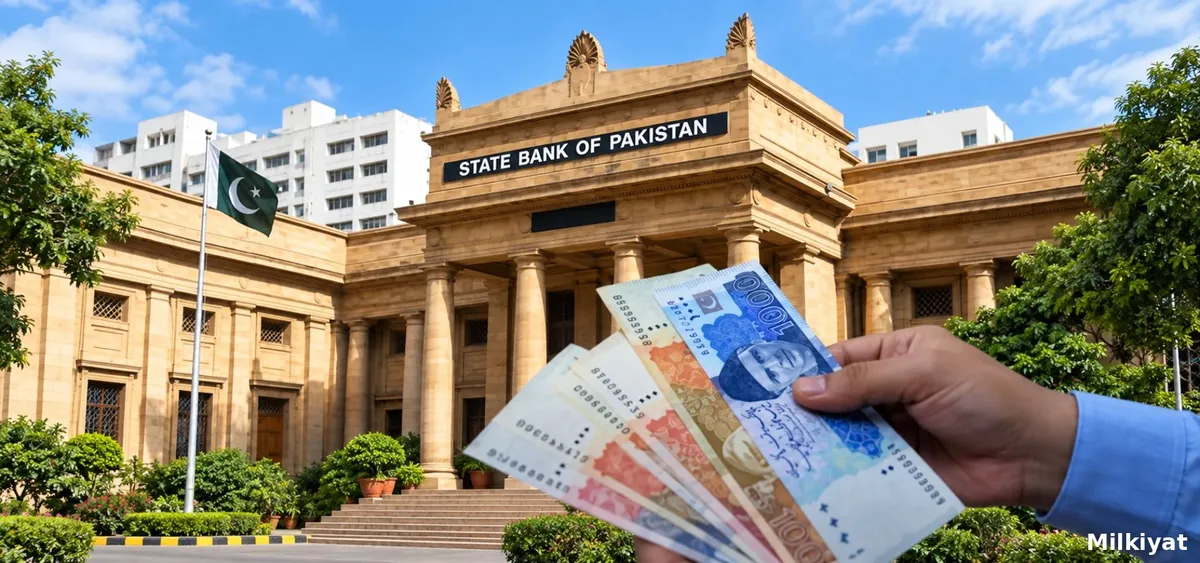
The government raised Rs181 billion through its latest Pakistan Investment Bond auction, but yields across every tenor on offer rose sharply, signalling that investors are demanding meaningfully higher compensation to hold longer term government debt even as the central bank has kept its policy rate unchanged.
How Sharply Yields Moved
The three year PIB yield rose 75 basis points to 12.49 percent, the five year yield climbed 69 basis points to the same 12.49 percent level, and the ten year yield increased 20 basis points to 12.50 percent. A jump of this size across three separate tenors in a single auction is a meaningful shift in investor sentiment, and the fact that shorter and medium term yields rose by more than the ten year yield suggests the market is pricing in near term uncertainty more sharply than long run expectations.
Why This Followed the Rate Hold
This auction came directly after the State Bank of Pakistan's Monetary Policy Committee voted to keep the policy rate unchanged at 11.5 percent, with seven of the ten committee members supporting the decision to hold rather than cut. The central bank's decision came against a backdrop of continuing inflation concerns and global commodity price risks, and bond investors appear to have responded to that same backdrop by demanding higher yields on government paper, since a hold rather than a cut signals the central bank itself remains cautious about the inflation outlook rather than confident that price pressures are easing.
What Rising Yields Signal About Financing Conditions
A rise in PIB yields across multiple tenors in a single auction generally reflects tighter financing conditions taking hold in the broader economy, since government bond yields function as a benchmark that commercial lending rates, including for developers and construction, tend to track over time. When investors demand a higher return to lend to the government itself, which is normally considered the lowest risk borrower in the domestic market, it typically becomes correspondingly more expensive for banks to raise the funds they in turn lend out to businesses and individuals, including for property and construction financing.
What This Means for Developer Financing and Mortgages
If this rise in yields proves sustained rather than a one off auction result, it could weigh on developer financing costs, construction borrowing, and mortgage affordability across the property sector, since these forms of credit are generally priced with reference to the same underlying government yield curve that just moved higher. Higher borrowing costs also tend to make fixed income instruments like government bonds relatively more attractive to investors compared to property, potentially affecting investor appetite for real estate as an asset class if the yield gap between the two continues to widen. Developers and buyers relying on bank financing should watch whether this yield increase persists across subsequent PIB auctions, since a single auction result is not yet confirmation of a durable shift in financing conditions.