News
PM Orders Compensation for Flood Damaged Homes as Pakistan Begins Monsoon Loss Assessment

By Mariam Khan
Real Estate Analyst
4 min read
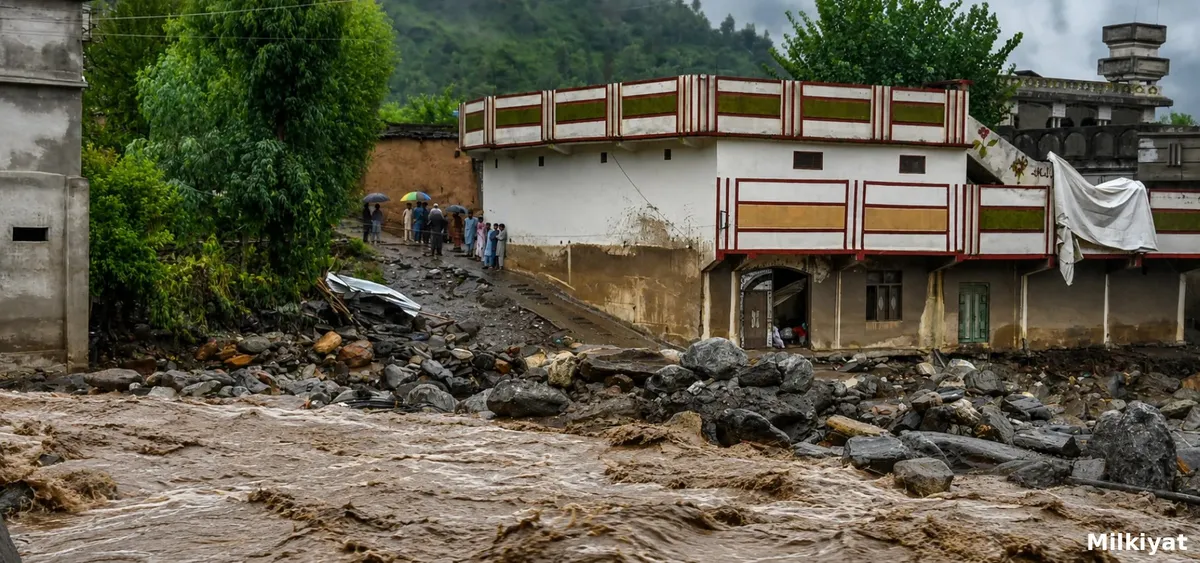
Prime Minister Shehbaz Sharif has directed authorities to extend financial assistance to households whose homes have been partially or completely destroyed in the recent monsoon flooding, expanding relief beyond the families of those killed to cover housing losses directly. Alongside the compensation order, the government has instructed relevant authorities to carry out a formal damage assessment and speed up rehabilitation work in the affected areas.
This shifts the ongoing monsoon story from a weather and drainage warning into something more concrete for the property sector: a housing damage and reconstruction question with real implications for how, and where, rebuilding actually happens over the coming months.
What a compensation order like this typically involves
Pakistan has run cash compensation programmes for flood affected households before, most notably the Watan Card scheme following the 2022 floods, under which the federal and provincial governments jointly financed one off cash grants to displaced families through a body called the Council of Common Interests, which brings together the Prime Minister and provincial chief ministers on shared national issues. That precedent gives a rough sense of the mechanics likely to follow this latest directive: a formal damage assessment first, categorising homes by the extent of destruction, followed by phased cash disbursement tied to reconstruction milestones rather than a single lump sum paid upfront.
The disaster management structure that carries out this kind of assessment sits primarily with the National Disaster Management Authority at the federal level, working alongside provincial disaster management authorities that handle the on the ground survey and verification work in each affected district.
Why this matters for real estate beyond the immediate relief
A government commitment to fund rebuilding, once it moves from announcement to actual disbursement, tends to generate a real construction demand spike in the affected areas, concentrated in the months immediately following. This has knock on effects worth watching for anyone active in property or construction in flood affected districts: local material and labour costs can firm up as rebuilding activity picks up, and contractors with capacity to take on reconstruction work in these areas may see a genuine near term opportunity.
There is also a structural question worth asking each time this cycle repeats. Rebuilding a destroyed home in exactly the same location, at the same elevation, with the same drainage exposure, restores what was there before without addressing why it flooded in the first place. Reconstruction efforts following past major flood events in Pakistan have, at least at the policy level, been framed around the idea of building back with greater resilience rather than simply restoring prior conditions, a principle sometimes referred to internationally as build back better in post disaster recovery planning. Whether that principle translates into genuinely flood resilient construction on the ground, through better site elevation, improved drainage connections, or stricter adherence to building codes in vulnerable zones, is the detail that will determine whether this round of rebuilding actually reduces exposure the next time a serious monsoon spell arrives.
What owners and buyers in affected areas should watch for
Households whose homes were damaged should expect the formal assessment process to be the gating step before any compensation is disbursed, which typically means documentation of the damage, sometimes with photographic or official verification, matters more at this stage than the announcement itself. Buyers considering property in areas that experienced flood damage this season should treat the coming rehabilitation period as an opportunity to observe, rather than assume, whether rebuilding in a given block or street addresses the underlying drainage and elevation issues, or simply reconstructs the same vulnerability in a new coat of plaster.
Reading this alongside the wider monsoon pattern
This compensation order arrives in the same stretch as renewed flood warnings across several Punjab cities, and the two are connected rather than separate stories. A city or block that has now generated both a fresh flood warning and an active damage assessment in the same fortnight is one where the underlying exposure is clearly established, not a one off unlucky spell. For anyone weighing a purchase, a build, or a repair decision in one of the affected districts, the compensation programme is worth tracking specifically for whether reconstruction guidance ends up requiring any change in siting, elevation, or drainage connection, since that detail is the difference between money spent restoring a known risk and money spent reducing it.
Sources
- National Disaster Management Authority, for background on Pakistan's federal disaster response structure
- Council of Common Interests, for background on how federal and provincial compensation programmes have been coordinated in the past
- Provincial Disaster Management Authority Punjab, for ongoing updates on damage assessment and relief programmes in Punjab specifically