News
Punjab Converts 8,000 Brick Kilns to Cleaner Technology, Tightens Construction Dust Controls

By Mariam Khan
Real Estate Analyst
3 min read
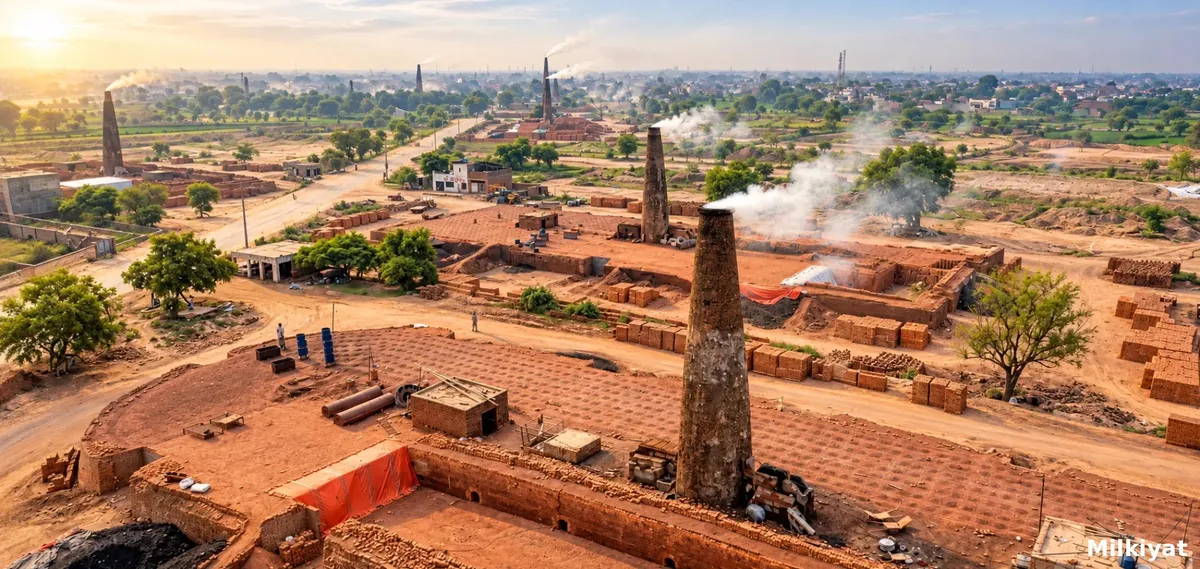
Punjab Senior Minister Marriyum Aurangzeb has reported progress on the province's anti-smog programme, including measures that affect brick manufacturing and construction. According to the report, about 8,000 brick kilns have been converted to zigzag technology and another 709 have been fully mechanised. Brick kilns have been assigned QR codes for monitoring, cameras are being installed on industrial chimneys, and construction sites are being required to adopt dust-control measures such as sprinklers. Punjab is also considering low-emission zones in heavily polluted areas. Environmental policy is published by the Punjab Environment Protection Department. These are newly reported implementation figures. They are not a brick price increase or a new construction ban.
Why the Kiln Figures Need Context
The report gives about 8,000 kilns converted to zigzag technology and 709 fully mechanised. The reports we have seen do not say whether the 709 are part of the 8,000 or additional to them, so we have not added the two together. They also do not give the total number of kilns in Punjab, so we cannot say what share has been converted or how many remain.
Why Monitoring Is a Separate Step From Conversion
QR codes on kilns and cameras on industrial chimneys are monitoring tools. They are aimed at checking emissions and compliance, and not at changing how bricks are made. The reports do not say how many kilns have QR codes, how many chimneys have cameras, or what penalties follow a violation. Until those details are published, the effect of the monitoring on kiln operators is unclear.
Why Dust Control Falls on Developers and Contractors
Construction sites are being required to adopt dust-control measures, including sprinklers. For developers and contractors, this adds a compliance task and some cost on each site. The reports do not give the cost, the deadline, or the penalty for non-compliance, and we have not assumed any. The requirement is also described as being applied to sites, so smaller projects should check whether it applies to them.
Why Low-Emission Zones Are Only Under Consideration
Punjab is considering low-emission zones in heavily polluted areas. The reports do not say which areas, what restrictions would apply or when a decision would be made. Restrictions on vehicles or activity in such zones could affect construction logistics if adopted, but at this stage it is a proposal.
Why Brick Costs Are Not Reported as Changing
The report does not announce any change in brick prices, and the digest we received states that this is not a price increase. Cleaner kilns could change production costs, but the reports do not say how, and we have not assumed a direction. Brick costs are also affected by fuel and transport, which are covered in our reports on diesel prices and construction costs and the October 10 fuel prices.
What This Means for Kiln Owners, Developers and Buyers
Kiln owners who have not converted should find out what the monitoring requirements mean for them. Developers should check dust-control rules for their sites before the winter smog season, since enforcement may tighten. Buyers are unlikely to see an immediate effect on property prices. The signals to watch are published conversion totals, any deadlines for the remaining kilns and enforcement notices for construction sites. Updates are published by the Punjab Environment Protection Department and the Government of Punjab.