News
Punjab Widens Environmental Crackdown as Construction Sites Face Sealing Over Violations
Real Estate Analyst
4 min read
The Punjab government has decided to launch a province wide operation intensifying monitoring of environmental violations, expanding field operations of the Environmental Protection Force ahead of the crop harvesting season, following a high level meeting chaired by Senior Provincial Minister Marriyum Aurangzeb on the directions of Chief Minister Maryam Nawaz Sharif. During the reporting period reviewed at the meeting, 30 construction sites were inspected and six were sealed for regulatory violations.
Beyond construction sites, the Environmental Protection Agency briefed the meeting that 68 industrial units were inspected during the period, with environmental monitoring separately carried out at 58 industrial units. Eighteen units were issued notices for violating environmental laws, and four were sealed. A crackdown on single use plastic and polythene separately resulted in 314 inspections, the sealing of 36 premises, and confiscation of 44 kilograms of prohibited plastic products, alongside fines amounting to hundreds of thousands of rupees. It was decided that the Environmental Force, EPA, and other relevant departments would expand operations across Punjab and take strict legal action against industrial units, construction sites, vehicles, and businesses found violating environmental regulations.
This renewed crackdown comes specifically as Punjab prepares for the crop harvesting season, a period officials have directly linked to sharp deterioration in air quality driven by agricultural activity, industrial emissions, and vehicular pollution combined. Positioning construction site enforcement within this same seasonal push signals that dust and particulate emissions from active building sites are being treated as a contributing factor to Punjab's broader seasonal air quality decline, not as an isolated construction sector issue.
Construction site enforcement of this kind operates under a specific, formally issued order from EPA Punjab's Director General under Section 6(1)(t) of the Punjab Environmental Protection Act, 1997, covering dust suppression and control at building construction sites. That order requires construction sites across Punjab to display compliance guidelines prominently on a cloth banner at the site itself, and states plainly that any contravention is punishable under Section 188 of the Pakistan Penal Code. Separately, EPA Punjab has a standardised sealing proclamation template, issued under Section 5(4) of the same Act, formally affixed at the outer gate of any unit or site found causing pollution, giving this enforcement a documented, consistent legal and procedural basis rather than ad hoc administrative action.
Karachi police have submitted a fresh charge sheet in the Gul Plaza fire case, placing primary responsibility on the shopping mall’s management over serious fire safety failures. The findings have renewed scrutiny of safety compliance, emergency exits and legal liability across Karachi’s older commercial plazas.
Prime Minister Shehbaz Sharif has urged early groundbreaking of Pakistan’s ML-1 railway project as the government and ADB push for faster progress on railway reforms, freight connectivity, and infrastructure development. The project could have major implications for industrial land, warehousing, and logistics property along the Karachi–Peshawar corridor.
KDA has identified more than 350 shops, houses and structures on authority land worth over Rs8 billion in North Karachi. Occupants unable to prove legal title could face eviction and demolition.
Punjab has launched Mandi Mart projects in Lahore, Multan and Faisalabad, offering regulated commercial space linked to agricultural market modernisation. The Kahna Kacha Phase I commercial plot draw is scheduled for 10 September 2026.
Real Estate Analyst
4 min read
The Punjab government has decided to launch a province wide operation intensifying monitoring of environmental violations, expanding field operations of the Environmental Protection Force ahead of the crop harvesting season, following a high level meeting chaired by Senior Provincial Minister Marriyum Aurangzeb on the directions of Chief Minister Maryam Nawaz Sharif. During the reporting period reviewed at the meeting, 30 construction sites were inspected and six were sealed for regulatory violations.
Beyond construction sites, the Environmental Protection Agency briefed the meeting that 68 industrial units were inspected during the period, with environmental monitoring separately carried out at 58 industrial units. Eighteen units were issued notices for violating environmental laws, and four were sealed. A crackdown on single use plastic and polythene separately resulted in 314 inspections, the sealing of 36 premises, and confiscation of 44 kilograms of prohibited plastic products, alongside fines amounting to hundreds of thousands of rupees. It was decided that the Environmental Force, EPA, and other relevant departments would expand operations across Punjab and take strict legal action against industrial units, construction sites, vehicles, and businesses found violating environmental regulations.
This renewed crackdown comes specifically as Punjab prepares for the crop harvesting season, a period officials have directly linked to sharp deterioration in air quality driven by agricultural activity, industrial emissions, and vehicular pollution combined. Positioning construction site enforcement within this same seasonal push signals that dust and particulate emissions from active building sites are being treated as a contributing factor to Punjab's broader seasonal air quality decline, not as an isolated construction sector issue.
Construction site enforcement of this kind operates under a specific, formally issued order from EPA Punjab's Director General under Section 6(1)(t) of the Punjab Environmental Protection Act, 1997, covering dust suppression and control at building construction sites. That order requires construction sites across Punjab to display compliance guidelines prominently on a cloth banner at the site itself, and states plainly that any contravention is punishable under Section 188 of the Pakistan Penal Code. Separately, EPA Punjab has a standardised sealing proclamation template, issued under Section 5(4) of the same Act, formally affixed at the outer gate of any unit or site found causing pollution, giving this enforcement a documented, consistent legal and procedural basis rather than ad hoc administrative action.
Karachi police have submitted a fresh charge sheet in the Gul Plaza fire case, placing primary responsibility on the shopping mall’s management over serious fire safety failures. The findings have renewed scrutiny of safety compliance, emergency exits and legal liability across Karachi’s older commercial plazas.
Prime Minister Shehbaz Sharif has urged early groundbreaking of Pakistan’s ML-1 railway project as the government and ADB push for faster progress on railway reforms, freight connectivity, and infrastructure development. The project could have major implications for industrial land, warehousing, and logistics property along the Karachi–Peshawar corridor.
KDA has identified more than 350 shops, houses and structures on authority land worth over Rs8 billion in North Karachi. Occupants unable to prove legal title could face eviction and demolition.
Punjab has launched Mandi Mart projects in Lahore, Multan and Faisalabad, offering regulated commercial space linked to agricultural market modernisation. The Kahna Kacha Phase I commercial plot draw is scheduled for 10 September 2026.
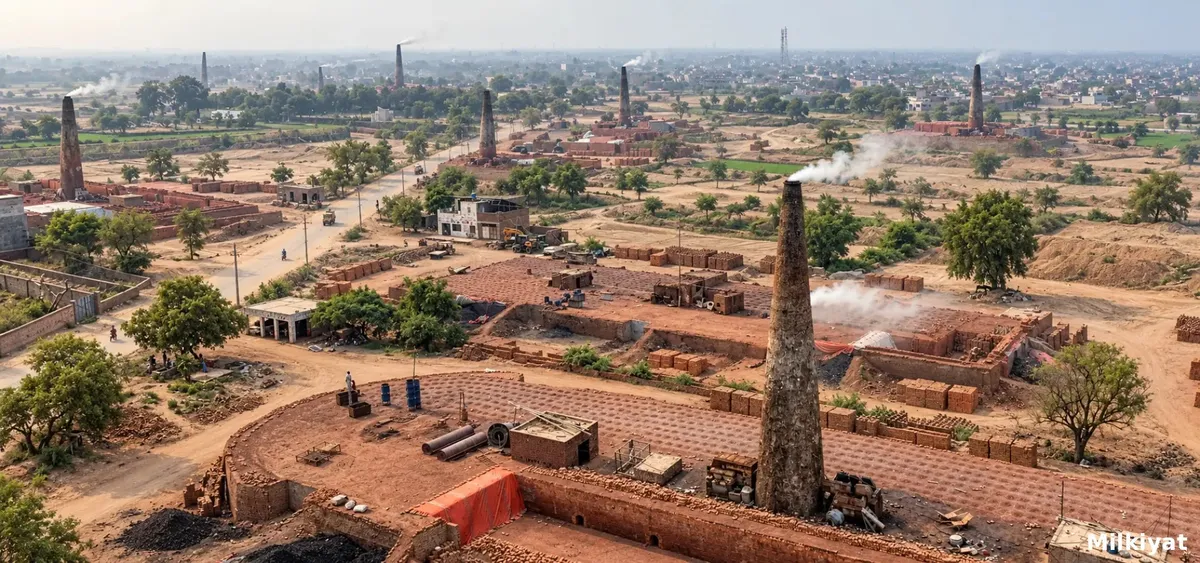
This construction site action sits within a considerably larger, ongoing EPA Punjab enforcement effort across the province. Earlier data covering a comparable prior period showed EPA Punjab conducting well over 100,000 inspections across roughly 20 months, resulting in thousands of units demolished and thousands more sealed for continuous violations, alongside thousands of FIRs registered and tens of millions of rupees in fines imposed on polluting industries. Brick kiln enforcement specifically has also intensified this year, with hundreds of kilns demolished and hundreds more sealed between January and July 2026 alone as EPA Punjab has expanded action against brick kilns, industrial units, plastic factories, construction sites, and smoke emitting vehicles together ahead of the winter smog season.
Officials at the meeting stressed that timely information from citizens can play an important role in ensuring effective enforcement and helping eliminate pollution across Punjab. The meeting was also told that implementation of the Chief Minister's broader clean and healthy Punjab vision is continuing, with efforts focused on eliminating pollution and providing citizens a cleaner, healthier environment.
Given that construction site inspections and sealings are being explicitly folded into Punjab's broader, intensifying environmental enforcement push ahead of the harvesting and smog season, developers and contractors with active construction sites anywhere in the province should treat dust suppression compliance as an immediate, non negotiable requirement rather than a routine formality. Under EPA Punjab's own official order, this specifically means visible compliance signage at the site, active dust and particulate control measures, and readiness for site inspection at any time, given the demonstrated willingness of authorities to move directly to sealing for non compliance. Given how this enforcement pattern has scaled considerably over the current year across multiple sectors simultaneously, construction firms should expect inspection frequency and sealing risk to continue rising through the harvesting and winter smog period specifically, rather than treating this as an isolated, time limited enforcement wave.
This construction site action sits within a considerably larger, ongoing EPA Punjab enforcement effort across the province. Earlier data covering a comparable prior period showed EPA Punjab conducting well over 100,000 inspections across roughly 20 months, resulting in thousands of units demolished and thousands more sealed for continuous violations, alongside thousands of FIRs registered and tens of millions of rupees in fines imposed on polluting industries. Brick kiln enforcement specifically has also intensified this year, with hundreds of kilns demolished and hundreds more sealed between January and July 2026 alone as EPA Punjab has expanded action against brick kilns, industrial units, plastic factories, construction sites, and smoke emitting vehicles together ahead of the winter smog season.
Officials at the meeting stressed that timely information from citizens can play an important role in ensuring effective enforcement and helping eliminate pollution across Punjab. The meeting was also told that implementation of the Chief Minister's broader clean and healthy Punjab vision is continuing, with efforts focused on eliminating pollution and providing citizens a cleaner, healthier environment.
Given that construction site inspections and sealings are being explicitly folded into Punjab's broader, intensifying environmental enforcement push ahead of the harvesting and smog season, developers and contractors with active construction sites anywhere in the province should treat dust suppression compliance as an immediate, non negotiable requirement rather than a routine formality. Under EPA Punjab's own official order, this specifically means visible compliance signage at the site, active dust and particulate control measures, and readiness for site inspection at any time, given the demonstrated willingness of authorities to move directly to sealing for non compliance. Given how this enforcement pattern has scaled considerably over the current year across multiple sectors simultaneously, construction firms should expect inspection frequency and sealing risk to continue rising through the harvesting and winter smog period specifically, rather than treating this as an isolated, time limited enforcement wave.
