News
Punjab’s 120,000 EV Plan Could Reshape Urban Mobility

By wajahat Ali
Real Estate Analyst
5 min read
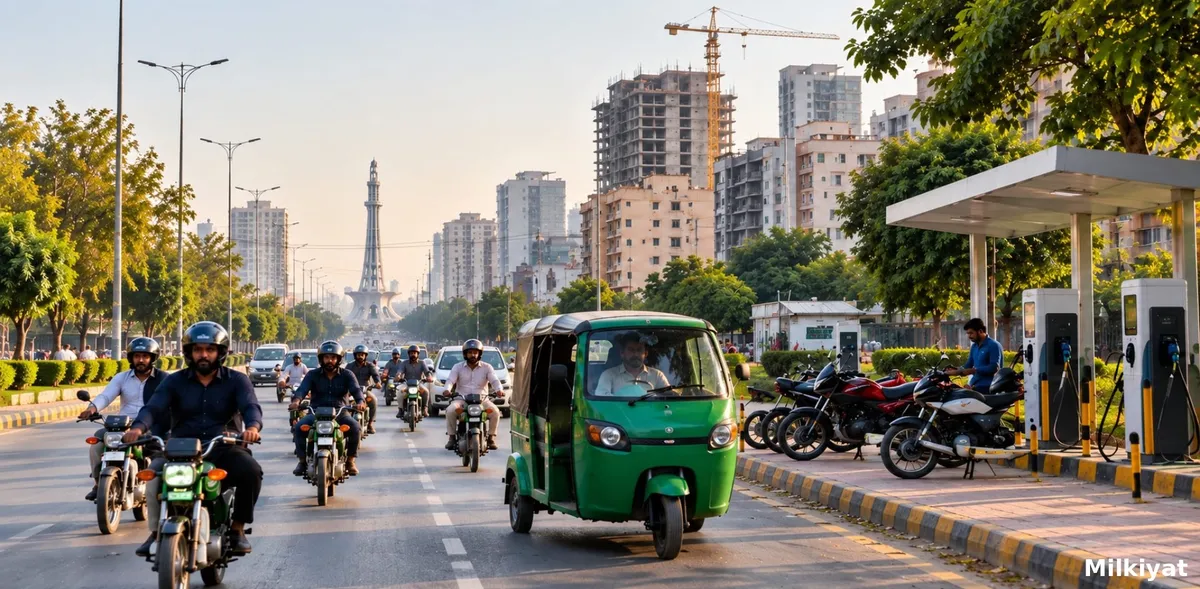
Punjab is preparing to expand electric mobility across the province with a plan to introduce about 120,000 electric two and three wheelers, an initiative that could change how residents move through some of Pakistan’s most congested urban areas and, over time, how parts of those cities develop.
The proposal is being developed under the Punjab Clean Air Programme, the provincial government’s broader effort to reduce air pollution and combat the severe smog that has become a recurring problem across Punjab.
Officials and industry representatives met this week to discuss financing, charging infrastructure, battery management and a system for measuring the emissions reductions generated by the transition to electric vehicles.
The government plans to make the vehicles available through affordable financing arrangements, potentially putting electric motorcycles and three wheelers within reach of commuters, commercial operators, women, young people and lower income households.
The programme is also being designed to generate carbon credits from verified reductions in emissions. Officials said the project could eventually participate in international carbon markets under the Verified Carbon Standard.
A Transport Plan With Wider Urban Consequences
The immediate objective is environmental. Replacing petrol powered motorcycles and three wheelers with electric alternatives could reduce tailpipe emissions and contribute to cleaner air.
But the consequences of a large scale shift in urban transport could extend beyond pollution.
In Punjab’s rapidly expanding cities, transport connections are closely tied to where people choose to live, work and invest. Areas with easier access to major roads, public transport and commercial centres often become more attractive as cities expand.
A wider electric vehicle network could reinforce that trend if charging facilities, roads and supporting services are developed alongside new residential and commercial areas.
That does not mean the government’s EV programme will automatically increase property prices. Property values depend on a much broader set of factors, including road access, infrastructure, planning regulations, employment centres, utilities and the quality of development.
But better mobility can gradually alter the relative accessibility of different parts of a city.
Infrastructure Will Be the Test
The success of the programme will depend in part on infrastructure.
Government officials and private sector participants discussed the need for charging stations, battery waste management and financing mechanisms during the recent consultation.
For electric two and three wheelers to become a practical alternative for large numbers of residents, charging infrastructure will have to expand alongside vehicle adoption.
That could create demand for new forms of supporting infrastructure, including charging points at commercial centres, transport corridors, workplaces and potentially residential developments.
For property developers, the shift could eventually make mobility infrastructure a more important consideration when planning large housing schemes and commercial projects.
Financing Could Determine Who Benefits
The government is considering low interest instalment and financing models to make the vehicles affordable to ordinary commuters and commercial users.
Representatives from the Bank of Punjab, vehicle manufacturers, dealers, battery swapping companies, financial institutions and several provincial departments participated in the consultation.
The programme also aims to ensure that women and lower income groups are able to participate rather than limiting electric mobility to higher income households.
That distinction could be important in a province where motorcycles and three wheelers are a major part of everyday transportation.
If financing remains accessible, the programme could have a larger effect on mobility than a scheme focused primarily on private electric cars.
From Clean Air to Urban Development
Punjab’s electric vehicle initiative is part of a larger clean air strategy.
The province has also planned the introduction of 600 electric buses and other measures intended to reduce pollution from transport and agriculture.
The broader clean air programme is designed to address air pollution through interventions across transport, agriculture, industry and other sectors.
The latest proposal for 120,000 electric two and three wheelers would significantly broaden the reach of that transition.
For Punjab’s property market, the more important question may therefore not be how many electric vehicles are introduced, but where the supporting infrastructure is eventually built.
As cities grow outward, transport corridors can become anchors for commercial activity and new housing. Improvements in connectivity can make previously less accessible areas more viable for development.
The relationship is gradual rather than automatic. A charging station alone does not create a property boom. But sustained investment in mobility, roads and urban infrastructure can influence the way cities expand.
A Programme Still Being Developed
The 120,000 vehicle figure is part of a programme currently being developed rather than a fully operational consumer scheme.
The September consultation focused on finalising financing, infrastructure and mechanisms for measuring and verifying emissions reductions. Feedback from stakeholders is expected to be incorporated into the project’s formal design documents and implementation procedures.
That leaves important details, including the precise financing structure, eligibility requirements, rollout schedule and charging network coverage, to be established.
For now, the initiative represents something larger than a vehicle distribution programme.
Punjab is attempting to connect clean transport, climate finance and urban development in a single policy framework.
If the infrastructure keeps pace with the vehicles, the effects could eventually be felt not only on the province’s roads, but also in the way its cities grow.