News
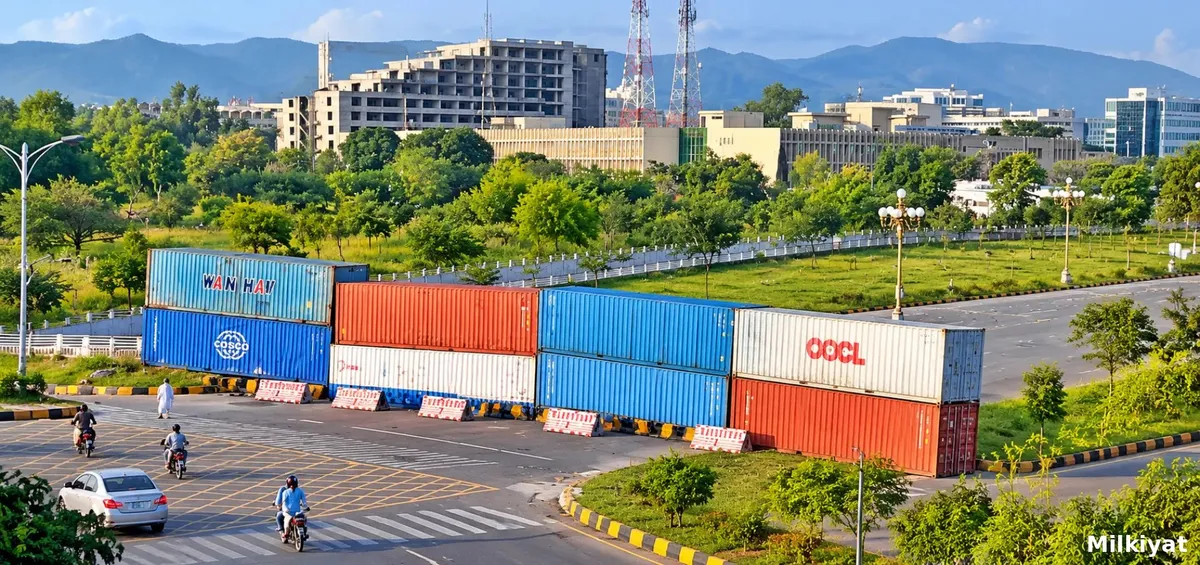
Road Closures and Protests Could Disrupt Construction and Material Supply Chains

By Mariam Khan
Real Estate Analyst
3 min read
Finance Minister Muhammad Aurangzeb has warned that strikes, long marches, and sit ins planned across the coming week, along with the road closures typically associated with them, could cost Pakistan's economy approximately Rs120 billion per day, with construction and material supply chains specifically named among the activities at risk.
How the Rs120 Billion Estimate Breaks Down
The largest share of the projected daily loss, Rs86 billion, falls on the services sector, spanning financial services, communications, transport, retail, wholesale, and hospitality. A further Rs25 billion is attributed to industrial activity, an estimate that Aurangzeb specifically said covers construction, finished goods, raw materials, and broader supply chain related activity. Agriculture accounts for an additional Rs9 billion tied to transportation of perishable goods, dairy, and related trade, while the government itself stands to lose Rs17 billion in foregone revenue if the disruptions materialise as projected.
Why the Construction Figure Is the One That Matters Here
Unlike some of the other categories in this estimate, the construction and supply chain component is not a background assumption, it was named explicitly by the finance minister as part of the Rs25 billion industrial loss figure. Road closures around major urban centres directly interrupt the movement of cement, steel, bricks, and other bulk construction materials between suppliers and active building sites, and can equally prevent construction labour and machinery from reaching sites on schedule, meaning even a short closure window can meaningfully delay work already under way rather than simply raising costs at the margin.
Who Is Marching and Why It Matters for Timing
Three separate groups have announced marches in the coming week. Jamaat e Islami is demanding removal of the petroleum development levy, Kissan Ittehad is seeking relief measures for farmers, and Pakistan Tehreek e Insaf is calling for the release of its party founder. With three distinct groups mobilising around different demands in the same window, the risk of overlapping or compounding road closures across multiple cities is meaningfully higher than it would be with a single, isolated demonstration, which is part of why the finance minister's warning frames this as a cumulative, economy wide risk rather than a localised disruption.
Why This Is a Short Term Risk, Not a Structural Shift
It is worth being clear about what this warning does and does not signal. Aurangzeb described the potential disruption as self inflicted pain to an economic stabilisation achieved through difficult decisions, framing this explicitly as a risk to ongoing economic momentum rather than evidence of any underlying weakness in construction demand or the property market itself. If the marches and associated closures proceed as announced, the practical effect for developers and contractors is likely to be temporary delays in material delivery and site access rather than a lasting change in project economics, provided the disruption does not extend well beyond the coming week.
What This Means for Developers and Contractors
Developers and contractors with active projects near likely march routes or affected urban centres, particularly around Islamabad given the destinations named for these marches, should build short term contingency into material delivery schedules and labour planning for the coming week specifically. This is a near term construction risk worth factoring into scheduling decisions right now, rather than a signal that requires any change to longer term project planning or investment decisions.