News
Sindh Backs New Sukkur Airport and Major Karachi Airport Expansion

By Mariam Khan
Real Estate Analyst
4 min read
The Sindh government has pledged support to the Pakistan Airports Authority for a major aviation development package covering a new greenfield airport in Sukkur, a substantial expansion and modernisation of Jinnah International Airport in Karachi, an upgrade of Hyderabad Airport, and the development of Pakistan's first dedicated aviation university in Hyderabad. The provincial government has directed relevant departments to expedite land acquisition, land records coordination, road connectivity, and regional development planning to support the projects.
The Sukkur Greenfield Airport
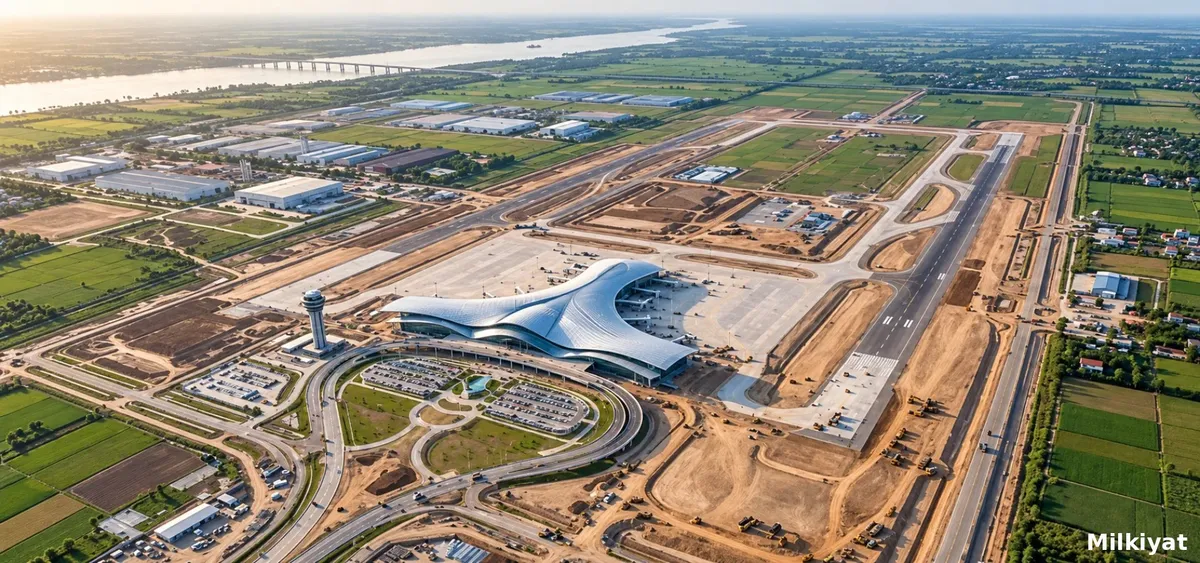
The proposed Sukkur airport is designed to handle 1.6 million passengers annually and would require approximately 3,000 acres of land, positioned to serve a catchment area of roughly 29.6 million people within a three hour radius. Beyond serving as a regional gateway for Upper Sindh, the airport is also being planned as an alternative diversion option for Karachi traffic. The project is being structured around a public private partnership model that would involve land equity participation, rather than being funded entirely through direct government spending.
The Scale of the Karachi Expansion
At Jinnah International Airport, two expansion options are under consideration. The first would expand the terminal from 115,000 to 400,000 square metres and increase boarding bridges from 12 to 25, while a larger second option would add up to 50 boarding bridges and lift capacity to as much as 75 million passengers annually. Planned infrastructure improvements include a new 285 foot air traffic control tower, a modern ten bay fire station, upgraded taxiways and navigation aids, and passenger facility upgrades incorporating Indus Valley cultural heritage elements, alongside a runway extension from 3,200 to 3,500 metres that has already been completed.
Hyderabad's Dual Role as Airport Upgrade and Aviation Education Hub
Hyderabad Airport is set for a runway expansion from 7,000 to 11,500 feet, positioning it as both a regional hub and a further diversion option for Karachi traffic, though the project faces land issues affecting roughly 1,473 acres tied to mutations and encroachments that will need to be resolved. Separately, the existing Civil Aviation Training Institute in Hyderabad, a facility spanning more than 100 acres that has been operational since 1982 and has trained more than 25,000 people across 2,500 courses from 49 countries, is planned for conversion into Pakistan's first dedicated aviation university.
Why the Land Acquisition Directive Matters Most for Real Estate
Sindh Chief Minister Murad Ali Shah's directive to accelerate land acquisition, land records coordination, and road connectivity around these sites is the piece of this announcement with the most direct bearing on property markets. Airport development of this scale typically drives demand for land along access corridors and in surrounding catchment areas well before construction itself concludes, and the explicit instruction to prioritise land records and road connectivity suggests the provincial government is preparing the regulatory groundwork for that kind of surrounding development rather than treating the airports as standalone infrastructure projects.
What This Means for Property Markets Around Sukkur, Karachi, and Hyderabad
For Sukkur specifically, a confirmed greenfield airport requiring 3,000 acres and built around a public private partnership with land equity participation represents a genuine, near term catalyst for land values and commercial interest in Upper Sindh, an area that has not historically attracted this scale of infrastructure investment. Around Karachi, an expansion of this magnitude at Jinnah International Airport is likely to reinforce demand for logistics, hospitality, and commercial development along existing airport corridors over the coming years. In Hyderabad, the combination of an airport upgrade and a new aviation university adds two separate, reinforcing drivers of longer term property and commercial interest in the city, though the unresolved land issues affecting more than a thousand acres there are a genuine complication worth watching as that specific project proceeds.