News
Two New Flood Protection Dykes Completed at Jalalpur Pirwala

By Mariam Khan
Real Estate Analyst
4 min read
ShareWhatsApp
News
By Mariam Khan
Real Estate Analyst
4 min read
News
By Mariam Khan
Real Estate Analyst
4 min read
The Punjab government has completed two new flood protection dykes at Jalalpur Pirwala, designed to protect the city's urban areas and surrounding rural settlements from possible flooding, with authorities simultaneously placing flood relief operations along the Sutlej, Chenab, and Indus rivers on heightened readiness.
Jalalpur Pirwala is a historic city roughly 90 kilometres south of Multan, named after the Sufi saint Jalaluddin Surkh Posh Bukhari, with a population that had already exceeded 500,000 as of the 2017 census. The city's economy rests substantially on agriculture and trade, alongside meaningful income from overseas remittances, meaning the surrounding riverine land these new dykes protect is not incidental but directly tied to the livelihoods of the local population.
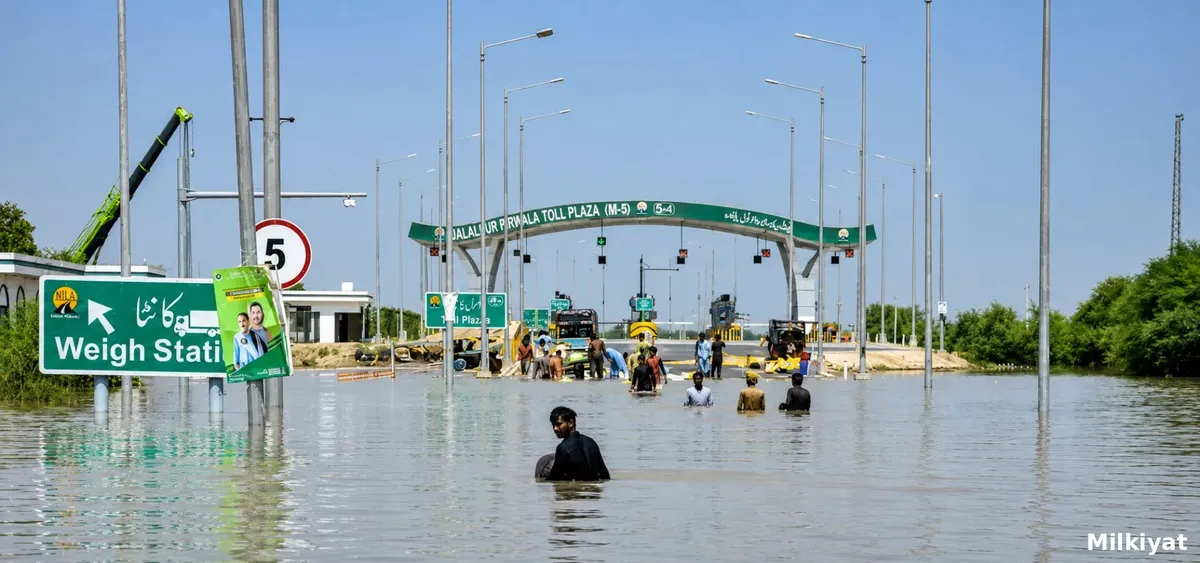
These dykes are not precautionary infrastructure built in the abstract. Jalalpur Pirwala came close to catastrophic inundation during Pakistan's severe 2025 flooding, when rising Chenab and Sutlej river levels prompted large scale evacuation orders for the city and surrounding tehsil, with reports at the time describing roughly half a million people stranded as floodwater inundated villages, some residents seeking shelter under rooftops with insufficient boats available for evacuation and helicopter operations complicated by poor weather. During that same crisis, five people, including four children, drowned in Jalalpur Pirwala after a rescue boat capsized in the Chenab during an evacuation attempt. The 2025 floods nationally submerged over 2.2 million hectares of agricultural land and swept away significant sections of Punjab's road network, including a portion of the M5 motorway connecting Sukkur and Multan specifically near Jalalpur Pirwala.
Given that the 2025 crisis was driven substantially by locally built, informal earthen embankments failing under sustained pressure from rising river levels, formal, engineered dyke construction at this specific location represents a meaningfully different, more durable category of flood defence than the ad hoc protective measures residents have previously had to rely on. The completion of two dedicated dykes here specifically targets the same vulnerability that nearly overwhelmed the city and its surrounding rural settlements the previous year.
Authorities placing flood relief operations along the Sutlej, Chenab, and Indus simultaneously on heightened alert reflects the same multi river vulnerability that defined the 2025 crisis, when Punjab's Sutlej, Ravi, and Chenab rivers all swelled together, compounding flood risk across the province's southern districts rather than presenting a single, isolated threat. This kind of coordinated, multi river readiness posture suggests authorities are treating this year's monsoon season with the same level of seriousness the 2025 events demonstrated was genuinely warranted.
No specific technical details on the new dykes' height, engineering specifications, or total protected area have been detailed alongside this completion announcement. Given the scale of what these structures are meant to withstand, based directly on the documented 2025 flood levels at this same location, their actual performance during a comparable future flood event remains the genuine test of their adequacy.
Flood protection infrastructure of this kind carries direct, material relevance for land usability, housing safety, and agricultural property investment decisions across river adjacent areas of South Punjab, particularly in a district that experienced near catastrophic flooding within the past year. Property owners, farmers, and prospective investors evaluating land near Jalalpur Pirwala or comparable Chenab and Sutlej adjacent settlements should treat this dyke completion as a genuine, positive development for flood resilience, while recognising that the underlying river system's demonstrated capacity for extreme, multi river flooding in 2025 means proximity to these waterways will likely continue to warrant serious, ongoing risk assessment regardless of new protective infrastructure. Given how quickly informal embankments failed during the 2025 crisis, buyers and current landowners should specifically confirm whether any protective structure near a given property is a formally engineered dyke of the kind completed here, rather than an informal, locally built embankment of the kind that proved insufficient the previous year.
Federal Minister Ahsan Iqbal has directed CDA to either immediately allot the required land to PIDE or refund approximately Rs4 billion after the institute waited six years despite completing payments by 2020.
Authorities in Topi, Swabi have launched demolitions against illegal buildings and structures along the Badri Nullah. Officials say the encroachments were blocking the natural water channel and contributing to flooding, with the enforcement operation expected to continue.
Authorities in Peshawar have declared 27 housing and plotting schemes in Shah Alam tehsil illegal, warning citizens against bookings, investments, and land transactions. Buyers and existing file holders are advised to verify NOC status directly with the relevant authorities before making any property-related decision.
Karachi has completed the Rs360 million rehabilitation of Jahangir Road from Gurumandir to Teen Hatti. The 1.4-kilometre project includes road widening, drainage improvements, footpaths, lane markings and new street lighting.
The Punjab government has completed two new flood protection dykes at Jalalpur Pirwala, designed to protect the city's urban areas and surrounding rural settlements from possible flooding, with authorities simultaneously placing flood relief operations along the Sutlej, Chenab, and Indus rivers on heightened readiness.
Jalalpur Pirwala is a historic city roughly 90 kilometres south of Multan, named after the Sufi saint Jalaluddin Surkh Posh Bukhari, with a population that had already exceeded 500,000 as of the 2017 census. The city's economy rests substantially on agriculture and trade, alongside meaningful income from overseas remittances, meaning the surrounding riverine land these new dykes protect is not incidental but directly tied to the livelihoods of the local population.
These dykes are not precautionary infrastructure built in the abstract. Jalalpur Pirwala came close to catastrophic inundation during Pakistan's severe 2025 flooding, when rising Chenab and Sutlej river levels prompted large scale evacuation orders for the city and surrounding tehsil, with reports at the time describing roughly half a million people stranded as floodwater inundated villages, some residents seeking shelter under rooftops with insufficient boats available for evacuation and helicopter operations complicated by poor weather. During that same crisis, five people, including four children, drowned in Jalalpur Pirwala after a rescue boat capsized in the Chenab during an evacuation attempt. The 2025 floods nationally submerged over 2.2 million hectares of agricultural land and swept away significant sections of Punjab's road network, including a portion of the M5 motorway connecting Sukkur and Multan specifically near Jalalpur Pirwala.
Given that the 2025 crisis was driven substantially by locally built, informal earthen embankments failing under sustained pressure from rising river levels, formal, engineered dyke construction at this specific location represents a meaningfully different, more durable category of flood defence than the ad hoc protective measures residents have previously had to rely on. The completion of two dedicated dykes here specifically targets the same vulnerability that nearly overwhelmed the city and its surrounding rural settlements the previous year.
Authorities placing flood relief operations along the Sutlej, Chenab, and Indus simultaneously on heightened alert reflects the same multi river vulnerability that defined the 2025 crisis, when Punjab's Sutlej, Ravi, and Chenab rivers all swelled together, compounding flood risk across the province's southern districts rather than presenting a single, isolated threat. This kind of coordinated, multi river readiness posture suggests authorities are treating this year's monsoon season with the same level of seriousness the 2025 events demonstrated was genuinely warranted.
No specific technical details on the new dykes' height, engineering specifications, or total protected area have been detailed alongside this completion announcement. Given the scale of what these structures are meant to withstand, based directly on the documented 2025 flood levels at this same location, their actual performance during a comparable future flood event remains the genuine test of their adequacy.
Flood protection infrastructure of this kind carries direct, material relevance for land usability, housing safety, and agricultural property investment decisions across river adjacent areas of South Punjab, particularly in a district that experienced near catastrophic flooding within the past year. Property owners, farmers, and prospective investors evaluating land near Jalalpur Pirwala or comparable Chenab and Sutlej adjacent settlements should treat this dyke completion as a genuine, positive development for flood resilience, while recognising that the underlying river system's demonstrated capacity for extreme, multi river flooding in 2025 means proximity to these waterways will likely continue to warrant serious, ongoing risk assessment regardless of new protective infrastructure. Given how quickly informal embankments failed during the 2025 crisis, buyers and current landowners should specifically confirm whether any protective structure near a given property is a formally engineered dyke of the kind completed here, rather than an informal, locally built embankment of the kind that proved insufficient the previous year.
Federal Minister Ahsan Iqbal has directed CDA to either immediately allot the required land to PIDE or refund approximately Rs4 billion after the institute waited six years despite completing payments by 2020.
Authorities in Topi, Swabi have launched demolitions against illegal buildings and structures along the Badri Nullah. Officials say the encroachments were blocking the natural water channel and contributing to flooding, with the enforcement operation expected to continue.
Authorities in Peshawar have declared 27 housing and plotting schemes in Shah Alam tehsil illegal, warning citizens against bookings, investments, and land transactions. Buyers and existing file holders are advised to verify NOC status directly with the relevant authorities before making any property-related decision.
Karachi has completed the Rs360 million rehabilitation of Jahangir Road from Gurumandir to Teen Hatti. The 1.4-kilometre project includes road widening, drainage improvements, footpaths, lane markings and new street lighting.