News
$6bn Refinery Modernisation Agreements Move Toward Signing, What It Means for Industrial Construction
News
News
Real Estate Analyst
6 min read
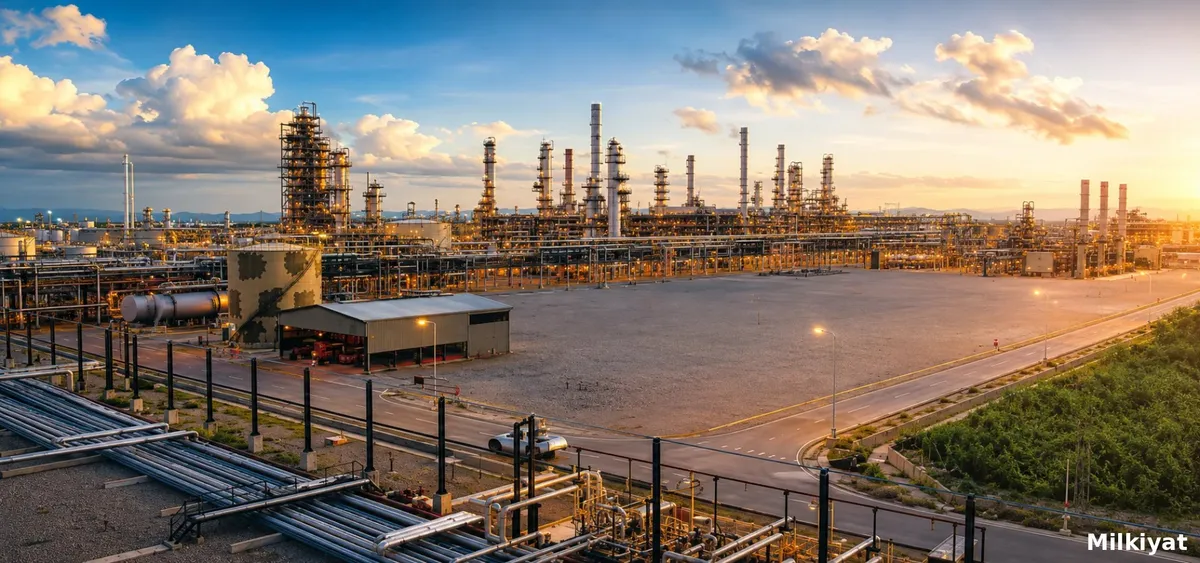
Pakistan's five major oil refineries have confirmed readiness to sign modernisation agreements under the Brownfield Refinery Upgradation Policy, potentially unlocking more than $6 billion in investment across the country's refining sector. The agreements, expected to be completed in early September 2026, followed meetings between Federal Petroleum Minister Ali Pervaiz Malik and the management of Pak Arab Refinery Limited, Pakistan Refinery Limited, National Refinery Limited, Cnergyico, and Attock Refinery Limited.
The management of all five refineries reaffirmed their readiness to sign agreements under the Refinery Upgradation Policy during meetings with the Petroleum Minister. Malik reiterated that modernising Pakistan's refining capacity was important not only for improving the quality and efficiency of petroleum products, but also for strengthening domestic supply resilience, reducing reliance on imported petrol and diesel, and advancing the country's broader energy security objectives. He said the government remained committed to working with the refining industry to ensure timely implementation of the policy.
The Pakistan Oil Refining Policy for Upgradation of Existing and Brownfield Refineries, 2023, issued by the Directorate General (Oil) of the Petroleum Division under Pakistan's Ministry of Energy, states its objective directly: to provide optimal tariff protection to the refining sector, comparable to protection already available to other local industries, in order to ensure the sustainability and modernisation of Pakistan's existing refineries. The policy document itself notes that the refining sector is critical for the country's energy security and economic growth, and that demand for petroleum products and petrochemicals is expected to increase substantially in the coming years, with Pakistan needing to roughly double its refining capacity over time. The full policy document, along with related Petroleum Division guidance, is published on the Petroleum Division's official website.
The Asian Development Bank has approved a $400 million regional facility to modernise CAREC border crossings. Pakistan is among 11 eligible countries, with potential future benefits for trade, logistics, warehousing and industrial property.
CDA has directed Islamabad developers to display approved layout plans and clearly show their current approval status, improving transparency for property buyers.
CDA has ordered accelerated development in Islamabad’s C-14, C-15, C-16, E-12, I-12 and H-16 sectors, alongside Park Enclave. The directives include on-site complaint offices, road widening, improved lighting, encroachment removal and a stronger focus on construction quality.
CDA has approved a comprehensive solid waste management plan for 65 union councils across Islamabad’s Zones IV and V. The system will introduce door-to-door collection, GPS vehicle tracking, digital monitoring and performance-based sanitation services across previously underserved rural and peri-urban areas.
Real Estate Analyst
6 min read
Pakistan's five major oil refineries have confirmed readiness to sign modernisation agreements under the Brownfield Refinery Upgradation Policy, potentially unlocking more than $6 billion in investment across the country's refining sector. The agreements, expected to be completed in early September 2026, followed meetings between Federal Petroleum Minister Ali Pervaiz Malik and the management of Pak Arab Refinery Limited, Pakistan Refinery Limited, National Refinery Limited, Cnergyico, and Attock Refinery Limited.
The management of all five refineries reaffirmed their readiness to sign agreements under the Refinery Upgradation Policy during meetings with the Petroleum Minister. Malik reiterated that modernising Pakistan's refining capacity was important not only for improving the quality and efficiency of petroleum products, but also for strengthening domestic supply resilience, reducing reliance on imported petrol and diesel, and advancing the country's broader energy security objectives. He said the government remained committed to working with the refining industry to ensure timely implementation of the policy.
The Pakistan Oil Refining Policy for Upgradation of Existing and Brownfield Refineries, 2023, issued by the Directorate General (Oil) of the Petroleum Division under Pakistan's Ministry of Energy, states its objective directly: to provide optimal tariff protection to the refining sector, comparable to protection already available to other local industries, in order to ensure the sustainability and modernisation of Pakistan's existing refineries. The policy document itself notes that the refining sector is critical for the country's energy security and economic growth, and that demand for petroleum products and petrochemicals is expected to increase substantially in the coming years, with Pakistan needing to roughly double its refining capacity over time. The full policy document, along with related Petroleum Division guidance, is published on the Petroleum Division's official website.
The Asian Development Bank has approved a $400 million regional facility to modernise CAREC border crossings. Pakistan is among 11 eligible countries, with potential future benefits for trade, logistics, warehousing and industrial property.
CDA has directed Islamabad developers to display approved layout plans and clearly show their current approval status, improving transparency for property buyers.
CDA has ordered accelerated development in Islamabad’s C-14, C-15, C-16, E-12, I-12 and H-16 sectors, alongside Park Enclave. The directives include on-site complaint offices, road widening, improved lighting, encroachment removal and a stronger focus on construction quality.
CDA has approved a comprehensive solid waste management plan for 65 union councils across Islamabad’s Zones IV and V. The system will introduce door-to-door collection, GPS vehicle tracking, digital monitoring and performance-based sanitation services across previously underserved rural and peri-urban areas.
This agreement follows what has been widely described as six years of policy deadlock. The original Brownfield Refining Policy was notified in 2023, applying to Pakistan's five operational refineries, which together hold a combined refining capacity of roughly 20.5 million tonnes per annum. Pakistan's refining industry consists of one mild conversion refinery operated by PARCO, while the remaining four are ageing hydroskimming refineries producing a relatively high proportion of furnace oil and lower specification fuel, leaving the country reliant on imports to meet domestic demand for Euro-V compliant petrol and diesel. Amendments to the original policy were approved by Pakistan's Cabinet Committee on Energy specifically to address industry concerns that had stalled refineries from actually signing their Upgrade Agreements, even though the industry had reportedly accepted draft agreements as far back as 2024.
Under the policy, refineries are required to sign legally binding Upgrade Agreements with the Oil and Gas Regulatory Authority, commonly known as OGRA, within 90 days of policy notification to qualify for incentives. OGRA was established by the federal government on 28 March 2002 under the Oil and Gas Regulatory Authority Ordinance, 2002, and holds exclusive regulatory power over licensing for refining, pipeline construction, storage, and marketing activities across Pakistan's oil and gas sector, with a stated objective to foster competition, increase private investment, and protect the public interest while providing effective regulation of the industry. OGRA's role in this specific policy extends to managing an escrow account, held jointly with each refinery, into which a portion of the deemed duty incentive is deposited specifically to help finance the upgrade projects.
The Upgrade Agreements specify project timelines, Euro-V production targets, refinery capacity, and furnace oil reduction plans for each participating refinery. To support the investment, the policy introduces a minimum 10 percent customs or regulatory duty on imported petrol and diesel for seven years, alongside deemed duty or tariff protection on ex-refinery prices for eligible refineries. Plant, machinery, and equipment imported specifically for upgrade projects are exempt from sales tax under the policy.
Once refineries complete their upgrades, the Petroleum Division will notify Euro-V fuel specifications for compliance, formally shifting Pakistan's domestic fuel standard upward from the current baseline most local refineries produce today. Refineries will also be permitted to export surplus petroleum products, subject to OGRA approval, once domestic demand is met.
Pak Arab Refinery Limited, commonly known as PARCO, is a fully integrated energy company and joint venture between the Government of Pakistan and the Emirate of Abu Dhabi, operating what is described as Pakistan's most modern refinery with a capacity of 120,000 barrels per day, alongside a cross country pipeline network extending more than 2,000 kilometres from Karachi to Mahmood Kot near Lahore. The other four participating refineries, Pakistan Refinery Limited, National Refinery Limited, Cnergyico, and Attock Refinery Limited, represent the remainder of Pakistan's operational refining capacity now moving toward this modernisation programme.
The agreements themselves are expected to be signed in early September 2026, but signing an Upgrade Agreement is the formal starting point for these projects, not their completion. Actual construction, procurement, and commissioning of the upgraded refining units would follow over a longer timeframe after signing, meaning the $6 billion investment figure represents the policy's total potential unlock across all five refineries and their multi year upgrade programmes, not capital that will be spent immediately upon signing.
A genuine $6 billion investment programme across five refinery sites represents a substantial pipeline of industrial construction activity, plant expansion, and specialised engineering work concentrated at each refinery's existing location, likely supporting demand for contractor services, specialised industrial labour, and logistics capacity around these sites over the coming years. The property impact here is real but indirect: this is industrial facility upgrade work at existing refinery sites rather than new land development, so its more direct relevance lies in the scale of industrial construction activity it represents nationally, and in the potential downstream effect of domestic Euro-V fuel production on transport and machinery costs that feed into general construction expenses. If refineries successfully increase domestic high quality fuel output and reduce Pakistan's reliance on imports over time, this could contribute to greater long term stability in fuel costs that affect construction material transportation and machinery operation nationally, though this remains a multi year outcome contingent on the upgrade projects actually being completed as planned following this month's signing.
This agreement follows what has been widely described as six years of policy deadlock. The original Brownfield Refining Policy was notified in 2023, applying to Pakistan's five operational refineries, which together hold a combined refining capacity of roughly 20.5 million tonnes per annum. Pakistan's refining industry consists of one mild conversion refinery operated by PARCO, while the remaining four are ageing hydroskimming refineries producing a relatively high proportion of furnace oil and lower specification fuel, leaving the country reliant on imports to meet domestic demand for Euro-V compliant petrol and diesel. Amendments to the original policy were approved by Pakistan's Cabinet Committee on Energy specifically to address industry concerns that had stalled refineries from actually signing their Upgrade Agreements, even though the industry had reportedly accepted draft agreements as far back as 2024.
Under the policy, refineries are required to sign legally binding Upgrade Agreements with the Oil and Gas Regulatory Authority, commonly known as OGRA, within 90 days of policy notification to qualify for incentives. OGRA was established by the federal government on 28 March 2002 under the Oil and Gas Regulatory Authority Ordinance, 2002, and holds exclusive regulatory power over licensing for refining, pipeline construction, storage, and marketing activities across Pakistan's oil and gas sector, with a stated objective to foster competition, increase private investment, and protect the public interest while providing effective regulation of the industry. OGRA's role in this specific policy extends to managing an escrow account, held jointly with each refinery, into which a portion of the deemed duty incentive is deposited specifically to help finance the upgrade projects.
The Upgrade Agreements specify project timelines, Euro-V production targets, refinery capacity, and furnace oil reduction plans for each participating refinery. To support the investment, the policy introduces a minimum 10 percent customs or regulatory duty on imported petrol and diesel for seven years, alongside deemed duty or tariff protection on ex-refinery prices for eligible refineries. Plant, machinery, and equipment imported specifically for upgrade projects are exempt from sales tax under the policy.
Once refineries complete their upgrades, the Petroleum Division will notify Euro-V fuel specifications for compliance, formally shifting Pakistan's domestic fuel standard upward from the current baseline most local refineries produce today. Refineries will also be permitted to export surplus petroleum products, subject to OGRA approval, once domestic demand is met.
Pak Arab Refinery Limited, commonly known as PARCO, is a fully integrated energy company and joint venture between the Government of Pakistan and the Emirate of Abu Dhabi, operating what is described as Pakistan's most modern refinery with a capacity of 120,000 barrels per day, alongside a cross country pipeline network extending more than 2,000 kilometres from Karachi to Mahmood Kot near Lahore. The other four participating refineries, Pakistan Refinery Limited, National Refinery Limited, Cnergyico, and Attock Refinery Limited, represent the remainder of Pakistan's operational refining capacity now moving toward this modernisation programme.
The agreements themselves are expected to be signed in early September 2026, but signing an Upgrade Agreement is the formal starting point for these projects, not their completion. Actual construction, procurement, and commissioning of the upgraded refining units would follow over a longer timeframe after signing, meaning the $6 billion investment figure represents the policy's total potential unlock across all five refineries and their multi year upgrade programmes, not capital that will be spent immediately upon signing.
A genuine $6 billion investment programme across five refinery sites represents a substantial pipeline of industrial construction activity, plant expansion, and specialised engineering work concentrated at each refinery's existing location, likely supporting demand for contractor services, specialised industrial labour, and logistics capacity around these sites over the coming years. The property impact here is real but indirect: this is industrial facility upgrade work at existing refinery sites rather than new land development, so its more direct relevance lies in the scale of industrial construction activity it represents nationally, and in the potential downstream effect of domestic Euro-V fuel production on transport and machinery costs that feed into general construction expenses. If refineries successfully increase domestic high quality fuel output and reduce Pakistan's reliance on imports over time, this could contribute to greater long term stability in fuel costs that affect construction material transportation and machinery operation nationally, though this remains a multi year outcome contingent on the upgrade projects actually being completed as planned following this month's signing.
