News
ADB Launches $400m Border Infrastructure Financing Facility, Pakistan Among Eligible Countries
Real Estate Analyst
5 min read
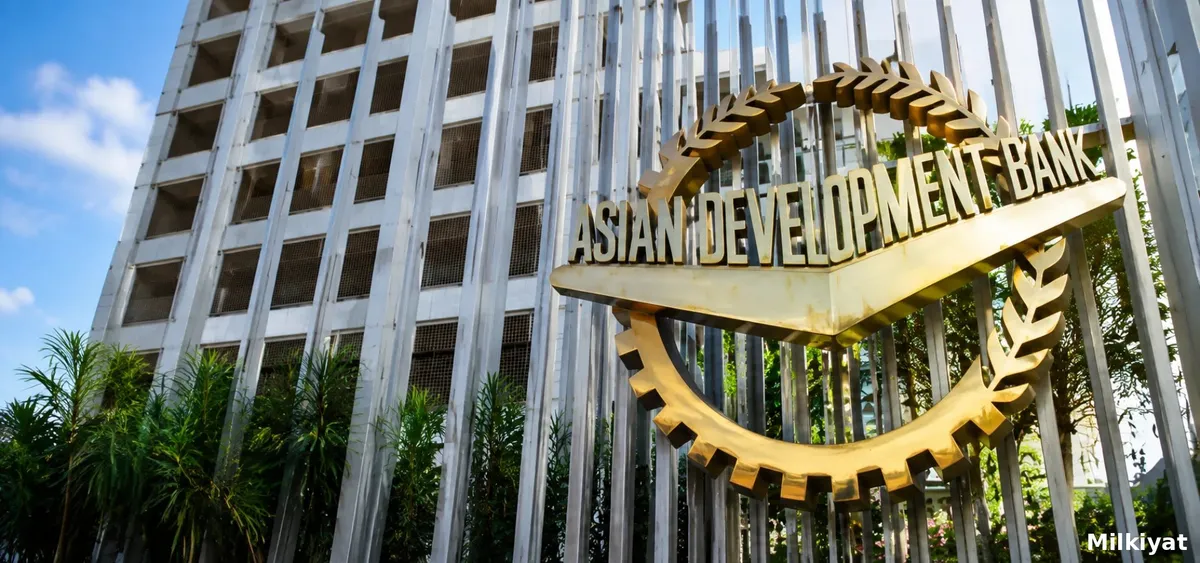
The Asian Development Bank has approved a $400 million regional financing facility to modernise border crossing points, lower transport and logistics costs, and improve the movement of people and goods across the Central Asia Regional Economic Cooperation region, according to an official ADB news release dated 27 August 2026. Pakistan is among the eleven CAREC member countries eligible to seek financing under the new facility, alongside Afghanistan, Azerbaijan, China, Georgia, Kazakhstan, Kyrgyz Republic, Mongolia, Tajikistan, Turkmenistan, and Uzbekistan.
The financing sits under what ADB calls the BUILD mechanism, standing for Border Upgrades for Integration, Logistics, and Development. It will support modernisation of road and rail border crossing points across the CAREC region, focusing on upgrading physical infrastructure, introducing digital systems, and installing advanced inspection and screening equipment. According to ADB documentation on a related technical assistance project, the BUILD facility is specifically structured to finance a series of individual, small value border crossing point projects along CAREC corridors, rather than functioning as a single large project itself. Funding proposals under the mechanism will be accepted over an eight year period, from August 2026 to August 2033, with ADB financing capped at up to $50 million for any individual qualifying project, and the possibility of multiple projects being approved within a single country.
"Borders are not just checkpoints. They are gateways to job creation, regional market development, and expanded opportunities for income generation," said Lea Gutierrez, ADB's Vice President for Central and West Asia, in the bank's official announcement. ADB has said that despite growing trade and transport infrastructure development across the CAREC region in recent years, border crossing points remain one of the main constraints on the region's economic corridors, citing increased trade volumes, insufficient capacity, outdated management systems, and the need for further digitalisation of border procedures as the core problems the facility is designed to address. The bank said these constraints currently create additional costs for carriers, businesses, and passengers, alongside risks tied to illicit trade, environmental issues, and public safety.
Pakistan’s five major oil refineries are preparing to sign modernisation agreements under the Brownfield Refinery Upgradation Policy, potentially unlocking more than $6 billion in investment. The programme could boost industrial construction, improve Euro-V fuel production and strengthen domestic energy security.
CDA has directed Islamabad developers to display approved layout plans and clearly show their current approval status, improving transparency for property buyers.
CDA has ordered accelerated development in Islamabad’s C-14, C-15, C-16, E-12, I-12 and H-16 sectors, alongside Park Enclave. The directives include on-site complaint offices, road widening, improved lighting, encroachment removal and a stronger focus on construction quality.
CDA has approved a comprehensive solid waste management plan for 65 union councils across Islamabad’s Zones IV and V. The system will introduce door-to-door collection, GPS vehicle tracking, digital monitoring and performance-based sanitation services across previously underserved rural and peri-urban areas.
Real Estate Analyst
5 min read
The Asian Development Bank has approved a $400 million regional financing facility to modernise border crossing points, lower transport and logistics costs, and improve the movement of people and goods across the Central Asia Regional Economic Cooperation region, according to an official ADB news release dated 27 August 2026. Pakistan is among the eleven CAREC member countries eligible to seek financing under the new facility, alongside Afghanistan, Azerbaijan, China, Georgia, Kazakhstan, Kyrgyz Republic, Mongolia, Tajikistan, Turkmenistan, and Uzbekistan.
The financing sits under what ADB calls the BUILD mechanism, standing for Border Upgrades for Integration, Logistics, and Development. It will support modernisation of road and rail border crossing points across the CAREC region, focusing on upgrading physical infrastructure, introducing digital systems, and installing advanced inspection and screening equipment. According to ADB documentation on a related technical assistance project, the BUILD facility is specifically structured to finance a series of individual, small value border crossing point projects along CAREC corridors, rather than functioning as a single large project itself. Funding proposals under the mechanism will be accepted over an eight year period, from August 2026 to August 2033, with ADB financing capped at up to $50 million for any individual qualifying project, and the possibility of multiple projects being approved within a single country.
"Borders are not just checkpoints. They are gateways to job creation, regional market development, and expanded opportunities for income generation," said Lea Gutierrez, ADB's Vice President for Central and West Asia, in the bank's official announcement. ADB has said that despite growing trade and transport infrastructure development across the CAREC region in recent years, border crossing points remain one of the main constraints on the region's economic corridors, citing increased trade volumes, insufficient capacity, outdated management systems, and the need for further digitalisation of border procedures as the core problems the facility is designed to address. The bank said these constraints currently create additional costs for carriers, businesses, and passengers, alongside risks tied to illicit trade, environmental issues, and public safety.
Pakistan’s five major oil refineries are preparing to sign modernisation agreements under the Brownfield Refinery Upgradation Policy, potentially unlocking more than $6 billion in investment. The programme could boost industrial construction, improve Euro-V fuel production and strengthen domestic energy security.
CDA has directed Islamabad developers to display approved layout plans and clearly show their current approval status, improving transparency for property buyers.
CDA has ordered accelerated development in Islamabad’s C-14, C-15, C-16, E-12, I-12 and H-16 sectors, alongside Park Enclave. The directives include on-site complaint offices, road widening, improved lighting, encroachment removal and a stronger focus on construction quality.
CDA has approved a comprehensive solid waste management plan for 65 union councils across Islamabad’s Zones IV and V. The system will introduce door-to-door collection, GPS vehicle tracking, digital monitoring and performance-based sanitation services across previously underserved rural and peri-urban areas.
This approval follows groundwork already laid earlier this year specifically involving Pakistan. In July 2026, the CAREC Secretariat briefed Commerce Minister Jam Kamal that ADB was expected to approve a Border Connectivity and Logistics Upgrade Facility for Pakistan in the coming weeks, as part of the same broader BUILD mechanism now confirmed. That same meeting reviewed Pakistan's preparations for the CAREC Ministerial Conference and Business Forum, scheduled for 29 to 30 September 2026 in Mongolia, and reaffirmed Pakistan's active participation in the Regional Trade and Investment Facilitation Partnership, a related framework entering its operational phase to promote trade facilitation, logistics cooperation, and investment across the CAREC region.
The CAREC Program is a partnership of Afghanistan, Azerbaijan, China, Georgia, Kazakhstan, the Kyrgyz Republic, Mongolia, Pakistan, Tajikistan, Turkmenistan, and Uzbekistan, working with development partners to promote regional cooperation and economic growth, with ADB hosting the CAREC Secretariat. Since its establishment in 2001, the CAREC Program has cumulatively facilitated more than $53.7 billion in regional investment, with an emphasis on multimodal transportation and energy infrastructure, trade expansion, and the movement of people and goods across member countries.
This is a regional financing facility Pakistan is now eligible to draw on, not a confirmed, funded Pakistani project. Actual financing for any specific Pakistani border crossing point would require a proposal to be developed, submitted, and separately approved under the facility's own project cycle, following the same scoping, feasibility study, and due diligence process ADB has outlined for other qualifying BUILD projects. At this stage, no specific Pakistani border crossing point, project cost, or implementation timeline has been confirmed.
If Pakistan does secure specific projects under this facility, the resulting border crossing upgrades could meaningfully support logistics hubs, warehousing capacity, and industrial or commercial property development around the specific corridors involved, given how directly reduced border crossing times and lower logistics costs tend to translate into stronger commercial activity at and around modernised crossing points. This would sit within a broader pattern already visible elsewhere in Pakistan's trade and logistics infrastructure, including the industrial development already under way around Port Qasim. At this stage, however, this should be understood as a financing opportunity Pakistan can pursue rather than an approved, funded project with a defined location or timeline, and property investors should wait for confirmation of specific project approvals before treating this facility as a settled driver of value around any particular Pakistani border corridor.
This approval follows groundwork already laid earlier this year specifically involving Pakistan. In July 2026, the CAREC Secretariat briefed Commerce Minister Jam Kamal that ADB was expected to approve a Border Connectivity and Logistics Upgrade Facility for Pakistan in the coming weeks, as part of the same broader BUILD mechanism now confirmed. That same meeting reviewed Pakistan's preparations for the CAREC Ministerial Conference and Business Forum, scheduled for 29 to 30 September 2026 in Mongolia, and reaffirmed Pakistan's active participation in the Regional Trade and Investment Facilitation Partnership, a related framework entering its operational phase to promote trade facilitation, logistics cooperation, and investment across the CAREC region.
The CAREC Program is a partnership of Afghanistan, Azerbaijan, China, Georgia, Kazakhstan, the Kyrgyz Republic, Mongolia, Pakistan, Tajikistan, Turkmenistan, and Uzbekistan, working with development partners to promote regional cooperation and economic growth, with ADB hosting the CAREC Secretariat. Since its establishment in 2001, the CAREC Program has cumulatively facilitated more than $53.7 billion in regional investment, with an emphasis on multimodal transportation and energy infrastructure, trade expansion, and the movement of people and goods across member countries.
This is a regional financing facility Pakistan is now eligible to draw on, not a confirmed, funded Pakistani project. Actual financing for any specific Pakistani border crossing point would require a proposal to be developed, submitted, and separately approved under the facility's own project cycle, following the same scoping, feasibility study, and due diligence process ADB has outlined for other qualifying BUILD projects. At this stage, no specific Pakistani border crossing point, project cost, or implementation timeline has been confirmed.
If Pakistan does secure specific projects under this facility, the resulting border crossing upgrades could meaningfully support logistics hubs, warehousing capacity, and industrial or commercial property development around the specific corridors involved, given how directly reduced border crossing times and lower logistics costs tend to translate into stronger commercial activity at and around modernised crossing points. This would sit within a broader pattern already visible elsewhere in Pakistan's trade and logistics infrastructure, including the industrial development already under way around Port Qasim. At this stage, however, this should be understood as a financing opportunity Pakistan can pursue rather than an approved, funded project with a defined location or timeline, and property investors should wait for confirmation of specific project approvals before treating this facility as a settled driver of value around any particular Pakistani border corridor.
