News
ADB Urges Pakistan to Link Future Financing to Sustainable Infrastructure Pipeline

By Mariam Khan
Real Estate Analyst
4 min read
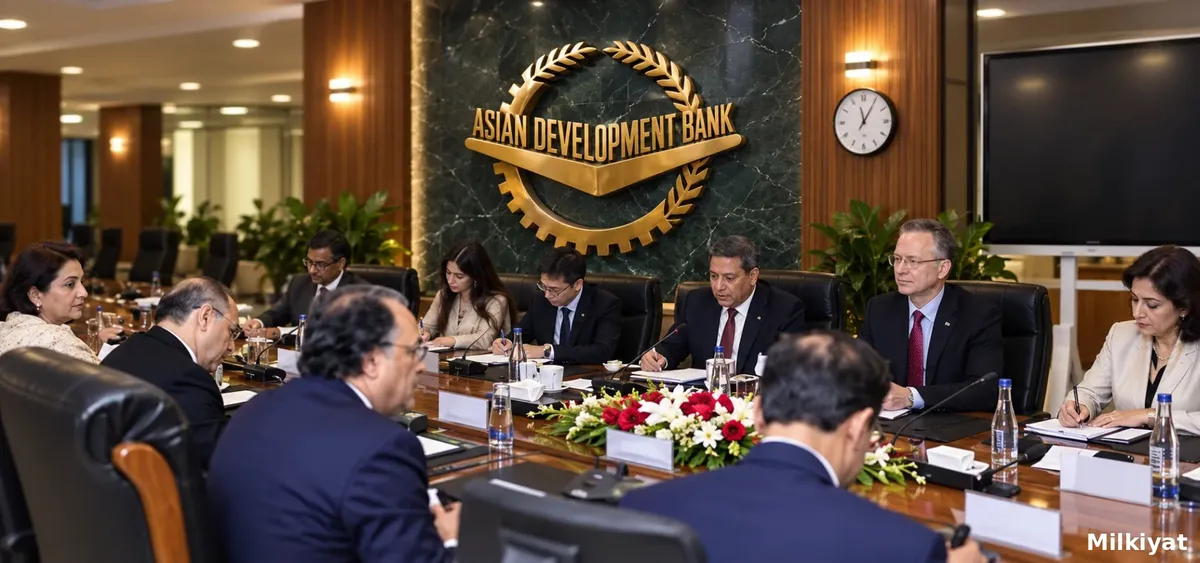
The Asian Development Bank has recommended integrating Pakistan's Sustainable Financing Framework directly into the Public Sector Development Programme, so that eligible infrastructure projects are identified and screened for sustainable financing eligibility during the project preparation stage itself, rather than after a project has already been designed and approved. The recommendation specifically named water infrastructure, electricity distribution networks, and other climate resilient public investment as areas that could potentially draw financing through future Panda Bond issuances.
Why This Recommendation Builds Directly on an Already Proven Model
This is not a theoretical financing concept being proposed for the first time. Pakistan already completed its inaugural Panda Bond issuance in May 2026, a renminbi-denominated instrument worth 1.75 billion yuan, approximately 258 million dollars, backed by credit enhancement guarantees from both ADB and the Asian Infrastructure Investment Bank. That bond specifically funded Pakistan's Sustainable and Green Infrastructure Project, with proceeds directed toward water governance, energy reliability and efficiency, and healthcare capacity, and forms part of a larger Panda Bond Programme valued at up to 1 billion dollars in total. This September recommendation to formally embed the underlying Sustainable Financing Framework into PSDP itself appears designed to systematise and scale up this same successful financing model, rather than relying on it as a one-off transaction.
What Integrating This Framework Into PSDP Would Actually Change
Under ADB's recommendation, sustainable financing eligibility would be assessed during a project's preparation phase, before it is finalised and added to Pakistan's development spending pipeline, rather than being considered only afterward. This would give planners the ability to identify which projects genuinely qualify for this kind of specialised, sustainability-linked financing early enough to shape a project's design and financing structure accordingly, potentially expanding the pool of projects able to access instruments like future Panda Bond issuances.
Why Water and Electricity Infrastructure Specifically Were Named
Water infrastructure and electricity distribution networks were specifically highlighted as areas suited to this kind of financing, consistent with the sectors Pakistan's first Panda Bond already targeted. This has direct relevance to projects already covered separately, including CDA's water supply master planning work with JICA and various provincial water and electricity distribution upgrades under way, all of which represent exactly the kind of climate resilient public infrastructure this financing approach is intended to support.
What Remains Unconfirmed
No specific timeline for when or whether Pakistan will formally adopt this integration recommendation has been announced, and ADB's statement represents policy advice rather than a confirmed commitment from the Pakistani government. The scale of any future Panda Bond issuances that might result from this closer PSDP integration, and which specific projects might be identified as eligible, have not been detailed.
What This Means for Long Term Infrastructure Funding
If adopted, this closer integration could broaden the range of financing options available for infrastructure that directly supports property markets, particularly water systems, electricity networks, and climate resilient urban infrastructure, by making it easier to channel future sustainable financing instruments toward specific, pre-identified projects in these sectors. This is more accurately understood as an infrastructure financing development than a direct property market policy change, since it affects how public infrastructure projects are funded rather than altering property regulation, taxation, or development rules directly.
What This Means for Property Markets Indirectly
Better funded, more reliably financed water and electricity infrastructure, delivered through an expanded pipeline of sustainable financing instruments, could support property development capacity in areas currently constrained by utility limitations, echoing the same underlying logic already visible in Punjab's water metering investments and CDA's own long term water planning work. Property developers and investors should treat this as a longer term, structural financing development worth monitoring rather than one with any immediate, direct effect on current property transactions or regulations.