News
CDA Land Transfer Delay Puts $6.79m Islamabad National Museum Grant at Risk

By Mariam Khan
Real Estate Analyst
4 min read
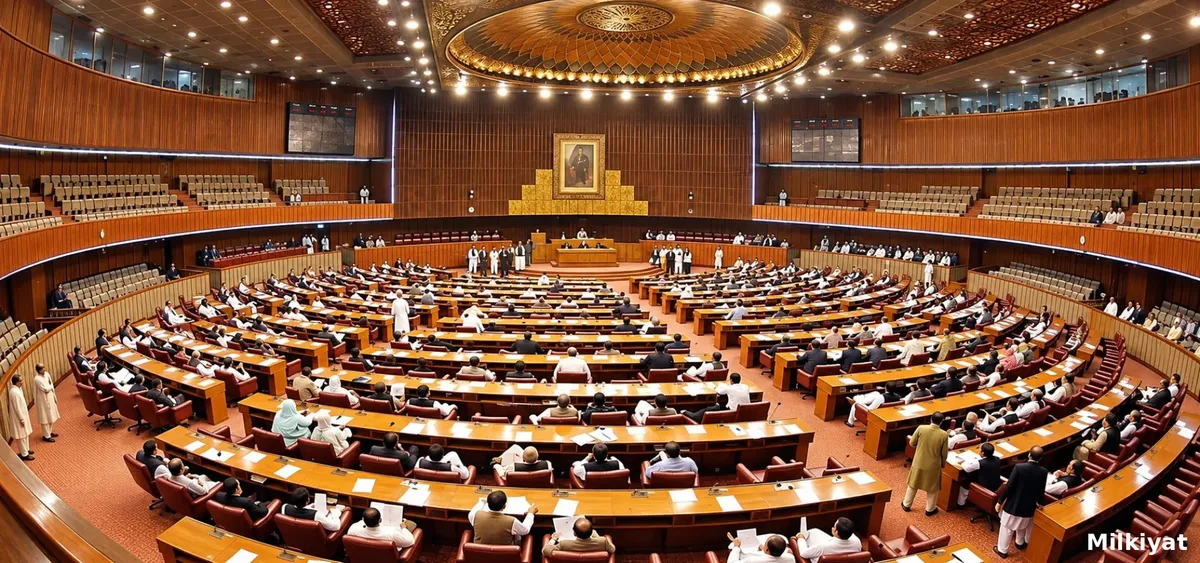
Pakistan could lose a $6.79 million Korean Grant-in-Aid for the proposed National Museum of Pakistan at Shakarparian, Islamabad, because land earmarked for the project has still not been formally transferred, according to the Senate Standing Committee on National Heritage and Culture. The committee, chaired by Senator Hidayatullah Khan, directed the Capital Development Authority and the Ministry of National Heritage and Culture to resolve the outstanding land transfer issue urgently, warning the grant could lapse if delays persist.
This Allotment Was Actually Reported as Already Under Way Months Earlier
This is a genuinely important detail worth understanding clearly. As early as January 2026, CDA had already allotted 8.33 acres of land at Shakarparian to the Department of Archaeology and Museums specifically for establishment of the museum, with officials telling a separate National Assembly committee at the time that the process of taking possession from CDA was already under way. That means the core problem now being raised before the Senate committee in September is not a fresh allotment dispute, but the apparent stalling of a possession and transfer process that was already reported as actively progressing roughly eight months earlier.
What Else the Senate Committee Addressed at the Same Session
Beyond the museum land issue, the committee expressed serious displeasure over the absence of senior CDA officials, including the CDA Chairman, from the meeting, with the committee chairman directing that the Ministry of Interior be formally informed of this concern and stressing that parliamentary committees should not be undermined by such absences. The committee also raised concern over encroachments around protected heritage sites nationally and called for stricter enforcement of the prescribed 200 foot buffer zone meant to protect such sites, and separately sought a detailed report on 523 priceless artefacts recently returned from the United States.
Why the Korean Grant's Structure Makes This Delay Genuinely Consequential
A Grant-in-Aid of this kind, provided by a foreign government specifically to support a defined project, typically carries its own internal timeline and conditions tied to the recipient country actually being in a position to use the funds as intended. A prolonged land transfer delay on the Pakistani side directly threatens the practical usability of the grant within whatever timeframe the Korean government has attached to it, independent of Pakistan's own domestic budgetary allocations or construction planning for the museum.
Why This Case Illustrates a Broader Pattern
A land allotment being announced as complete or actively progressing, only for the underlying transfer or possession process to remain genuinely unresolved many months later, is a pattern that has appeared in other CDA linked institutional land matters as well. This specific case, involving a foreign government grant with its own external deadline pressure, illustrates with particular clarity how this kind of administrative delay can carry consequences extending beyond the immediate project itself, in this instance risking Pakistan's access to already committed international development funding.
What Remains Unresolved
No specific reason for the gap between the January 2026 report of possession being under way and the September 2026 confirmation that the transfer remains outstanding has been detailed. The exact deadline attached to the Korean grant, and how much time remains before it would actually lapse, has also not been specified in available committee proceedings.
What This Means for CDA Administered Land Transfers More Broadly
This case offers a concrete, documented example of how an unresolved CDA land transfer can directly delay a major public development project and place foreign development funding genuinely at risk, distinct from more commonly discussed CDA land issues involving private housing societies. Other public institutions or foreign funded projects currently relying on land transfers from CDA should treat this case as a caution, an allotment being announced or a possession process being described as under way does not guarantee the transfer will actually be completed within any particular timeframe, and continued follow up and monitoring appears necessary even after an allotment has been formally made.