News
CDA Orders 25-Day Crackdown on Illegal Structures and Encroachments Across Islamabad

By Mariam Khan
Real Estate Analyst
4 min read
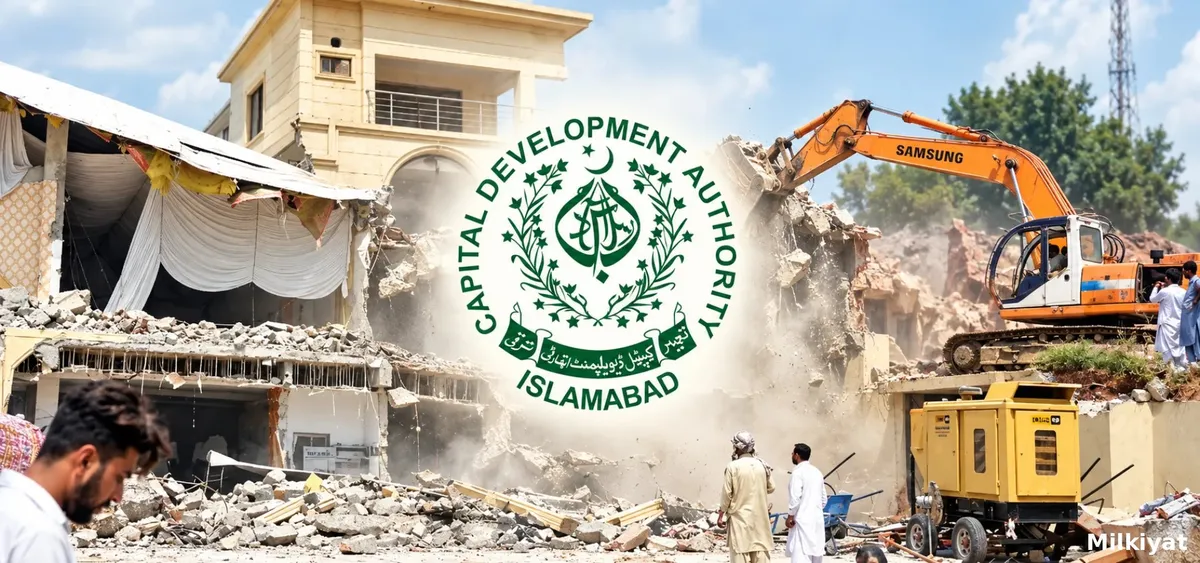
The Capital Development Authority has ordered removal of illegal constructions and unauthorised occupants from its water supply installations across Islamabad, with a directive issued by CDA's Directorate of Water Supply on 9 September 2026 identifying illegal structures at water works, sumps, tube wells, and overhead and underground water tanks. CDA has directed Deputy Directors to clear its land of unauthorised occupants and demolish structures built without approval, with the operation to be carried out alongside the Enforcement Directorate, police, and other relevant agencies over a 25 day period.
The Scale of Infrastructure This Directive Actually Covers
According to CDA's own Water Supply Directorate, the authority manages water production and distribution for Islamabad through the Simly and Sangjani water treatment plants, the Shahdara, Saidpur, Korang, and Noorpur water works, the Poona Faquiran Augmentation Scheme, and 189 tube wells, alongside 37 small water filtration plants installed across various sectors of the city. This gives a sense of the genuinely large number of individual sites potentially covered by an enforcement action targeting water installations across the entire directorate's holdings, rather than a single, isolated location.
What the Directive Specifically Found
According to the directive, additional rooms and quarters had been constructed at these sites beyond the layouts CDA had originally approved. The authority separately found that some occupants at these installations were using electricity and gas without separate meters, and has directed that every allotted quarter must have its own distinct utility connection, with bills paid directly by the occupants themselves rather than through any shared or informal arrangement.
Why This Timing May Not Be Coincidental
This enforcement action follows a period of documented public concern over unauthorised water related activity in specific parts of the city. Reports in the weeks before this directive had already raised concerns about illegal tube wells operating around the Koral Expressway area, with residents calling on CDA and other authorities to take indiscriminate action against water supply operations they alleged were being run outside proper regulatory control. This broader context of documented illegal water extraction activity in at least one specific corridor may help explain why CDA's Water Supply Directorate has now moved to a comprehensive, city wide review of its own installations specifically.
This Is Not CDA's First Large Scale Demolition Operation
CDA has previously carried out comparable large scale enforcement actions against illegal construction across the capital. In an earlier such operation, the authority's Building Control Director issued instructions to seal and demolish hundreds of buildings in the suburbs of the federal capital in a first phase, specifically targeting illegal constructions in the PWD, Lehtrar Road, Simly Dam Road, and Kurri Road areas, with CDA's IT department separately directed to publish details of the affected buildings online specifically to warn the public against investing in them. This history shows CDA has both the institutional capacity and documented precedent for running enforcement operations at this kind of scale when it chooses to do so.
What Remains Unconfirmed
The specific number of structures or occupants actually affected across CDA's water installations has not been detailed, nor has confirmation been given of how many of the 25 days allotted for this operation have already elapsed as of this report. Given the sheer number of individual sites potentially covered, from major treatment plants down to the smallest of the 189 tube wells, the practical scope of what gets addressed within this specific 25 day window may vary considerably by location.
What This Means for Islamabad Property Owners, Developers and Investors
This directive extends CDA's enforcement focus beyond private housing schemes specifically into the authority's own infrastructure land, signalling that unauthorised occupation and construction on any CDA controlled property, not only land intended for private residential development, is now subject to active scrutiny. Property owners and developers operating anywhere near CDA water installations should treat any existing informal arrangement involving such land as carrying genuine, active enforcement risk rather than an overlooked technicality, and should independently confirm the legal status of any structure or occupancy connected to CDA infrastructure land before assuming continued, uninterrupted use.