News
CDWP Clears Rs60 Billion Development Package, Anchored by a Mirani Dam to Gwadar Water Pipeline

By Mariam Khan
Real Estate Analyst
4 min read
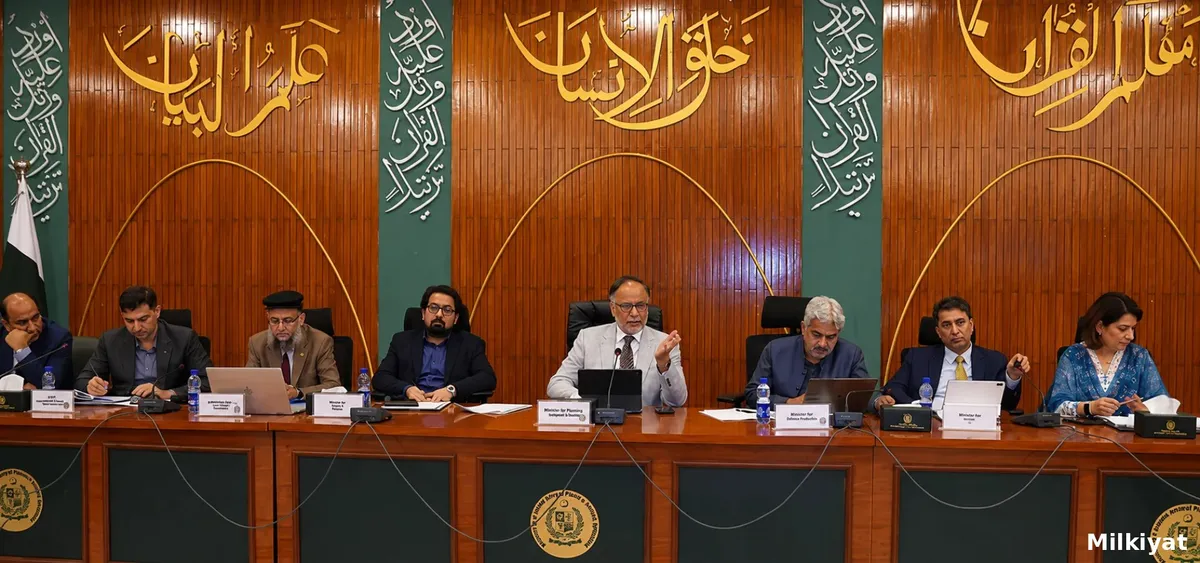
Pakistan's Central Development Working Party has cleared five development projects worth a combined 60.259 billion rupees, with two carrying direct relevance for property and urban development. The larger of the two is a 125 kilometre water supply pipeline linking Mirani Dam to Gwadar, aimed at addressing one of the port city's most persistent and long running infrastructure constraints. Alongside the pipeline approval, the government has also ordered a study into wastewater treatment for Gwadar, intended to stop sewage discharge directly into the Arabian Sea. The second project of note is a revised Karachi Neighbourhood Improvement Project, now costing 19.55 billion rupees, cleared for consideration by the Executive Committee of the National Economic Council and expected to draw foreign financing, including a World Bank loan of roughly 85 million dollars alongside funding from the Sindh government.
Why Gwadar's water problem has outlasted several previous fixes
Gwadar's water shortage is not a new story, and this pipeline is not the first attempt to resolve it. The city has relied for years on a patchwork of sources, including the Akra Kaur, Mirani and Sawad dams, alongside periodic emergency tanker deliveries and a desalination plant, none of which has permanently closed the gap between the city's growing population and its available supply. Residents in Balochistan's coastal district have at various points gone weeks between water deliveries, relying on underground storage tanks, while successive governments have announced pipeline and desalination projects that have either stalled, run over budget, or delivered only partial relief. A dedicated bulk pipeline directly from Mirani Dam, cleared now at the CDWP stage with a defined budget attached, represents a more structural attempt at a permanent fix than the emergency tanker arrangements that have dominated the response in recent years.
Why this matters for property specifically
Bulk water infrastructure is one of the more basic, unglamorous preconditions for any city's housing and commercial development, and Gwadar has arguably felt this constraint more acutely than almost any other Pakistani city with comparable investment interest. Land in and around Gwadar has attracted sustained speculative and strategic interest tied to the Gwadar Port's development and its role in regional trade corridors, but actual residential and commercial buildout has repeatedly run into the same basic limitation: a reliable water supply large enough to support genuine population growth rather than an already stretched emergency system. A pipeline of this scale, if it proceeds through construction and into operation, addresses exactly the kind of infrastructure gap that has historically limited how much of Gwadar's land value potential could actually translate into livable, developable property.
The wastewater treatment study ordered alongside the pipeline is a smaller but related piece. A city that solves bulk water supply without addressing what happens to that water afterward eventually recreates the same environmental and public health pressure through untreated sewage discharge, which over time affects both coastal environmental quality and the broader liveability case for residential development near the water.
The Karachi Neighbourhood Improvement Project, a different kind of infrastructure story
The Karachi project sits in a different category entirely. Rather than solving a single acute constraint the way the Gwadar pipeline does, a neighbourhood improvement project of this kind typically funds a broader mix of urban upgrades, roads, drainage, utilities and public space improvements, spread across existing, already populated parts of the city rather than opening new development capacity. Its clearance for ECNEC consideration, with confirmed World Bank co financing alongside Sindh government funding, signals a genuinely resourced project rather than an unfunded announcement, though ECNEC approval itself remains a further step before implementation actually begins.
What to watch as both projects move forward
Buyers and investors specifically interested in Gwadar should treat CDWP clearance as an early, meaningful stage rather than a construction guarantee, since Pakistani infrastructure projects at this scale have historically taken considerably longer to move from approval to operational delivery than initial timelines suggest, and Gwadar's water infrastructure specifically has a documented history of partial or delayed fixes. The more informative signal to track going forward is whether the pipeline moves from CDWP clearance into an actual construction contract and funded implementation timeline, rather than the initial approval alone. For Karachi, the relevant next step is whether ECNEC formally approves the project and whether the World Bank financing is finalised, since foreign co financing on projects of this kind sometimes introduces its own conditions and timeline before disbursement begins.