News
Chashma-5 Nuclear Project Moves Another Step Toward Operation

By Mariam Khan
Real Estate Analyst
4 min read
Pakistan and the International Atomic Energy Agency signed a safeguards agreement covering Unit 5 of the Chashma Nuclear Power Plant, a 1,200 megawatt reactor, at a ceremony in Vienna on the sidelines of the IAEA's General Conference. Pakistan Atomic Energy Commission Chairman Dr Raja Ali Raza Anwar and IAEA Director General Rafael Mariano Grossi signed the agreement, with China Atomic Energy Authority Chairman Shan Zhongde also in attendance, reflecting continued Pakistan-China cooperation on the project.
An Important Discrepancy Worth Flagging on the Timeline
There is a genuine inconsistency worth noting honestly between different official and near-official statements on when this reactor will actually become operational. When the IAEA Board of Governors first approved this same safeguards agreement back in March 2026, Pakistan's own Foreign Office stated at the time that the reactor was expected to become operational by 2030. This week's reporting on the actual signing describes the project as targeted for operation in 2028 instead. Separately, industry coverage of the project's construction license, issued by the Pakistan Nuclear Regulatory Authority in December 2024, described the plant as expected to take seven to eight years to complete from its July 2023 groundbreaking, a timeline that would itself point closer to 2030 or 2031 than 2028. Readers should treat 2028 as the currently stated target while being aware that earlier official statements and construction timelines have pointed to a later date.
What This Safeguards Agreement Actually Does
Under a safeguards agreement, the IAEA holds the right and obligation to ensure nuclear material within a state's territory is not diverted toward nuclear weapons or other nuclear explosive purposes, and to independently verify this through inspection and monitoring once a facility is operational. This specific agreement was unanimously approved by the IAEA Board of Governors in March 2026, with this week's signing representing formal implementation of that earlier approval rather than a new decision in itself.
Construction Progress on the Ground
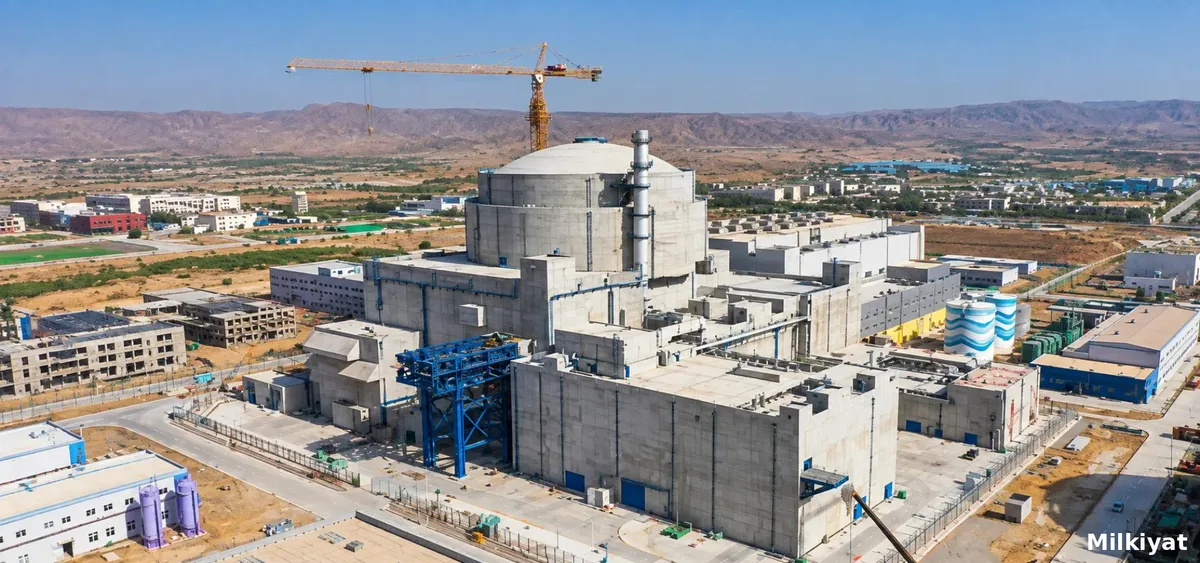
Construction of C-5 is described as progressing rapidly, with the project reaching a significant milestone through early completion of the reactor building's dome installation, ahead of the original schedule for that specific component. The reactor is a Hualong One, or HPR1000, design, the same reactor type China has separately supplied for Karachi's nuclear power units 2 and 3, and represents Pakistan's largest single nuclear power unit once complete.
The Existing Chashma Complex This Adds To
Pakistan currently operates six nuclear power plants nationally with a combined installed capacity of 3,530 megawatts, of which four operating reactors, each around 300 to 340 megawatts, already sit at the same Chashma site in Mianwali, Punjab. According to Pakistan Atomic Energy Commission's own data, the country's existing nuclear fleet supplied 17.2 percent of total electricity delivered to the national grid in the most recent reporting year available, giving a sense of how significant a single additional 1,200 megawatt unit would be relative to the country's current nuclear contribution.
What Remains Unconfirmed
Beyond the specific operational date discrepancy already noted, no updated, detailed construction schedule reconciling the 2028 versus 2030 target has been published. The project's total cost has also been reported elsewhere at approximately 4.8 billion dollars, though this week's signing did not include fresh confirmation of that figure.
What This Means for Long Term Power Availability and Property
An additional 1,200 megawatts of nuclear generation capacity, once genuinely operational, would represent a meaningful addition to Pakistan's baseload electricity supply, supporting longer term power availability for industry, construction, housing, and commercial property nationally, distinct from the more immediate, near term power sector developments already covered elsewhere. Given the genuine uncertainty around the actual commissioning date, ranging from 2028 to as late as 2030 or 2031 depending on which official statement or construction timeline is used, property developers and industrial planners should treat this project as a longer term, background positive for national power capacity rather than a near term factor in current development planning.