Blog
DHA Valley vs Bahria Town Phase 8: Instalment-File Risk Compared

By Bibi Masooma
Real Estate AnalystVerified author
Updated 7 min read
ShareWhatsApp
Blog
By Bibi Masooma
Real Estate AnalystVerified author
Updated 7 min read
The Bottom Line: DHA Valley and the affected Bahria Phase 8 sectors show that a property file’s value depends not only on location or developer promises, but on who legally controls it. Buyers should verify the current authority, documentation, conversion requirements, possession status, and potential additional charges before investing.
Bahria Town Rawalpindi has built its reputation on large, fast-growing phases, and Phase 8 is the biggest of them all, but size also brings more moving parts for file holders to track. From sector-level approvals to the recent change in who administers parts of the phase, buyers now need to know far more than the phase name on their file. If you are still getting familiar with the society, Milkiyat's Bahria Town Rawalpindi area guide explains how its phases are laid out, which authority oversees each one, and how Phase 8 fits into the wider community.
This article looks at instalment-file risk in DHA Valley and Bahria Town Phase 8, two projects where the authority behind a buyer's file has proved less settled than many expected. If you are considering a Bahria Town purchase despite these risks, check exactly which phase and sector a property sits in before comparing prices. You can browse current plots and properties for sale in Bahria Town Rawalpindi and confirm that detail for any listing that catches your eye.
Buying property on instalments in a private housing scheme is ultimately a bet on more than just location, price, or future development. It is also a bet that the authority standing behind your file today will still be responsible for it tomorrow. DHA Valley and Bahria Town Phase 8 show how quickly that assumption can become complicated. In one case, years of delays, litigation, and development issues left buyers waiting while control and possession moved forward in stages. In the other, a cluster of Bahria Town Phase 8 sectors was brought under DHA's administration, changing the authority behind existing files and creating a new layer of documentation and conversion requirements. Together, the two cases highlight a simple but often overlooked reality: a property's future can depend heavily on .
| Factor | DHA Valley | Bahria Town Phase 8 |
|---|---|---|
| Structure | Joint venture between Bahria Town and DHA | Bahria Town development, partly reassigned to DHA in 2026 |
| Core risk | Years-long delay tied to land and litigation issues | Sudden administrative takeover of specific sectors |
| Trigger event | Land conflict with the proposed Dadhocha Dam | Bahria Town's unresolved dues to DHA from earlier ventures |
| Most affected plot sizes | 5 and 8 marla residential plots | Sectors F2, F3, F4, and P |
| Current handling process | Phased balloting and possession by DHA | Physical boundary work and file conversion process |
| Timeline | Ongoing for several years | Reported in June 2026 |
| Buyer's practical concern | When possession will actually happen | Which authority's documentation is now valid |
DHA Valley was set up as a joint venture between Bahria Town and the Defence Housing Authority to develop residential plots on Islamabad's outskirts. The project ran into serious trouble over several fronts at once, including ongoing litigation and a slower-than-promised pace of development. One specific complication stood out: a significant portion of the land bought for the project sits in the path of the proposed Dadhocha Dam, one of three dams planned to serve as water reservoirs for Rawalpindi and Islamabad. That dam project has itself been repeatedly deferred due to funding shortages, which has left DHA Valley's affected land in a kind of limbo, neither cleared for the dam nor fully released for normal development.
DHA has responded to this by moving in phases rather than delivering the whole scheme at once. Rather than a single blanket handover, the authority has periodically announced computerized balloting and stepwise possession for specific plot categories, most notably the 5 and 8 marla residential plots. For file holders, that has meant years of watching for the next balloting announcement rather than a single clear possession date, with information from the developers often described by affected members as scarce and slow to arrive.
Bahria Town Phase 8's file risk looks completely different. In June 2026, multiple news outlets, including Pakistan Observer, reported that DHA had assumed administrative control of Phase 8's Sectors F2, F3, F4, and P, rebranding the cluster as DHA Sector IV. The change was linked to a long-standing financial and administrative dispute between the two organisations, reportedly tied to Bahria Town's unresolved dues connected to earlier joint projects, including DHA Phase 7.
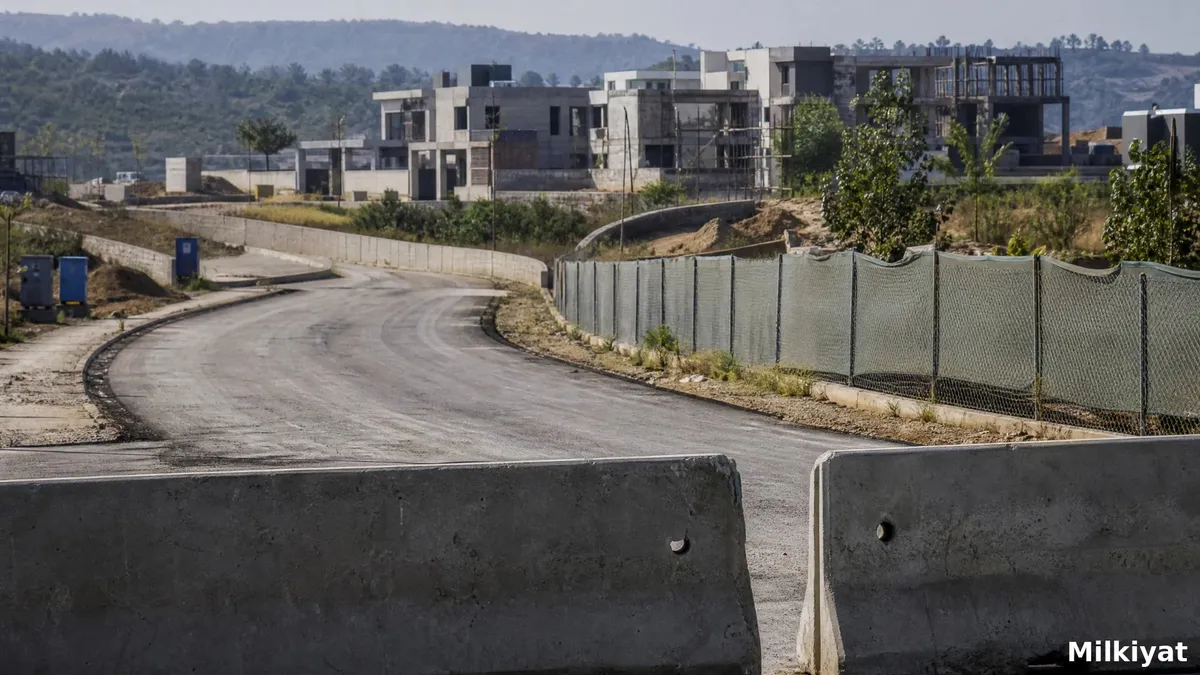
Unlike DHA Valley's gradual, years-long story, this shift arrived with visible, fast-moving physical activity. Reports describe DHA teams installing concrete slabs, fencing, and boundary walls to mark out the newly administered sectors, and Bahria Town publicly disputed the manner of the takeover, describing the affected areas as fully developed, occupied communities rather than vacant land, with thousands of plots already allotted, transferred, and sold. As of this writing, the matter remains before the courts, and neither DHA nor Bahria Town has issued one single, comprehensive statement covering transfers, billing, and long-term administration for every affected plot.
| Risk dimension | DHA Valley | Bahria Town Phase 8 |
|---|---|---|
| Nature of the risk | Waiting, not losing | Reassignment of governing authority |
| Speed of change | Gradual, phase by phase | Rapid, reported within weeks |
| Legal process involved | Balloting policy and possession scheduling | Court proceedings and administrative settlement |
| Documentation impact | Existing file structure largely unchanged | Bahria-stamped files reportedly need DHA conversion |
| Likely added cost | Possible delay-related costs | Potential development or conversion charges |
| Who to verify with | DHA Valley's own project office | Both DHA and Bahria Town's sector transfer offices |
| Question to ask | DHA Valley | Bahria Town Phase 8 |
|---|---|---|
| Which authority administers my plot right now | DHA, via the joint venture structure | Check sector: DHA if F2, F3, F4, or P; Bahria Town otherwise |
| Is my plot in an active balloting phase | Confirm current phase with DHA Valley's project office | Not applicable, this is a separate takeover process |
| Does my file need conversion | Not typically, structure has stayed with DHA throughout | Possibly, if in one of the four affected sectors |
| Is there a court case affecting my plot | Related litigation has featured in the project's history | Yes, matter reported before the courts as of mid-2026 |
| Who should I contact first | DHA Valley's own project office | Both DHA and Bahria Town sector transfer offices |
Anyone holding a file in DHA Valley should treat the project as a long patience game rather than a quick flip, and should specifically ask which balloting phase covers their plot size and block before assuming possession is imminent. Anyone holding a file in Bahria Town Phase 8, particularly in Sectors F2, F3, F4, or P, should confirm directly and in person which authority currently administers their specific sector, since reporting has been consistent that owners outside those four sectors should not assume they are affected without official communication. In both cases, the underlying lesson is the same: a joint-venture or disputed housing scheme can change its governing authority with very little warning, and the strength of a file depends entirely on which authority is actually standing behind it at the time you need to transfer, build, or sell.
For a related look at how a different kind of authority change plays out in an approved government sector, see Milkiyat's G-13 vs G-14 allotment-to-possession comparison.
A buyer's guide to office space for sale at Elanza Creeks in Park View City Islamabad — unit sizes, prices, best floor positions, payment plan and the step-by-step booking process for businesses buying their own commercial address.
A unit-level guide to the retail floors of Elanza Creeks in The Walk Commercial, Park View City Islamabad, how the 71.5 Lac to 5.1 Crore price band breaks down across ground-floor, indoor mall and anchor inventory, what the 30% down payment plan involves, the six-step booking process, the legal checks to run before paying, and what rental yield the location can realistically support.
A residential-only guide to the Elanza Creeks apartments for sale in Downtown Park View City, what 1-bed and 2-bed units actually measure, what they cost per square foot, which of floors 2 to 8 suits which buyer, and the checks worth running before you book.
A complete breakdown of the Elanza Creeks Park View City Islamabad payment plan the 30% down payment, the 30-month instalment schedule, floor-by-floor price per square foot for apartments, shops and office suites, the corner and lump-sum adjustments, the costs the plan leaves out, and the checks to run before you book.