News
Federal Constitutional Court Issues Six Directions to Prevent Land Consolidation Delays in Punjab

By Mariam Khan
Real Estate Analyst
3 min read
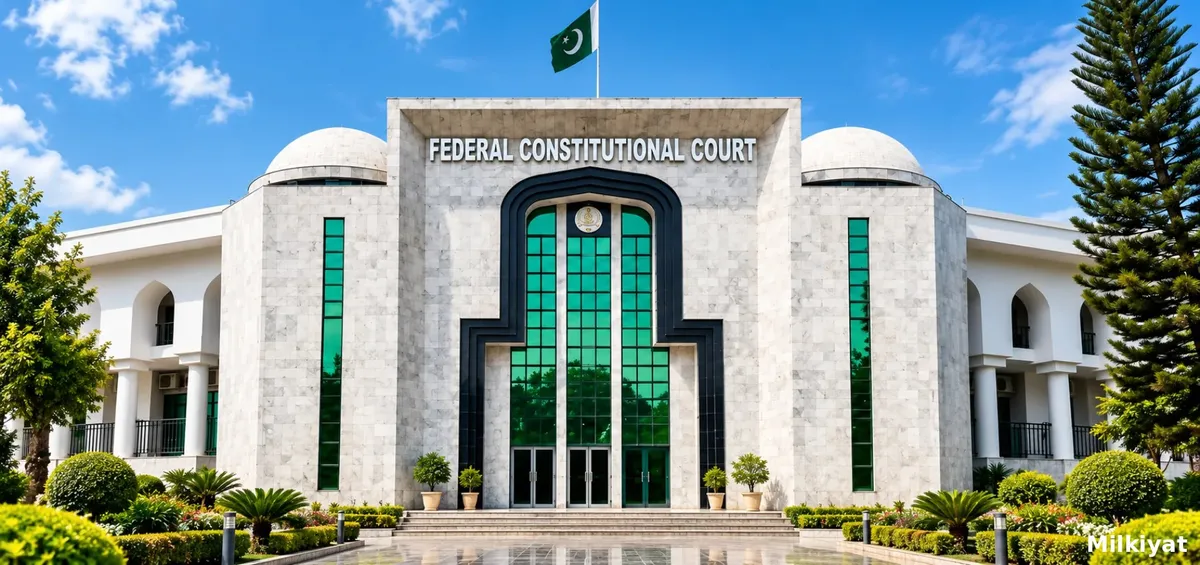
The Federal Constitutional Court of Pakistan has issued six guiding principles aimed at preventing unnecessary delays in land consolidation proceedings. The decision is dated October 26, 2026, and was reported on October 29. The ruling concerns a land dispute in which proceedings started in 1979 remained unresolved for decades. The court set aside the Lahore High Court order that had been challenged. The directions address land consolidation proceedings specifically. The judgment does not set a new nationwide deadline for every property transfer or mutation. The original judgment is published on the court's website.
Why the Court Intervened
The court expressed concern that prolonged administrative and judicial proceedings create uncertainty over land ownership and possession. The reports we have seen do not name the parties or the land, so we do not describe the particular dispute beyond its 1979 start. Land consolidation is the process by which revenue authorities regroup scattered holdings, and it can leave ownership unsettled while it is pending.
The Six Directions
The court's directions require revenue authorities to complete consolidation proceedings within statutory deadlines or a reasonable period. They are also to avoid unnecessary adjournments and administrative delays, and to give affected landowners a fair opportunity to be heard. They must not reopen legally final decisions without statutory authority, and are to discourage repeated referrals and unnecessary litigation. Finally, supervision and accountability within the Punjab Board of Revenue are to be strengthened. The Punjab Board of Revenue administers land records in the province.
What Is Not Known
The reports do not say how the court will check that its directions are followed, or whether it has set any reporting dates. They also do not say what happens to the original dispute on remand. The Lahore High Court issued the order that was set aside.
Why This Matters for Property
The ruling reinforces the importance of resolving land disputes on time and protecting ownership rights. Revenue authorities face clearer judicial expectations on delay, record-based decisions and fair procedure. Settling long-running consolidation disputes could reduce the uncertainty that affects land sales, transfers and investment. The reports do not link the ruling to prices, and the effect will depend on how the directions are applied.
What This Means for Landowners and Buyers
Landowners whose land is stuck in consolidation proceedings can cite the directions when asking the revenue authorities for a decision, and should take legal advice on their own case. Buyers of land with pending consolidation should check the status in the revenue records before paying. The signals to watch are the Punjab Board of Revenue's response, any circular implementing the directions and the handling of old consolidation cases.