News
FIA Launches Probe Into CDA's Bari Imam Operation Over Unresolved Property Compensation Claims

By Mariam Khan
Real Estate Analyst
4 min read
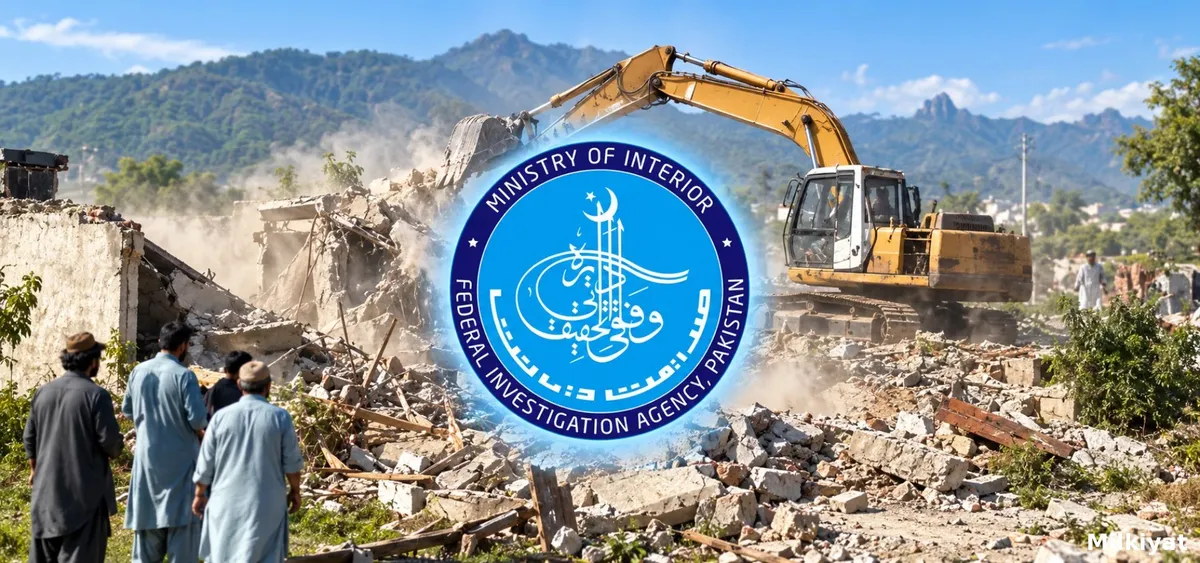
Pakistan's Federal Investigation Agency has launched an inquiry into whether the [Capital Development Authority]((https://www.cda.gov.pk/) carried out its anti-encroachment operation in the Bari Imam area of Islamabad before settling compensation claims linked to the underlying acquired land. The inquiry concerns land in Nurpur Shahan, and is being conducted on the instructions of the Minister for Interior and Narcotics Control following a complaint from Tanvir Hussain, president of the Nurpur Shahan Community Development Organisation.
What FIA Has Specifically Requested
FIA has sought the complete land acquisition record from CDA covering Nurpur Shahan, including compensation decisions made from the time the plots were originally acquired through to the present day. The complaint underlying this inquiry concerns allegations of forced displacement of Nurpur Shahan residents and the provision, or lack of provision, of rehabilitation through establishment of a promised model village.
The Land's Origin Goes Back More Than Six Decades
The underlying land in question was acquired in the Nurpur Shahan area near Bari Imam between 1961 and 1967 under the CDA Ordinance 1960, according to residents and their legal representatives. Residents have maintained that CDA approved a proposal for seven model villages, including one at Nurpur Shahan, submitted by the authority's own Regional Planning Directorate in May 1990, and have alleged that implementation of this model village scheme was subsequently delayed, citing restrictions under the Islamabad Zoning Regulations 1992.
CDA's Position on What Was Actually Demolished
CDA maintains that the settlements demolished during its operation were located outside the officially defined boundaries of the Nurpur Shahan model village, and that all individuals formally awarded compensation during the original land acquisition had received that compensation in full. According to CDA's position, occupation of the specific plots demolished had been declared illegal through a decision of the CDA district commissioner that was not challenged at the time. CDA has separately stated its enforcement teams were operating strictly on state land as per official records, and that this position had also been formally submitted before the relevant court.
Why This Case Has Already Drawn Direct Judicial Scrutiny
This dispute has already produced a significant judicial intervention prior to this FIA inquiry. The Islamabad High Court had earlier directed CDA to develop Model Village Nur Pur Shahan in accordance with the original land acquisition award and decisions previously approved by the authority's own board. The court subsequently issued a show cause notice to the Chief Commissioner Islamabad and CDA Chairman specifically over allegations that this earlier court order had been ignored, indicating the judiciary had already found the case serious enough to warrant direct accountability at CDA's most senior level before this FIA probe was launched.
The Human and Enforcement Scale of This Operation
CDA's anti-encroachment drive in this area has proceeded at genuinely significant scale, with the authority, backed by Islamabad's administration and police, having demolished structures across multiple village localities within Bari Imam and Nurpur Shahan. The operation has faced direct resistance from affected residents at points during its execution, including a clash serious enough that police registered cases against residents under multiple charges, including provisions of Pakistan's Anti-Terrorism Act.
Why the Compensation Timing Question Is the Crux of This Inquiry
The specific question FIA has been tasked with resolving, whether compensation matters were genuinely settled before demolition proceeded, sits at the heart of this entire dispute. CDA's position that all formally awarded compensation was paid in full does not, on its own, resolve the residents' separate allegation that the promised model village rehabilitation itself was never properly delivered, meaning even a finding that original compensation was paid would not necessarily address the rehabilitation commitment residents say was separately promised and not fulfilled.
What Remains Unresolved
FIA's inquiry is ongoing, and no findings have yet been issued as to whether CDA's acquisition, compensation, and enforcement process was properly followed in this specific case. The underlying Islamabad High Court proceedings concerning the show cause notice to CDA's leadership also remain a separate, parallel track whose outcome has not been confirmed.
What This Means for Land Acquisition and Compensation Cases More Broadly
This case offers a genuinely significant, documented example of how disputes over decades old land acquisitions can resurface with serious legal and human consequences when compensation and rehabilitation commitments are contested long after the original acquisition took place. Anyone with property interests connected to land acquired by CDA under similar historical circumstances, particularly where a model village or comparable rehabilitation commitment was made, should treat this case as a direct illustration of how such disputes can remain unresolved for decades before returning to active legal and investigative scrutiny.