News
Government Orders Investment Mechanism for Overseas Pakistanis to Fund Major Infrastructure

By Mariam Khan
Real Estate Analyst
4 min read
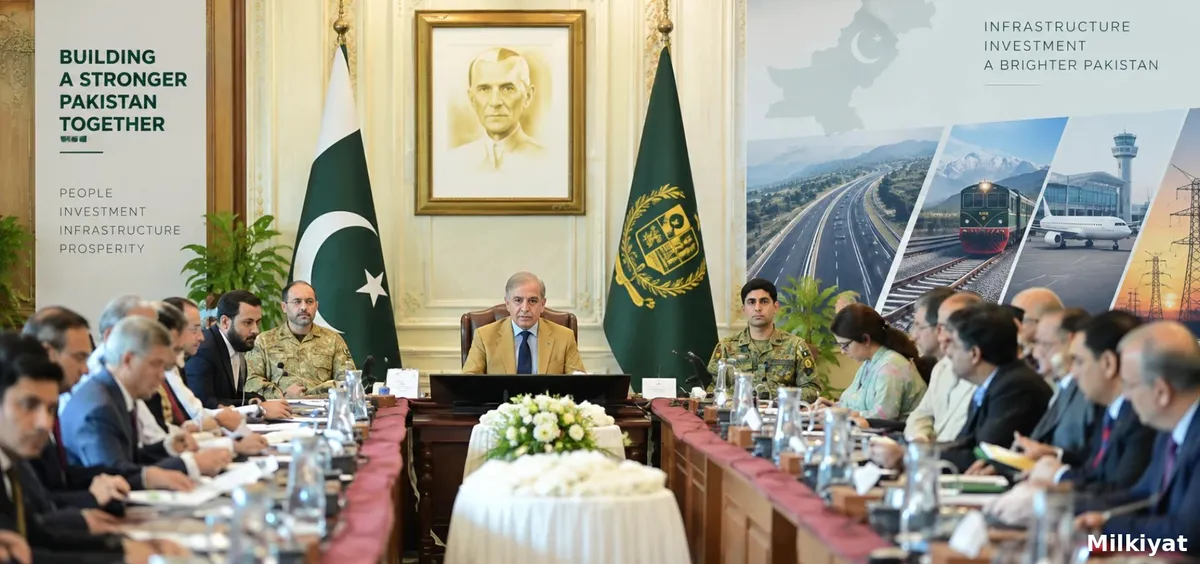
Federal Minister for Economic Affairs and Establishment Division Senator Ahad Cheema has directed authorities to develop a structured investment mechanism enabling overseas Pakistanis to invest in viable national infrastructure projects, chairing a high level meeting to review Pakistan's Public Private Partnership pipeline covering railways, highways, power, and airports, according to an official statement carried by Radio Pakistan.
What the Minister Actually Said
"We ask Overseas Pakistanis to invest in Pakistan, we must also provide them with credible, convenient and professionally structured avenues to do so," Cheema said. He directed officials to explore an investment fund or similar mechanism that would allow overseas Pakistanis to participate in major infrastructure projects without needing to directly establish or manage a business inside Pakistan, specifying that any such mechanism should offer transparent, commercially attractive opportunities with genuine safeguards and clearly defined returns, channelling overseas savings directly into national assets.
The Actual Scale of the PPP Pipeline Behind This Directive
This directive sits within a considerably larger financing push. The government is exploring bankable PPP projects across a pipeline reported at approximately 6.5 billion dollars, with Cheema directing the Public Private Partnership Authority and all concerned ministries and agencies to strengthen coordination, accelerate technical and financial assessments, and prepare a prioritised pipeline of bankable projects specifically capable of attracting domestic, international, and overseas Pakistani investment simultaneously. Officials were directed to ensure projects are made genuinely commercially viable and bankable before being formally offered to any category of investor.
The Specific Projects Already Under Review at This Meeting
Beyond the general investment mechanism directive, the same meeting reviewed several concrete, named projects. On the Main Line-1 railway project, Cheema said the government's first financing priority remains multilateral and development partner funding, with the Karachi-Rohri section already being pursued through the Asian Development Bank, while PPP options for the project's remaining sections are being retained as a secondary financing option. He specifically directed the Public Private Partnership Authority to assess the Lahore-Rawalpindi section of ML-1 under a potential PPP model, given its potential to meaningfully cut travel time between the two cities. The meeting separately reviewed the Kharian-Rawalpindi Motorway and numerous projects proposed by the Capital Development Authority, including the Gandhara Cultural project and expansion of Capital Hospital in Islamabad.
Why Structuring This Correctly Matters So Much
Overseas Pakistanis represent an already significant source of both remittances and direct property investment, and the minister's own framing, providing credible, professionally structured avenues rather than requiring direct business establishment, addresses a genuine, longstanding barrier that has likely discouraged some overseas capital from engaging with Pakistani infrastructure specifically, as distinct from more familiar routes like direct property purchase or remittance transfers to family. A properly structured, safeguarded investment fund could open an entirely new channel for this capital, one specifically targeted at large scale national assets rather than individual property transactions.
What Remains Unconfirmed
No specific fund structure, minimum investment threshold, expected returns, or launch timeline has been announced. Given that officials have only been directed to explore this mechanism, with the broader PPP pipeline itself still being prioritised and assessed for bankability, actual availability of any concrete overseas investment vehicle remains a meaningfully later stage development.
What This Means for Land Values and Property Along Infrastructure Corridors
If this investment mechanism is eventually developed and channels genuine overseas Pakistani capital into projects like the Lahore-Rawalpindi ML-1 section, the Kharian-Rawalpindi Motorway, or other named infrastructure in this pipeline, successful delivery of that infrastructure could meaningfully influence surrounding land values, commercial development, logistics property, and new housing activity along the specific corridors involved, following the same pattern seen with other major transport and infrastructure investments. Property investors and developers should watch for confirmation of which specific projects actually secure this kind of overseas investment as the more concrete indicator of real world impact, rather than treating this general directive alone as confirmation that any specific corridor will see accelerated development.
What This Means for Overseas Pakistanis Considering Infrastructure Investment
Overseas Pakistanis already engaged in property investment or remittances should watch for further detail on this proposed mechanism as a potentially new, distinct investment category, separate from direct real estate purchase, that could allow participation in large national infrastructure assets with defined, safeguarded returns once the mechanism is actually developed and launched. Given the early stage of this directive, interested investors should wait for confirmed structural and regulatory details before making any assumptions about how such participation would actually work in practice.