News
Newly Remodelled Faizabad Interchange Loop Reportedly Sinks After Heavy Rain

By Mariam Khan
Real Estate Analyst
4 min read
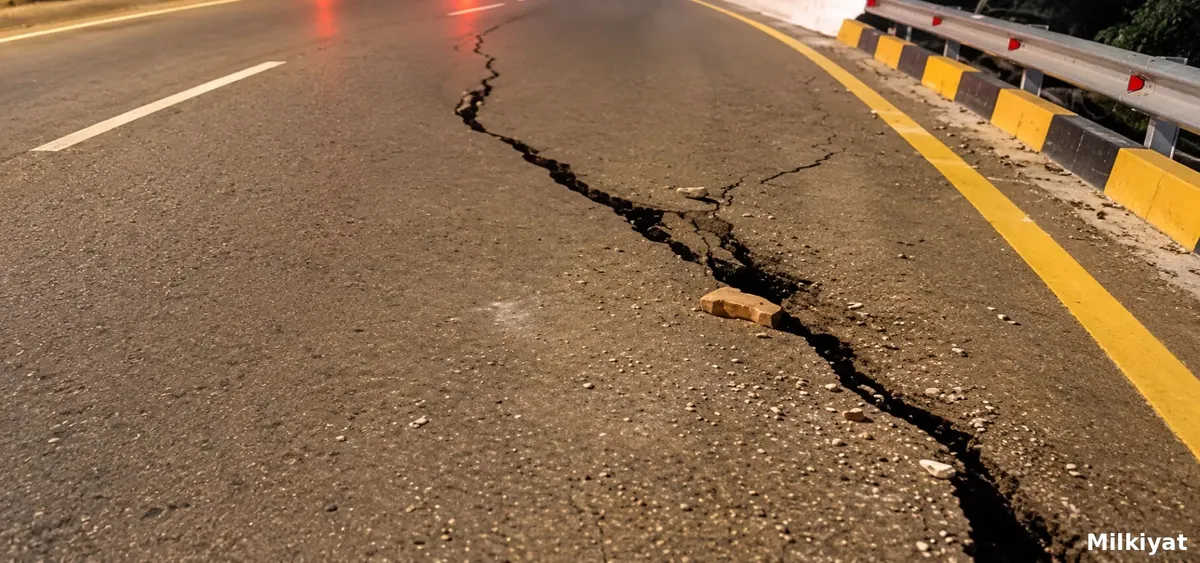
A section of the recently remodelled Faizabad Interchange loop connecting Islamabad toward Rawalpindi has reportedly subsided following the recent spell of heavy rainfall in the twin cities. No official technical assessment has yet established the cause, and that distinction is important to maintain, this report describes what has been observed on the ground, not a confirmed engineering finding.
Why This Location Carries So Much Weight
The Faizabad Interchange is a cloverleaf interchange joining Islamabad Highway and Murree Road, opened in January 1998, and functions as the primary entry and exit point between Islamabad and Rawalpindi. Beyond its everyday traffic role, Faizabad has also historically served as the focal point for protests, long marches, and sit ins in the capital, meaning any disruption to this specific junction carries outsized visibility and impact well beyond routine commuter inconvenience.
The Remodelling Project's Genuinely Chaotic Planning History
This project's path to completion was unusually indecisive, and that history is directly relevant to understanding why a newly finished section might already be showing distress. CDA initially called tenders specifically for widening the interchange's existing loops, and bids were opened. The authority then reconsidered and decided the loop widening alone was not the solution, scrapping that bidding process entirely in favour of a fresh tender for a complete overhaul of the whole interchange, engaging a consultant who completed a full new design. Following further reconsideration, CDA reversed course a second time, shelving the full overhaul and returning to the original plan of simply expanding the existing loops, accepting the lowest bid from that earlier process instead. This meant the project moved through at least three distinct planning phases, loop widening, full overhaul, back to loop widening, before construction on the currently completed work actually proceeded.
What the Project Was Actually Meant to Deliver
The completed remodelling covered rehabilitation of the loops and triangle at the western side of the interchange, with CDA's engineers explaining the goal was to increase the radius of the existing loops while adjusting the weaving distance between them, including the loop serving Lahore bound traffic on the expressway, specifically to reduce existing traffic conflict at the junction.
Why This Timing and History Matters for How the Subsidence Should Be Read
A newly completed road surface showing subsidence within one of its first heavy rainfall periods is a meaningful signal regardless of the eventual technical explanation, particularly given how much this specific project's design brief changed during planning. Concerns raised about drainage, soil settlement, compaction, and the durability of newly completed infrastructure are reasonable questions to ask precisely because the project's scope itself shifted substantially between initial tendering and final construction, a pattern that can plausibly affect how thoroughly underlying site conditions were accounted for in the version that was ultimately built.
What Remains Genuinely Unconfirmed
No official CDA statement identifying the specific cause of this subsidence, whether tied to drainage, soil compaction, construction quality, or another factor entirely, had been issued as of this report. Readers and commuters should treat the cause as genuinely open pending a formal technical assessment, rather than assuming any single explanation.
What This Means for Commuters and Nearby Commercial Accessibility
Faizabad's role as the main connective artery between Islamabad and Rawalpindi means any operational disruption here has an outsized effect on daily commuting patterns and commercial accessibility for businesses relying on that connectivity, well beyond the immediate footprint of the affected loop itself. Given the interchange's importance, commuters and nearby businesses should expect continued monitoring and potential traffic management adjustments at this specific site until the extent of the subsidence and its underlying cause are properly established.
What This Means for Confidence in Newly Completed Infrastructure
Beyond this single interchange, an issue emerging so soon after a newly completed, heavily publicised remodelling project raises broader questions about rain resilience and drainage standards being applied to new infrastructure projects across the twin cities more generally. Property owners, developers, and residents along other recently completed or currently under construction road corridors in Islamabad and Rawalpindi should treat this incident as a reasonable prompt to ask specifically about drainage design and soil compaction standards for any nearby project, rather than assuming a newly finished road surface is automatically free of this kind of risk.