News
Pakistan Announces Energy Austerity Measures as Gulf Conflict Drives Up Fuel Costs

By Mariam Khan
Real Estate Analyst
6 min read
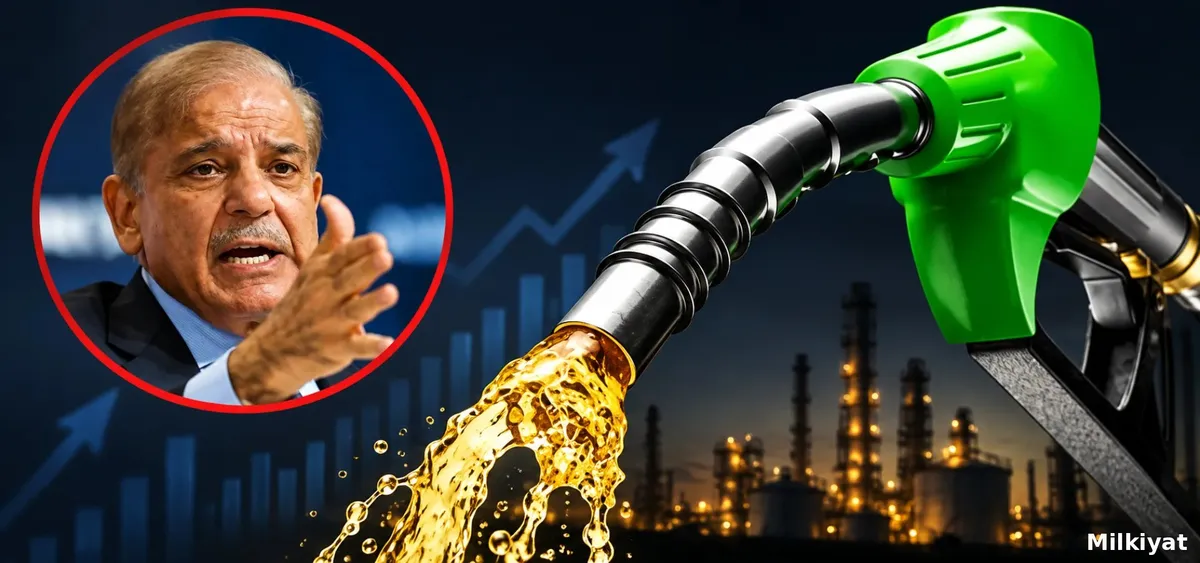
The federal government has reimposed a nationwide austerity and fuel conservation drive, cutting official fuel allocations, restricting foreign travel, and ordering earlier closing times for markets and restaurants, after a fresh escalation in the Middle East conflict pushed international oil prices sharply higher. The decision was approved at a high level meeting chaired by Prime Minister Shehbaz Sharif on September 17, 2026, and provincial governments have been asked to adopt matching policies of their own.
This Is the Second Time Pakistan Has Imposed This Exact Package in 2026
This is not the first austerity round this year, and understanding that history matters for judging how seriously to take it. Pakistan introduced a nearly identical package in March 2026, when Brent crude briefly spiked toward 140 dollars a barrel after commercial shipping through the Strait of Hormuz was effectively halted at the height of the US Iran conflict. Those measures were gradually eased and eventually lifted after a ceasefire memorandum of understanding between Washington and Tehran in June 2026, which we covered in detail in our earlier analysis of oil price risk and construction costs. Prices fell as low as 69 dollars a barrel by early July before climbing again through the summer. That the government felt compelled to reintroduce the same package just months after lifting it says something important on its own, it suggests officials view the current spike as more than a brief blip, and are treating it with the same urgency as the original crisis rather than as a smaller, temporary disturbance.
What the New Measures Specifically Require
The core of the package is a fifty percent cut in fuel provided to official government vehicles, effective immediately, for a period of three months. The cut applies broadly across federal ministries and departments, though operational vehicles used by the Armed Forces, Civil Armed Forces, law enforcement agencies, essential services, and the Federal Board of Revenue are exempt. Administrative and non operational vehicle fleets receive no such exemption. Alongside the fuel cut, the government has ordered a five percent reduction in the Non Essential Recurring Expenditure budget for the current fiscal year, applied monthly, while development spending has been left untouched. A complete ban on new vehicle purchases and durable goods procurement has also been imposed, with an exception carved out for IT related equipment.
Foreign travel by ministers and government officials has been suspended for three months, with narrow exceptions for travel tied to international development partner scholarships, training courses arranged through the Economic Affairs Division, and existing institutional agreement programs. Where travel genuinely cannot be avoided, ministers and officials are now required to fly economy class rather than business or first class. Government funded seminars, trainings, and conferences have been banned outright, official dinners are prohibited except when hosting foreign delegations, and teleconferencing has been made the preferred substitute for in person meetings wherever practical.
On the retail side, general shops, markets, and shopping malls have been ordered to close by 9 p.m., marriage halls and other festive venues by 10 p.m., and restaurants, cafes, and food outlets by 11 p.m., with takeaway and delivery services specifically exempted from the closing times. Pharmacies, hospitals, fuel stations, gyms, IT companies, and call centres also remain exempt given their essential or round the clock nature. A single dish rule has additionally been reimposed at marriage functions, a familiar feature of Pakistan's earlier austerity drives aimed at curbing lavish, energy intensive wedding events.
Why This Round Was Approved at the Highest Level
The government has said explicitly that this represents a continuation of austerity measures already implemented earlier in the 2026 to 2027 fiscal year rather than an entirely new initiative, and a monitoring arrangement has been set up to collect implementation reports from ministries, divisions, departments, and provincial governments on a weekly basis, with progress reported directly back to the Prime Minister. Separately, the Prime Minister has also approved continuation of a targeted fuel subsidy of roughly Rs100 per litre for motorcycles, rickshaws, and vehicles up to 800cc, aimed at cushioning lower income and economically vulnerable groups from the impact of rising pump prices even as the broader austerity drive tightens government spending elsewhere.
Why This Confirms the International Energy Shock Is Now Shaping Domestic Policy
The timing lines up closely with the latest deterioration in Gulf energy markets. Saudi Arabia's temporary shutdown of its East West pipeline after a drone attack, combined with the Houthi seizure of Perim Island near the Bab el Mandeb Strait, pushed Brent crude back above 100 dollars a barrel in the days immediately preceding this announcement. Pakistan imports the large majority of its crude oil and refined petroleum products, so a sustained rise in international benchmarks feeds almost directly into the country's import bill and its domestic pump prices, which is precisely the channel this austerity package is designed to blunt on the government side of the ledger even as consumers absorb higher prices at the pump.
What Remains Uncertain
How long this specific round of measures will actually stay in force is genuinely unclear, given that the identical package was introduced and then unwound once already this year within a matter of months. Much depends on how the underlying Gulf conflict develops from here, including whether the East West pipeline is repaired and whether the Bab el Mandeb threat escalates further or recedes. Readers should treat the three month duration named in this announcement as a stated target rather than a guaranteed timeline, given the precedent already set earlier in the year.
What This Means for Construction and Property Costs
For Pakistan's construction and property sector, this episode reinforces a cost pressure that has already been building through the year. Elevated fuel prices raise the cost of transporting cement, steel, bricks, sand, and other bulk materials to development sites, and they raise the running cost of diesel powered heavy machinery used in excavation, concrete work, and site preparation. Developers and contractors currently budgeting new projects should continue to build genuine contingency into fuel and transport dependent line items, a pattern our earlier coverage of the oil price and construction cost link found to be one of the more consistent risks facing the sector this year. Property buyers and investors watching for signs of construction cost stabilisation should treat this fresh round of austerity measures as a signal that officials themselves are not yet confident the underlying energy shock has passed.
Sources
- Radio Pakistan — Federal Govt announces fuel conservation, austerity measures
- Associated Press of Pakistan — PM approves austerity drive as global petroleum prices surge
- U.S. Energy Information Administration — Short-Term Energy Outlook, global oil markets
- Trading Economics — Brent crude oil price data and historical news