News
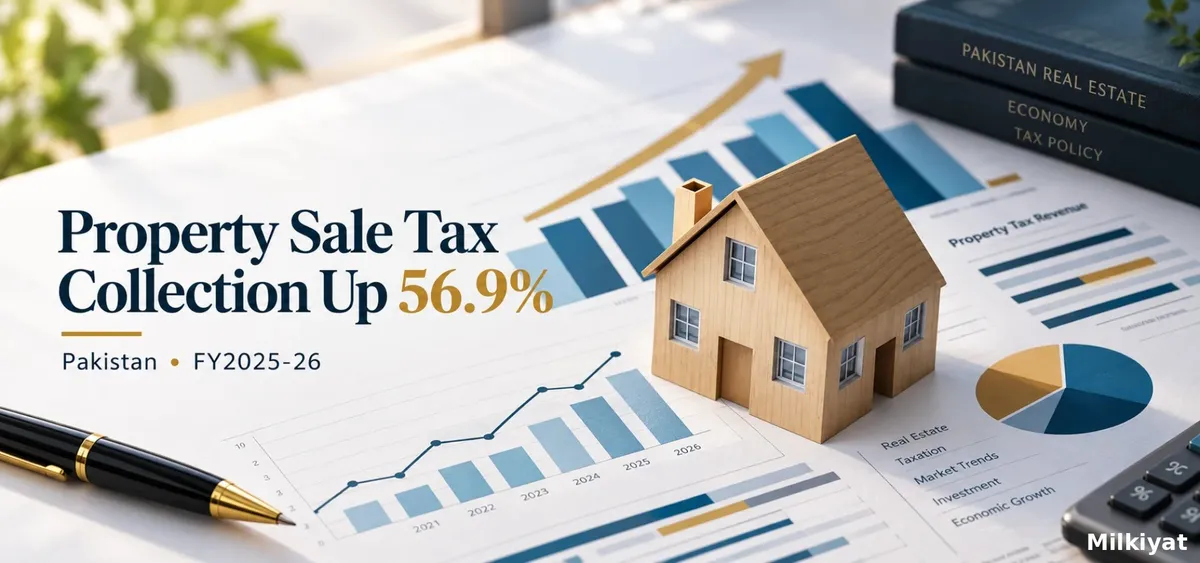
Pakistan's Property Sale Tax Collection Surges 56.9% in FY2025-26

By Mariam Khan
Real Estate Analyst
5 min read
Withholding tax collection on sales of immovable property rose 56.9 percent during FY2025-26, an increase of approximately Rs66.7 billion over the previous fiscal year, according to Federal Board of Revenue data. The collection falls under Section 236C of the Income Tax Ordinance, 2001, and property sales emerged as one of the larger contributors to the government's overall withholding tax growth during the year, alongside a 22.3 percent rise in withholding tax from contracts and a 16.5 percent rise from imports.
What Section 236C Actually Is
Section 236C requires whoever registers, records, or attests the transfer of any immovable property, typically a housing society, a development authority like DHA, or a sub registrar's office, to collect advance tax from the seller at the time of transfer, before the sale is finalised. This functions as an advance, adjustable tax collected at the point of transaction rather than a standalone annual property charge, with the collected amount later adjustable against the seller's overall annual tax liability when they file their return.
Why the Tax Rate Itself Has Changed Substantially in Recent Years
Part of what makes this year on year comparison genuinely complex is that the underlying tax rate structure has itself changed more than once in the recent period covered. Following the Finance Act 2023, the Section 236C rate for filers was raised from 2 percent to 3 percent, while the rate for non-filers rose from 4 percent to 6 percent. Rates were adjusted again under a subsequent budget cycle, moving toward a flat structure. This kind of rate change alone can produce a substantial year on year revenue increase even if the actual number or value of property transactions taking place remained relatively stable, which is precisely the distinction that matters most when interpreting a headline growth figure like 56.9 percent.
Why the Increase Should Not Be Read as a Simple Transaction Volume Signal
A 56.9 percent rise in tax collected is not the same thing as a 56.9 percent rise in the number or total value of properties sold. At least three separate factors could each contribute to this kind of increase independently, higher average property transaction values reflecting genuine price appreciation, the rate changes described above applying to the same or even a similar volume of transactions, and improved documentation or compliance bringing previously undocumented or under reported transactions into the formal, taxed system. Any credible analysis of this figure needs to weigh these three factors together rather than defaulting to the simplest explanation that transaction activity itself grew by a comparable margin.
The Compliance and Liquidity Side of This Same Tax
FBR has separately had to address specific complications this same tax has created for the construction sector. Builders and developers operating under Section 7F's special tax regime, where tax is calculated on a fixed percentage of gross receipts rather than traditional profit and loss accounting, found that Section 236C deductions on their property sales created a genuine cash flow burden, since they typically lacked other taxable income against which the advance tax could be adjusted. FBR responded by clarifying that developers who have fully discharged their Section 7F liability and have no other taxable income may apply for a formal exemption from Section 236C collection, with automatic issuance of an exemption certificate if a Commissioner fails to act on a complete application within seven working days. This detail matters directly for interpreting the aggregate collection figure, since it shows the tax's actual real world application has been actively evolving even within the same fiscal year being measured.
What This Means for Property Sellers
Sellers should understand that Section 236C tax is deducted directly at the point of registering or transferring a property, calculated based on their filer status, and remains adjustable against their eventual annual tax liability rather than functioning as a final, non recoverable charge. Anyone planning a property sale should confirm their current Active Taxpayer List status before proceeding, since filer versus non-filer rates differ substantially, and should factor the applicable current year rate directly into their sale proceeds planning given how frequently this specific rate structure has changed in recent budget cycles.
What This Means for Understanding Pakistan's Property Market
This data point offers genuine, official evidence of the property transaction and tax environment, but should be treated as exactly that, evidence requiring careful interpretation rather than a standalone market activity indicator. Analysts, investors, and industry observers examining this 56.9 percent figure should specifically seek disaggregated data separating rate driven revenue growth from genuine transaction volume growth and improved compliance before drawing conclusions about the underlying health or direction of Pakistan's property market from this tax collection figure alone.